Polymath and Polymesh Review: Compliance-First Tokenization
General-purpose blockchains were designed for pseudonymity, permissionless access, and censorship resistance. Capital markets require exactly the opposite: known identities, authorized participation, and regulatory compliance. This fundamental friction led the team behind Polymath to pivot from building smart contracts on Ethereum to launching Polymesh, a specialized Layer 1 blockchain designed exclusively for regulated assets. In this comprehensive Polymath Polymesh review, we evaluate both the legacy tokenization tools and the new blockchain infrastructure to determine if a compliance-first approach justifies abandoning the deep liquidity of the Ethereum ecosystem. Founders and technical teams evaluating infrastructure for regulated assets face a stark choice between retrofitting compliance onto public chains or adopting specialized networks. We will examine the technical architecture, developer experience, and market adoption of Polymesh to help you make an informed infrastructure decision.
Platform overview and history
Polymath launched in 2017 as an Ethereum-based tokenization platform, introducing the ST-20 standard for security tokens. Recognizing the fundamental limitations of retrofitting compliance onto a general-purpose blockchain, the team developed Polymesh, a purpose-built Layer 1 blockchain that natively integrates identity, compliance, and deterministic finality. Polymesh officially launched its mainnet in April 2023.
Understanding this ecosystem requires drawing a clear distinction between Polymath and Polymesh. Polymath is a software company that builds technology to facilitate the creation and management of security tokens. In its early days, Polymath operated exclusively on Ethereum, creating the ST-20 token standard to embed transfer restrictions directly into smart contracts. This approach worked mechanically but faced severe limitations because Ethereum itself does not understand compliance. Every transaction on Ethereum is processed by pseudonymous validators, and the network settles probabilistically, meaning a transaction is never technically final but merely increasingly unlikely to be reversed. For institutional capital markets, probabilistic settlement and pseudonymous validation introduce unacceptable legal and operational risks.
To solve these structural problems, the Polymath team initiated the development of Polymesh, an entirely separate Layer 1 blockchain network. While Polymath built the initial technology, Polymesh operates as an independent network governed by the Polymesh Association, a non-profit entity based in Switzerland. The mainnet went live in 2023, representing a massive shift from building applications on top of existing chains to building the base layer itself. This transition positions the ecosystem uniquely among the best tokenization platforms. Instead of forcing capital markets to adapt to blockchain architecture, the developers adapted blockchain architecture to meet the strict requirements of capital markets.
Polymesh technical architecture
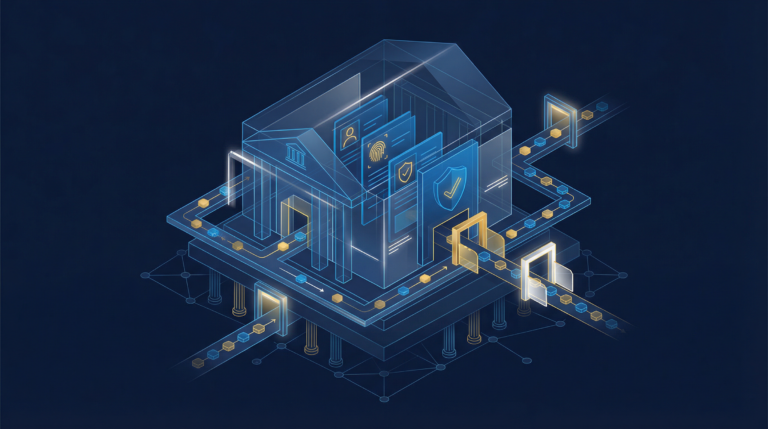
The Polymesh blockchain architecture replaces pseudonymous addresses with verified identities at the protocol level. Every network participant must pass Customer Due Diligence through an authorized provider before transacting. The network utilizes nominated proof-of-stake consensus operated by regulated financial entities, ensuring deterministic finality and native compliance enforcement for asset transfers.
Identity serves as the foundational layer of the Polymesh network. On general-purpose blockchains, users are represented by cryptographic public keys, and anyone can generate a new wallet in seconds. On Polymesh, every on-chain action is tied to a unique identity that has been verified by an authorized Customer Due Diligence (CDD) provider. Users still hold private keys to authorize transactions, but those keys are mapped to a verified identity record at the protocol level. If a user loses their private key, the identity system allows them to securely map a new key to their existing identity, solving one of the most persistent operational risks in digital asset management. This native identity framework means issuers do not need to build complex smart contracts to check whitelists before every transfer.
Confidentiality represents another major architectural divergence from public networks. Public blockchains broadcast transaction details, including sender, receiver, and amount, to the entire network to achieve consensus. Institutional participants cannot broadcast their trading positions and transaction volumes to the public without violating client confidentiality and exposing proprietary trading strategies. Polymesh addresses this through a confidential assets feature that utilizes zero-knowledge proofs (zk-SNARKs). This cryptography allows node operators to verify that a transaction is valid, that the sender has sufficient balance, and that all compliance rules are met, without actually seeing the underlying details of the trade.
Governance and settlement mechanics further differentiate the network. Polymesh operates on a nominated proof-of-stake consensus mechanism, but unlike Ethereum or Solana, the node operators validating transactions are known, regulated financial entities. This known validator set allows the network to achieve deterministic finality. When a block is produced and validated on Polymesh, the transactions within it are immediately and permanently final. There is no risk of chain reorganizations or probabilistic delays. For clearinghouses and transfer agents, deterministic finality is a hard requirement for integrating blockchain technology into legacy settlement systems.
Polymesh versus Ethereum for security tokens
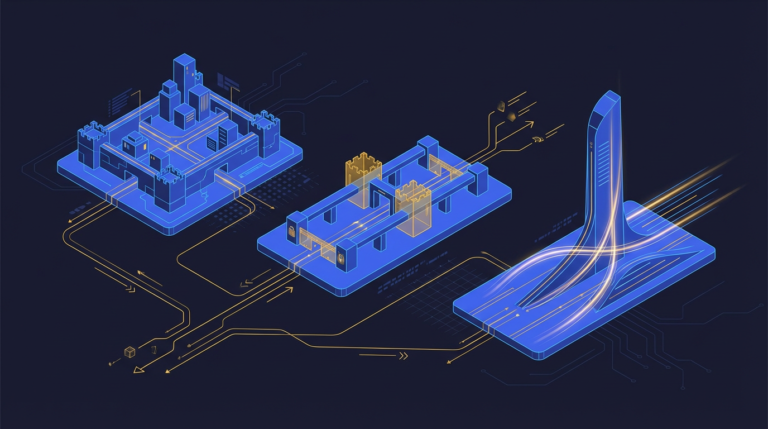
When comparing Polymesh to Ethereum for security tokens, the primary distinction lies in protocol-level versus smart-contract-level compliance. Polymesh enforces identity and transfer rules natively, resulting in predictable fees paid in POLYX and instant deterministic finality. Ethereum relies on complex smart contracts, resulting in higher gas costs but offering massive DeFi composability.
The debate over the best blockchain for tokenization often centers on where compliance should live within the technology stack. On Ethereum, compliance lives in the application layer. Issuers use frameworks like the ERC-3643 security token standard to attach identity registries and transfer rules to their tokens. Every time an ERC-3643 token moves, the smart contract must execute multiple checks against external registries to ensure the sender and receiver are authorized. This approach requires significant computational effort, driving up gas costs during periods of network congestion. On Polymesh, these checks happen at the protocol level. The base layer inherently understands what an identity is and what a compliance rule is, making transfers highly efficient and significantly cheaper to execute.
Composability and liquidity present the strongest arguments for remaining on Ethereum. The Ethereum ecosystem contains billions of dollars in stablecoin liquidity, hundreds of decentralized exchanges, and lending protocols that can interact seamlessly with tokenized assets. Polymesh, by design, is an isolated environment. Only verified identities can participate, which inherently excludes the vast majority of retail crypto liquidity and permissionless DeFi protocols. Issuers must weigh the operational efficiency and legal certainty of Polymesh against the massive network effects and secondary market infrastructure available on Ethereum.
Hands-on testing results with Polymesh Studio
Polymesh Studio serves as the primary graphical interface for issuers to configure, mint, and manage security tokens on the network. Our technical evaluation found the platform offers granular control over compliance rules and corporate actions, though the developer experience requires navigating a steep learning curve due to the specialized nature of the protocol.
During our testing, we evaluated the end-to-end process of configuring a new asset using Polymesh Studio. The onboarding process requires users to complete the CDD verification step before accessing the full suite of tools, which immediately demonstrates the network’s identity-first architecture. Once authenticated, the dashboard provides a clean, logical interface for asset creation. Users can define the asset ticker, total supply, and divisibility without writing any code. The platform truly excels in its compliance configuration interface. Issuers can set complex rules, such as restricting transfers between specific jurisdictions, limiting the maximum percentage of token supply held by a single identity, or enforcing lock-up periods for specific investor classes.
The developer experience for technical teams integrating directly with the Polymesh blockchain presents a mixed picture. The documentation provided by the Polymesh Association is thorough and covers the specific architectural nuances of the network. However, developers accustomed to writing Solidity smart contracts for the Ethereum Virtual Machine (EVM) will face a significant paradigm shift. Polymesh is built using the Substrate framework, the same technology underlying Polkadot. Developers interact with the chain using the Polymesh SDK rather than deploying custom smart contracts. This reduces the risk of smart contract bugs exploiting tokenized assets, but it also limits flexibility for teams wanting to build highly customized, non-standard financial logic.
Ecosystem adoption and pricing
Polymesh network adoption is growing steadily, primarily driven by institutional partnerships with broker-dealers and transfer agents who value native compliance. Network operations and transaction fees are paid in POLYX, the native utility token, which provides highly predictable and generally lower costs compared to Ethereum gas fees during periods of network congestion.
Institutional adoption remains the critical metric for specialized blockchains. Polymesh has secured several high-profile node operators, including major cryptocurrency exchanges like Binance and institutional service providers like Entoro Capital. The network has also integrated with prominent tokenization engines like Tokeny, allowing issuers to leverage Tokeny’s software suite while settling on the Polymesh base layer. Based on block explorer data, the network supports dozens of active tokenized assets, ranging from real estate funds to private equity shares. However, it is important to state clearly that the total value locked and transaction volume on Polymesh remain a fraction of the tokenized asset activity occurring on Ethereum and Polygon.
The economic model of the network revolves around the POLYX token. Unlike Polymath’s original ERC-20 POLY token, POLYX is the native protocol token used for staking, governance, and transaction fees. When comparing tokenization platform fees, Polymesh offers a distinct advantage in predictability. Because the network is not competing for block space with meme coins and NFT mints, transaction fees remain stable and low. Issuers can accurately forecast the cost of distributing dividends to thousands of token holders or executing complex corporate actions.
Pros and cons
The primary advantage of Polymesh is its purpose-built architecture that natively solves identity, compliance, and finality requirements for regulated securities. The main disadvantages include a significantly smaller ecosystem than Ethereum, limited secondary market infrastructure, reduced DeFi composability, and the added complexity of managing the POLYX utility token for network operations.
The benefits of using a specialized network are entirely structural. By embedding identity and compliance at the protocol level, Polymesh eliminates the need for expensive, complex smart contract audits for basic asset transfers. The deterministic finality provided by its regulated node operators gives institutional compliance departments the legal certainty they require to approve blockchain integrations. Furthermore, the confidential assets functionality provides a path forward for institutions that cannot operate in transparent public ledger environments. For a comprehensive look at how these features stack up against other dedicated providers, readers can review our Securitize vs tZERO vs Polymath comparison.
The drawbacks are primarily related to network effects and liquidity. Choosing Polymesh means opting out of the broader decentralized finance ecosystem. There are currently very few secondary market venues that support assets minted on Polymesh, which severely limits liquidity options for investors. Additionally, requiring all participants to pass KYC before interacting with the chain creates massive friction for retail investors. Finally, managing POLYX tokens to pay for network operations adds treasury management complexity for traditional financial institutions that prefer to pay software licensing fees in fiat currency.
Scoring
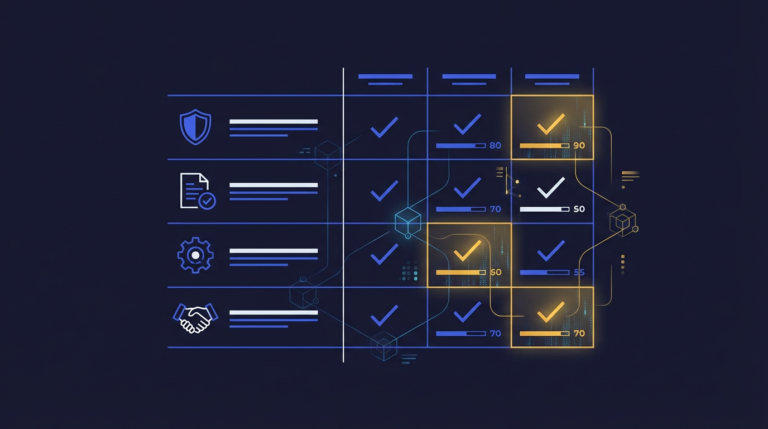
We rate Polymesh an overall score of 6.3 out of 10 based on our institutional tokenization platform framework. The network excels in regulatory compliance and purpose-built token standards, but scores lower in secondary market infrastructure and overall track record due to its relatively recent mainnet launch and isolated liquidity environment.
| Evaluation Criteria | Score | Justification |
|---|---|---|
| Regulatory compliance | 8/10 | Identity and compliance at the protocol level is architecturally superior, though the chain itself is not yet universally recognized by all global regulators. |
| Ease of use | 5/10 | Polymesh Studio is powerful but presents a steep learning curve. Documentation is improving but remains highly technical. |
| Pricing transparency | 7/10 | POLYX fees are on-chain, predictable, and generally low. Platform costs are reasonably transparent for issuers. |
| Secondary market | 4/10 | Very limited secondary trading infrastructure exists compared to established networks or platforms like Securitize Markets. |
| Token standards | 8/10 | Purpose-built standards for regulated securities with compliance enforcement handled securely at the protocol layer. |
| Track record | 6/10 | The mainnet is newer than competitors. It shows growing institutional adoption but has a smaller installed base than EVM chains. |
Regulatory compliance
Polymesh scores highly here because it does not treat compliance as an afterthought. The requirement for authorized CDD providers to verify identities before any on-chain activity occurs aligns perfectly with global anti-money laundering regulations. The network architecture effectively prevents the accidental transfer of securities to unverified wallets.
Ease of use
The platform receives a moderate score for usability. While the graphical interfaces are well-designed, the underlying concepts require a deep understanding of both capital markets and specialized blockchain architecture. Developers migrating from Ethereum will need time to adapt to the Substrate-based environment and the Polymesh SDK.
Pricing transparency
Fees on the network are transparent and predictable. Because the network is insulated from the extreme volatility of retail crypto trading, issuers can model their operational costs with a high degree of accuracy. The reliance on the POLYX token does introduce some friction for fiat-native businesses.
Secondary market
This remains the weakest point for the ecosystem. Tokens minted on Polymesh cannot simply be listed on Uniswap or traditional crypto exchanges. They require integrated broker-dealers and alternative trading systems that support the specific network architecture, and currently, those venues are scarce.
Token standards
The native asset standards on Polymesh are exceptional. They handle complex corporate actions, dividend distributions, and granular transfer restrictions far more elegantly than retrofitted ERC-20 tokens. The standards are designed specifically for the lifecycle of traditional securities.
Track record
While Polymath has been a recognized name since 2017, the Polymesh mainnet only launched in 2023. The network operates flawlessly from a technical standpoint, but it lacks the decade-long battle-testing that secures trillions of dollars in value on older blockchains.
How we evaluated
Our assessment of Polymath and Polymesh follows our standardized framework for blockchain infrastructure, focusing on technical architecture, developer experience, and regulatory alignment. We tested the testnet environments, reviewed protocol documentation, analyzed on-chain data, and compared the architecture directly against leading general-purpose blockchains used for asset tokenization.
We configured test assets using Polymesh Studio to evaluate the user interface and compliance rule engines. We also reviewed the developer documentation and SDKs to assess the technical integration requirements. On-chain metrics regarding transaction costs, node operator participation, and network activity were sourced directly from the Polymesh block explorer. Our evaluation criteria are designed specifically for institutional capital markets use cases, prioritizing legal certainty and operational security over permissionless access. For complete details on our scoring rubrics, please read our review methodology.
Choosing the right infrastructure for asset tokenization requires a clear understanding of your target investor base and regulatory obligations. Our Polymath Polymesh review demonstrates that building a purpose-built blockchain for regulated securities solves many of the technical and legal frictions associated with public networks. The native identity framework, deterministic finality, and protocol-level compliance rules make Polymesh an exceptionally secure environment for institutional tokenization. However, this security comes at the cost of liquidity and composability. Issuers must decide whether the operational efficiency of a specialized network outweighs the massive network effects of the Ethereum ecosystem. For institutions prioritizing strict compliance over retail distribution, Polymesh provides a compelling, architecturally sound foundation.
Frequently Asked Questions
What is the difference between Polymath and Polymesh?
Polymath is the software company that originally built tokenization tools on Ethereum and developed the concept for a specialized network. Polymesh is the actual Layer 1 blockchain network, governed independently by the Polymesh Association, designed specifically for regulated security tokens.
Do I need to pay gas fees on Polymesh?
Yes, network operations and transaction fees on Polymesh require POLYX, the native utility token. These fees are generally lower and much more predictable than Ethereum gas fees because the network does not host congested retail DeFi applications.
Can anyone run a node on the Polymesh network?
No, Polymesh uses a nominated proof-of-stake consensus mechanism where node operators must be known, regulated financial entities. This permissioned validator set allows the network to achieve the deterministic finality required by capital markets.
Are Polymesh tokens compatible with Ethereum DeFi?
No, assets minted on Polymesh exist on an entirely separate blockchain architecture and cannot interact directly with Ethereum-based decentralized finance protocols. The network prioritizes regulatory compliance and verified identities over permissionless composability.