Tokenized Assets Tax Guide for US Investors (2025)
Disclaimer: This article provides general educational information about tax concepts and does not constitute financial, legal, tax, or investment advice. Asset tokenization involves complex regulatory and financial variables. This content does not create a tax advisor-client relationship. Readers must consult a qualified tax professional, such as a CPA or tax attorney, for advice specific to their individual situation. Tax laws change frequently and their application depends heavily on specific circumstances.
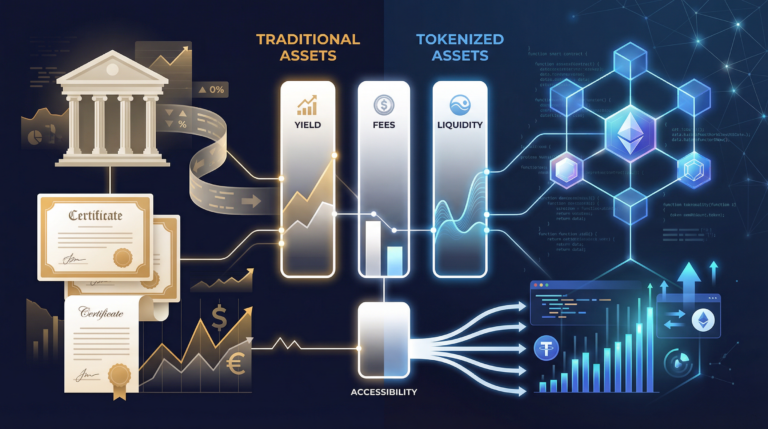
The tokenization of traditional financial assets forces investors to navigate two overlapping regulatory frameworks. You must understand the established tax rules for traditional securities while simultaneously applying the evolving guidelines for digital assets. When you buy a security token representing equity in a private company or a fractional share of commercial real estate, the Internal Revenue Service does not treat this asset as a novel currency. The agency looks through the blockchain wrapper to the underlying economic reality of the asset. This approach requires investors to maintain rigorous records and understand how traditional tax doctrines apply to blockchain-based settlements. If you are learning how to invest in tokenized assets, mastering the tokenized assets tax implications is a mandatory step before executing your first transaction. Unprepared investors often face unexpected tax liabilities because they assume crypto tax software will automatically handle tokenized securities correctly. While a tokenization glossary might define these assets simply, their tax treatment demands a thorough understanding of the Internal Revenue Code.
How the IRS classifies tokenized assets and securities
The IRS classifies tokenized assets based on the underlying economic interest rather than the blockchain delivery mechanism. Security tokens representing corporate equity are taxed as stock, tokenized debt functions as traditional bonds, and tokenized physical gold is taxed as a collectible under IRC Section 408(m) subject to a 28% maximum rate.
The foundation of US digital asset taxation rests on IRS Notice 2014-21, which established that virtual currency is treated as property for federal tax purposes. However, tokenized assets generally fall under specific existing categories of the Internal Revenue Code because they represent legal claims on real-world assets. When an issuer creates a tokenized share of corporate stock, the IRS applies the standard tax rules for equity investments. The blockchain token merely serves as the book-entry method for recording ownership. This look-through approach means that the specific tax treatment depends entirely on the legal structure of the underlying asset. Investors cannot rely on generic cryptocurrency tax advice when dealing with tokenized securities, as the underlying legal agreements dictate the tax reporting requirements.
Tokenized real estate presents specific classification challenges depending on how the issuer structures the investment. Most platforms use a Special Purpose Vehicle (SPV) or Limited Liability Company (LLC) to hold the physical property, issuing tokens that represent membership interests in that entity. The IRS treats these tokenized LLC interests as partnership interests for tax purposes. As a result, token holders receive a Schedule K-1 detailing their distributive share of the partnership’s income, deductions, and depreciation. This pass-through taxation differs entirely from direct ownership of real property. If you are engaged in tokenized real estate investing, you must account for these K-1 forms when filing your annual returns, which often arrive later in the tax season than standard brokerage forms.
Commodities and precious metals tokenization triggers another distinct section of the tax code. If you purchase a token backed by physical gold stored in a vault, the IRS generally classifies this asset as a collectible under IRC Section 408(m). Collectibles face a higher maximum long-term capital gains tax rate of 28%, compared to the 20% maximum rate applied to traditional equities. This classification catches many investors off guard if they assume all digital assets qualify for standard capital gains rates. The documentation provided by the token issuer will specify the legal nature of the asset, and investors must review these offering memorandums to confirm the exact tax classification before committing capital.
Capital gains, holding periods, and the wash sale rule
Tokenized asset sales trigger capital gains or losses based on the difference between the cost basis and the sale price. Assets held for one year or less face short-term rates up to 37%, while assets held longer qualify for long-term rates of 0%, 15%, or 20%, plus applicable net investment income taxes.
Calculating capital gains on tokenized assets requires establishing a precise cost basis and holding period. Your cost basis includes the purchase price of the token plus any transaction fees, gas fees, or platform commissions required to execute the trade. The holding period begins on the day after the transaction is confirmed on the blockchain and ends on the day the disposition transaction is finalized. For short-term capital gains, the IRS taxes the profit as ordinary income, matching your standard marginal tax bracket which can reach up to 37% for the 2024 and 2025 tax years. Long-term capital gains benefit from preferential rates of 0%, 15%, or 20% depending on your taxable income. High earners must also account for the Net Investment Income Tax (NIIT), which adds a 3.8% surtax on investment income for individuals with a modified adjusted gross income above $200,000, or $250,000 for married couples filing jointly.
The method you use to track and assign cost basis significantly impacts your final tax liability. The IRS default method is First-In, First-Out (FIFO), meaning the first tokens you purchased are assumed to be the first ones you sell. Investors can elect to use the Specific Identification method if they maintain detailed records of every transaction. Specific Identification allows you to choose exactly which token lots you are selling, enabling you to optimize your tax outcome by selling tokens with a higher cost basis to minimize realized gains. To use this method legally, you must record the specific blockchain transaction hashes, dates, and amounts, and communicate this identification to your broker or platform at the time of the sale. Failing to maintain these records restricts you to the FIFO method.
The application of the wash sale rule to tokenized assets remains a complex intersection of traditional securities law and digital asset regulation. Under IRC Section 1091, investors cannot claim a capital loss if they sell a security at a loss and purchase a substantially identical security within 30 days before or after the sale. Historically, the IRS did not apply the wash sale rule to standard cryptocurrencies like Bitcoin because they were classified as property, not securities. Because security tokens explicitly represent traditional securities like stock or debt, tax professionals broadly agree that the wash sale rule applies to them right now. Furthermore, the Infrastructure Investment and Jobs Act included provisions to extend wash sale rules and stringent reporting requirements to all digital assets. Understanding the risks of investing in tokenized assets means recognizing that attempting to harvest losses on security tokens while immediately repurchasing them will likely result in a disallowed loss.
Taxation of tokenized dividends and distributions
Distributions from tokenized assets are taxed according to their underlying structure. Tokenized corporate equity can yield qualified dividends taxed at lower capital gains rates, while stablecoin payouts function as cash equivalents. Real estate token distributions often include return of capital components that reduce your cost basis.
Investors receiving income from tokenized assets must classify the distributions correctly to determine their tax liability. When a tokenized corporation issues a dividend, the tax treatment depends on whether it meets the criteria for a qualified dividend under IRC Section 1(h)(11). To qualify for the preferential capital gains tax rates, the dividend must be paid by a US corporation or qualified foreign corporation, and the investor must hold the token for more than 60 days during the 121-day period that begins 60 days before the ex-dividend date. If the holding period or corporate status requirements are not met, the distribution is treated as an ordinary dividend and taxed at standard income tax rates. Having tokenized equity dividends explained by a tax professional is necessary because blockchain platforms often distribute these payments automatically via smart contracts without withholding taxes.
The mechanics of blockchain distributions introduce unique tax accounting challenges. Many tokenization platforms pay dividends or yield using fiat-backed stablecoins like USDC rather than traditional bank transfers. For tax purposes, the IRS treats the receipt of a stablecoin dividend exactly like receiving cash. The fair market value of the stablecoin on the day you receive it determines your taxable dividend income. If you hold the stablecoin and it later fluctuates in value before you convert it to fiat currency, that subsequent disposition triggers a separate capital gain or loss event. Platform documentation and IRS Publication 550 provide the framework for reporting these investment income streams. You must track the exact timestamp and dollar value of every smart contract distribution to report your income accurately.
Distributions from tokenized real estate or debt funds often contain a mix of taxable income and non-taxable returns of capital. A return of capital occurs when a fund distributes money that represents a return of your original investment rather than generated profit. This distribution is not immediately taxable; instead, it reduces the cost basis of your tokens. When you eventually sell the tokens, the lowered cost basis will result in a larger capital gain or a smaller capital loss. Depreciation deductions passed through from tokenized real estate LLCs frequently create these return of capital situations. Investors must carefully review the annual tax documents provided by the platform to separate ordinary income, capital gains distributions, and return of capital amounts.
IRS reporting requirements and cost basis tracking
US taxpayers must report tokenized asset transactions using Form 8949 and Schedule D for capital gains, and Form 1099-DIV or Schedule K-1 for income. The Infrastructure Investment and Jobs Act mandates that digital asset brokers provide Form 1099-B reporting starting in the 2025 and 2026 tax years.
The administrative burden of reporting tokenized asset transactions falls heavily on the individual investor. Every taxable disposition of a tokenized asset must be recorded on Form 8949, Sales and Other Dispositions of Capital Assets, which then feeds into Schedule D of your Form 1040. You must provide the description of the asset, the date acquired, the date sold, the proceeds, and the cost basis for every single transaction. All US taxpayers must answer the digital asset question on the front page of Form 1040, indicating whether they received, sold, exchanged, or otherwise disposed of any digital assets during the tax year. Checking the negative box when you have actively traded security tokens constitutes perjury on a federal tax return. Depending on where to buy security tokens, you may or may not receive comprehensive tax documents from the exchange.
The regulatory landscape for platform reporting is currently undergoing a massive transition. The Infrastructure Investment and Jobs Act expanded the definition of a broker in the Internal Revenue Code to include entities that regularly facilitate transfers of digital assets on behalf of another person. This statutory change requires digital asset platforms to track cost basis and issue Form 1099-B to investors and the IRS, similar to traditional stock brokerages. The rollout of these requirements takes effect for transactions occurring in 2025 and 2026, meaning investors will begin receiving standardized tax forms for their tokenized asset trades. Until these broker reporting rules are fully implemented across all platforms, investors must rely on their own records to calculate gains and losses accurately.
Accurate cost basis tracking remains the most significant operational challenge for tokenized asset investors. Moving tokens between different wallets, participating in decentralized finance protocols, or receiving airdrops connected to security tokens can fragment your transaction history. If you face an IRS audit and cannot prove your cost basis with verifiable records, the agency may assign a cost basis of zero, taxing the entire sale proceeds as a capital gain. Investors should utilize specialized digital asset tax software like CoinTracker, Koinly, or TokenTax to aggregate their wallet addresses and exchange accounts. These tools read blockchain data to reconstruct transaction histories and apply consistent accounting methods. Maintaining a comprehensive archive of trade confirmations, blockchain explorer exports, and platform statements is a non-negotiable requirement for compliant tax filing.
Tax-advantaged strategies for tokenized portfolios
Investors can optimize tokenized asset taxes through strategic loss harvesting, holding digital securities in self-directed IRAs, utilizing Qualified Opportunity Zones for tokenized real estate, or making charitable donations of appreciated tokens under IRC Section 170 to avoid capital gains recognition.
Tax-loss harvesting remains a primary strategy for offsetting capital gains within a tokenized asset portfolio. By intentionally selling tokens that have dropped below their purchase price, investors can realize losses to cancel out capital gains realized elsewhere in their portfolio. If total capital losses exceed capital gains for the year, you can use up to $3,000 of those losses to offset ordinary income, carrying the remainder forward to future tax years. Executing this strategy requires strict adherence to the wash sale rules discussed earlier. You cannot sell a tokenized share of a specific company to harvest a loss and immediately rebuy the exact same tokenized share. You must wait the required 30-day period or purchase a different asset that maintains your market exposure without triggering the substantially identical security classification.
Holding tokenized assets within a tax-advantaged retirement account offers a powerful method to shield investments from immediate taxation. Investors can establish a self-directed Individual Retirement Account (IRA) through specialized custodians that support digital assets and alternative investments. When you purchase tokenized real estate or security tokens inside a traditional self-directed IRA, all dividends, distributions, and capital gains accumulate tax-deferred until you take distributions in retirement. If you use a self-directed Roth IRA, the growth and eventual distributions are entirely tax-free, provided you meet the age and holding period requirements. The setup process requires transferring funds to a compliant custodian who executes the trades on your behalf, as holding the private keys to IRA assets yourself can trigger a prohibited transaction, resulting in severe tax penalties and the disqualification of the entire account.
High-net-worth investors can leverage specific sections of the tax code for tokenized real estate and charitable giving. Some tokenized real estate projects are located in Qualified Opportunity Zones (QOZs), allowing investors to defer and potentially reduce capital gains taxes if they roll prior gains into the tokenized QOZ fund. Alternatively, donating highly appreciated tokenized securities directly to a registered 501(c)(3) charity offers significant tax benefits under IRC Section 170. If you have held the token for more than one year, you can deduct the full fair market value of the asset on your tax return without ever recognizing the capital gain. The charity receives the full value of the asset and, as a tax-exempt entity, pays no taxes when it sells the tokens. This strategy requires careful coordination with a tax attorney and a charity capable of receiving digital securities.
The integration of blockchain technology with traditional financial assets does not erase the obligations of the US tax code. The IRS applies established legal principles to tokenized assets, requiring investors to classify their holdings accurately, track their cost basis meticulously, and report their transactions transparently. As the regulatory environment matures and broker reporting requirements take effect in 2025 and 2026, the margin for error in digital asset tax reporting will shrink significantly. Investors who proactively implement robust record-keeping systems and engage qualified tax professionals will be positioned to leverage tax-advantaged strategies effectively. Your next step should be auditing your current tokenized asset portfolio, downloading all available transaction histories from your platforms, and scheduling a consultation with a CPA who understands both traditional securities taxation and digital asset infrastructure. For a broader perspective on international regulations, review our tokenization tax guide by country.
Frequently Asked Questions
How does the IRS tax tokenized real estate?
The IRS taxes tokenized real estate based on its legal structure. If the tokens represent shares in an LLC or partnership, you will receive a Schedule K-1 and face pass-through taxation. Direct physical ownership is taxed as real property, subject to standard capital gains and depreciation rules.
Do I have to pay taxes if I receive stablecoins as a dividend?
Yes, receiving stablecoins as a dividend is a taxable event. The IRS treats stablecoin distributions exactly like cash dividends. You must report the fair market value of the stablecoins in US dollars on the day you receive them as taxable investment income.
Does the wash sale rule apply to security tokens?
Tax professionals generally agree that the wash sale rule applies to security tokens. Because these tokens represent traditional securities like corporate stock or debt, they fall under IRC Section 1091, which disallows claiming a loss if a substantially identical security is repurchased within 30 days.
How do I report tokenized asset sales on my taxes?
You must report every taxable disposition of a tokenized asset on Form 8949, which summarizes your capital gains and losses. This information transfers to Schedule D of your tax return. You must also answer affirmatively on the Form 1040 digital asset question.
Can I hold tokenized assets in an IRA?
You can hold tokenized assets in a self-directed IRA established through a specialized custodian. This strategy allows your tokenized investments to grow tax-deferred in a traditional IRA or tax-free in a Roth IRA, provided you follow strict IRS rules regarding prohibited transactions and custody.