How to Tokenize Company Equity: A Step-by-Step Guide
Tokenizing company equity fundamentally changes how founders raise capital and manage corporate ownership. It replaces static paper stock certificates and basic spreadsheet cap tables with programmable blockchain tokens. These digital assets execute compliance rules automatically, simplify fractional ownership, and create the infrastructure for potential secondary market liquidity. Founders who understand the mechanics of digital securities gain a distinct advantage in structuring modern capital raises.
Learning how to tokenize company equity requires navigating a strict sequence of legal, technical, and operational decisions. You cannot simply write a smart contract and sell digital shares to the public. The U.S. Securities and Exchange Commission (SEC) regulates equity tokens exactly like traditional securities. Issuers must select the appropriate regulatory exemption, hire specialized legal counsel, build the technical architecture, and conduct rigorous identity verification on every investor.
This guide provides a practical blueprint for founders. It details the exact steps required to transition from a traditional corporate structure to a fully tokenized equity model, including realistic cost ranges and timeline expectations.
Evaluating readiness and regulatory pathways
Determining how to tokenize company equity begins with assessing operational readiness and selecting a U.S. Securities and Exchange Commission (SEC) exemption. Founders must choose between Regulation D, Regulation CF, or Regulation A+ based on their target investor profile and capital requirements before incurring legal and technical costs.
The first step requires an honest assessment of company readiness. Post-revenue companies with complex cap tables or those seeking a global investor base present the strongest use cases for tokenization. Early-stage pre-revenue startups generally lack the scale to justify the $50,000 to $300,000 total setup costs associated with digital securities. Tokenization provides fractional ownership and potential secondary liquidity, but these benefits only materialize if actual investor demand exists. Managing hundreds of fractional owners requires administrative overhead that a traditional seed round avoids. Founders need a clear strategic goal for tokenization rather than pursuing the technology for its own sake. Read our complete guide to tokenizing your startup to evaluate your specific use case.
Choosing the regulatory exemption dictates the entire timeline and cost structure of the offering. Regulation D Rule 506(b) allows unlimited capital from accredited investors but forbids general solicitation. Rule 506(c) permits public advertising but requires strict, documented verification of accredited investor status. Both Reg D options typically cost $20,000 to $50,000 in legal fees and take four to eight weeks to prepare. Startups targeting retail investors often use Regulation Crowdfunding (Reg CF), which caps annual raises at $5 million and mandates the use of an SEC-registered funding portal. For larger capital requirements, Regulation A+ offers two tiers: Tier 1 allows up to $20 million, while Tier 2 allows raises up to $75 million from both retail and accredited investors. Reg A+ requires SEC qualification, audited financials, and legal fees often exceeding $150,000, pushing the timeline to six months or more. Review our Reg D vs Reg CF vs Reg A+ comparison for detailed limits.
Assembling the legal and technical infrastructure
Building the infrastructure requires hiring experienced securities counsel to draft offering documents and selecting a registered tokenization platform. Founders must also decide whether to issue equity directly to investors or use a Special Purpose Vehicle (SPV) to consolidate cap table entries.
Legal counsel must possess specific experience with digital asset offerings and state-level Blue Sky laws. General corporate lawyers rarely understand the nuances of programmable transfer restrictions or SEC compliance for blockchain tokens. Counsel will draft the Private Placement Memorandum (PPM), subscription agreements, and token purchase agreements. Simultaneously, founders must evaluate technology providers. A capable platform handles investor onboarding, smart contract generation, and compliance enforcement. Platform fees range from $50,000 to $150,000 or more, depending on whether they operate as a registered broker-dealer or Alternative Trading System (ATS). Selecting a vendor with a proven track record of compliant secondary market integrations prevents expensive migrations later. Review our guide on choosing a tokenization platform and the full cost breakdown for startup tokenization to budget accurately.
Structuring the offering involves choosing between direct token issuance and an SPV model. Direct issuance means tokens represent actual shares in the operating company, placing every token holder directly on the primary cap table. The SPV approach requires creating a separate legal entity that holds the company equity, while investors purchase tokens representing membership interests in the SPV. The SPV model adds $10,000 to $25,000 in setup costs but keeps the operating company’s cap table clean by consolidating all tokenized investors into a single line item. Once the structure is set, legal counsel finalizes the PPM to disclose specific digital asset risks, including smart contract vulnerabilities and private key management protocols. Understand how tokenized equity affects your cap table and review the tokenization legal requirements for US startups before finalizing the corporate structure.
Execution and smart contract deployment
Executing the tokenized offering involves deploying compliant smart contracts, conducting strict identity verification on all participants, and distributing the digital assets. The smart contract must enforce the specific rules of the chosen SEC exemption directly on the blockchain.
Smart contract deployment translates legal restrictions into unalterable code. Standard ERC-20 tokens cannot enforce securities laws, so issuers rely on compliance-focused standards like ERC-3643 or ERC-1400. These standards incorporate identity registries and transfer restrictions directly into the token architecture. If an unauthorized wallet attempts to receive the token, the smart contract automatically blocks the transaction. Before deployment, an independent security firm must audit the smart contract code to identify vulnerabilities. Smart contract audits cost between $15,000 and $40,000 and take two to four weeks to complete. Skipping this technical review exposes the issuer to catastrophic liability if a smart contract exploit results in stolen equity tokens.
Investor onboarding requires rigorous Know Your Customer (KYC) and Anti-Money Laundering (AML) checks. Third-party identity verification providers charge setup fees plus $2 to $10 per investor. Under Reg D 506(c), the issuer bears the burden of proving every investor is accredited, which requires reviewing tax returns, W-2s, or letters from certified public accountants. Once investors pass compliance checks, sign the subscription agreements, and their fiat or stablecoin funds settle in the corporate account, the company mints and distributes the tokens. The distribution process links the verified investor’s digital wallet to their verified real-world identity, ensuring the tokens remain in the possession of authorized individuals.
Managing post distribution compliance and cap tables
Post-distribution management requires continuous compliance monitoring, SEC reporting, and active cap table maintenance. Issuers must enforce lock-up periods and utilize an SEC-registered transfer agent to track ownership changes and maintain the official shareholder registry.
The regulatory obligations continue long after the initial token distribution concludes. Different exemptions carry distinct periodic reporting requirements. Reg A+ Tier 2 mandates annual and semiannual reports filed via the SEC EDGAR system, while Reg CF requires annual Form C-AR filings. The smart contract automatically enforces initial lock-up periods, such as the one-year restriction on secondary trading for Reg D offerings under Rule 144. However, the company must actively manage the underlying identity registry. If an investor loses access to their private keys, the issuer must follow a specific protocol to burn the lost tokens and mint replacements to a new, secure wallet. Use our tokenization compliance checklist to track these ongoing duties.
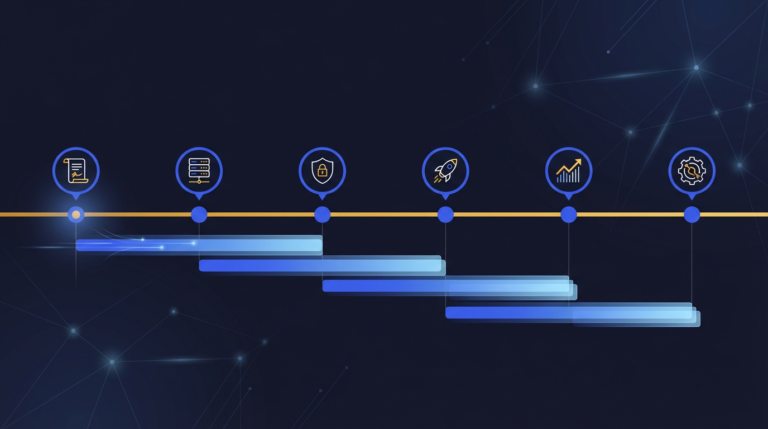
SEC rules generally require the use of a registered transfer agent for tokenized securities, particularly for Reg A+ offerings or when a company approaches the shareholder thresholds outlined in Section 12(g) of the Securities Exchange Act. The transfer agent maintains the master securityholder file, which serves as the legal source of truth regardless of the blockchain ledger’s state. Transfer agents charge monthly maintenance fees ranging from $500 to $2,000, plus transaction fees for secondary transfers. The entire end-to-end tokenization process requires careful project management to coordinate legal, technical, and regulatory workstreams.
| Phase | Key Activities | Estimated Duration |
|---|---|---|
| Assessment & Legal Strategy | Readiness review, exemption selection, SPV setup | 2 – 4 weeks |
| Document Preparation | Drafting PPM, subscription agreements, corporate resolutions | 4 – 8 weeks |
| Technical Setup | Platform integration, smart contract coding, security audit | 4 – 6 weeks |
| Capital Formation | Marketing (if permitted), KYC/AML, investor onboarding | 4 – 12 weeks |
| Distribution & Settlement | Fund reconciliation, token minting, wallet distribution | 1 – 2 weeks |
| Total Estimated Timeline | End-to-end process | 3 – 6 months |
Tokenizing company equity modernizes capital formation and shareholder management. It requires a significant upfront investment in legal counsel, smart contract audits, and platform integration. Founders must treat the process as a formal securities offering rather than a simple technology upgrade. The first step for any management team is auditing their current cap table and consulting a qualified digital asset securities attorney to determine the most cost-effective regulatory pathway.
Frequently Asked Questions
How much does it cost to tokenize company equity?
Tokenizing company equity typically costs between $50,000 and $300,000. This includes legal fees for SEC exemption filings, tokenization platform setup costs, smart contract security audits, and KYC/AML verification fees. Regulation D offerings fall on the lower end, while Regulation A+ offerings cost significantly more.
How long does the equity tokenization process take?
The end-to-end tokenization process usually takes 3 to 6 months. This timeline accounts for drafting legal documents, setting up the corporate structure, deploying and auditing the smart contracts, and conducting the actual capital raise and investor onboarding.
Do I need a transfer agent for tokenized equity?
Yes, SEC rules generally require an SEC-registered transfer agent for tokenized securities. The transfer agent maintains the official master securityholder file off-chain, which serves as the legal source of truth for ownership, regardless of the blockchain ledger’s status.
Can I use standard ERC-20 tokens for company equity?
No, standard ERC-20 tokens cannot enforce securities laws. Issuers must use compliance-focused token standards like ERC-3643 or ERC-1400, which incorporate identity registries and automatically block unauthorized transfers to ensure regulatory compliance.