Due Diligence Checklist for Tokenized Securities
Tokenized securities merge blockchain efficiency with traditional financial regulation. However, the technology wrapper does not eliminate underlying investment risks. Investors must evaluate both the traditional financial fundamentals and the novel technical infrastructure. The digital asset sector contains both highly regulated, institutional-grade offerings and poorly structured projects carrying significant legal and technical risks. Blindly trusting an issuance platform or a marketing brochure often leads to capital loss or indefinite lock-ups in illiquid assets.
This guide provides a comprehensive tokenized securities due diligence framework to assess legal compliance, issuer health, platform security, and secondary market liquidity before allocating capital. By systematically working through these verification steps, you can separate compliant digital securities from high-risk technical experiments. This checklist serves as a practical reference document to apply every time you evaluate a new tokenized offering.
Legal and regulatory due diligence
Legal due diligence for tokenized securities requires verifying the issuer’s regulatory exemption, checking SEC EDGAR filings, and confirming the registration of involved broker-dealers and transfer agents. Investors must ensure the offering complies with specific securities laws like Regulation D, Regulation A+, or Regulation Crowdfunding.
Companies issuing tokenized securities in the United States must either register their offering with the Securities and Exchange Commission or rely on a specific exemption. Most tokenized offerings utilize Regulation D Rule 506(c), which allows issuers to raise unlimited capital through general solicitation provided all investors are verified as accredited. Other common pathways include Regulation A+, which functions as a mini-IPO allowing participation from non-accredited investors, and Regulation Crowdfunding, which caps the total raise amount. Offshore offerings typically rely on Regulation S to restrict sales to non-US persons. Investors must identify the specific exemption claimed in the offering documents because this dictates who can invest, how much they can invest, and when they can legally resell the assets.
Verification requires using official government databases rather than relying on the issuer’s claims. The SEC EDGAR database provides public access to corporate filings, allowing investors to confirm that the company actually submitted the required Form D or Form 1-A. Similarly, the Financial Industry Regulatory Authority maintains the BrokerCheck system, which investors should use to verify the credentials and disciplinary history of any broker-dealer facilitating the token sale. The official SEC transfer agent registry allows you to confirm that a qualified, regulated entity maintains the official shareholder record, rather than the company attempting to manage the cap table internally on a spreadsheet.
The primary source of truth for any offering is the Private Placement Memorandum or Offering Circular. This document must detail the business operations, the management team, and all material risks associated with the investment. Investors should verify that the issuer engaged registered legal counsel experienced in securities law to draft these documents.
Legal verification checklist
- Verify the SEC exemption filing (Form D, Form 1-A, or Form C) using the EDGAR database at sec.gov/cgi-bin/browse-edgar.
- Confirm the broker-dealer placement agent holds active registration using the FINRA BrokerCheck tool.
- Check the SEC transfer agent registry to ensure a qualified entity maintains the official shareholder record.
- Review the Private Placement Memorandum or Offering Circular for completeness and disclosure of material facts.
- Search the SEC enforcement database and state securities regulator websites for past actions against the issuer or its executive team.
Issuer and management evaluation
Evaluating the issuer of a tokenized security involves analyzing audited financial statements, reviewing the management team’s track record, and scrutinizing the capitalization table. Investors must understand the corporate structure, the specific use of proceeds, and any pending litigation disclosed in the offering documents.
Tokenization does not fix a broken business model. Investors must evaluate the underlying company or asset exactly as they would a traditional private equity or real estate investment. Begin by requesting the most recent financial statements. Audited financials from a recognized accounting firm carry significantly more weight than internally generated unaudited reports. Review the balance sheet for excessive debt and analyze the income statement to understand the primary revenue drivers and operating margins. The offering document must state a specific use of proceeds outlining exactly how the raised capital will deploy. Vague allocations for general corporate purposes require deeper questioning. If you plan to how to invest in tokenized startups, understanding the cash burn rate and runway is mandatory.
The management team executing the business plan requires thorough background verification. Search for prior entrepreneurial successes, domain expertise in the specific asset class, and any history of failed ventures. Regulatory history is equally important. Investors should search for past bankruptcies, civil litigation, or securities fraud allegations involving the founders. A clean regulatory track record is non-negotiable in the highly scrutinized digital asset sector.
The legal entity structure also demands attention. Identify where the company is incorporated and map out any offshore holding companies or special purpose vehicles. Complex corporate structures spanning multiple jurisdictions often increase tax reporting burdens and complicate legal recourse if the investment fails. Request the current capitalization table to see who else holds equity in the company. A strong existing investor base of reputable venture capital firms or institutional players provides a layer of validation, whereas a cap table entirely dominated by founders with no outside capital warrants caution.
Platform and technical infrastructure assessment
Technical due diligence requires assessing the issuance platform’s regulatory status, reviewing smart contract security audits, and understanding the chosen token standard. Investors must verify that reputable firms audited the code and that the platform uses secure custody solutions for both tokens and underlying assets.
The technology provider facilitating the token issuance plays a central role in the lifecycle of the investment. Determine if the issuance platform operates as a registered broker-dealer or an Alternative Trading System under FINRA oversight. Review the platform track record by checking how many offerings they have successfully completed and the total capital raised to date. Ask about failed offerings or security breaches. The history of digital assets includes several early issuance platforms that faced SEC enforcement actions for operating unregistered exchanges. Investors need assurance that the current platform maintains strict compliance protocols and possesses the financial stability to operate for the duration of the investment horizon.
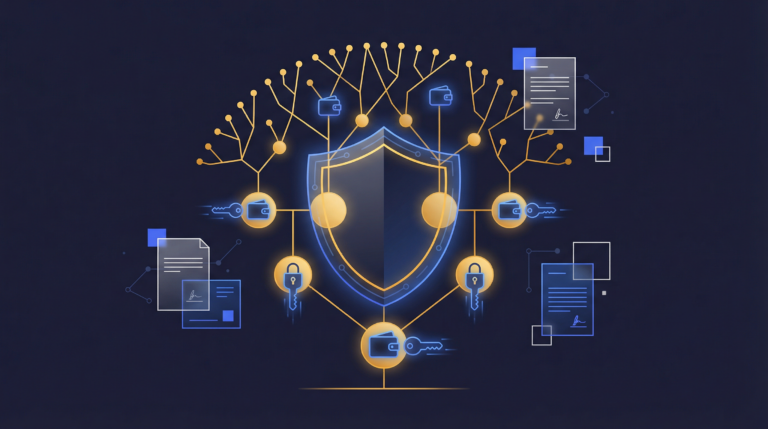
Smart contract security forms the foundation of any tokenized asset. The issuer must provide a comprehensive audit report from a recognized blockchain security firm like Trail of Bits, OpenZeppelin, Certik, or Quantstamp. This audit verifies that the code functions exactly as intended and contains no vulnerabilities that hackers could exploit. Investors should also identify the specific token standard used for the issuance. Enterprise-grade security tokens typically utilize standards like ERC-3643 or ERC-1400, which embed compliance rules directly into the token code to prevent unauthorized transfers. If you are learning what is a security token, understanding these compliance-enforcing standards is a foundational concept.
The choice of underlying blockchain also matters. Public networks like Ethereum or Polygon offer high transparency and interoperability, while private permissioned chains provide more control but limit broader market access. Finally, evaluate the custody solution. Determine if a qualified custodian holds the underlying physical assets or traditional securities, and understand how the digital tokens themselves are stored and protected from theft.
Investment terms and valuation
Investment terms due diligence focuses on valuation methodology, token pricing, and shareholder rights. Investors must review the offering documents to understand lock-up periods, ongoing transfer restrictions, dividend distribution schedules, voting rights, and the token holder’s position in the capital stack.
Understanding the financial mechanics of the offering begins with the valuation methodology. The offering documents should clearly explain how the issuer determined the total enterprise value or asset value and how that translates to the individual token price. Compare this valuation against similar traditional assets to ensure the issuer is not charging a premium simply for the tokenization wrapper. Investors must also identify all lock-up periods. According to SEC Rule 144, securities issued under Regulation D typically carry a mandatory 12-month holding period before investors can sell them in secondary markets. Some platforms enforce even longer lock-ups or impose ongoing restrictions that limit transfers exclusively to other verified users on the same platform.
Token holders must know exactly what legal rights their digital assets carry. Review the operating agreement to confirm dividend or distribution rights and the schedule for those payments. Determine if the tokens carry voting rights on corporate matters or if management retains complete control. Liquidation preferences dictate who gets paid first if the company sells or goes bankrupt. Tokenized equity often sits at the bottom of the capital stack, meaning debt holders and preferred equity investors receive their capital back before token holders see any return. Before you how to invest in tokenized assets, you must read the fine print regarding your legal standing in a liquidation scenario.
Secondary market and liquidity analysis
Analyzing secondary market liquidity involves identifying where the tokenized security can legally trade after lock-up periods expire. Investors should review trading volumes on regulated alternative trading systems, check for designated market makers, and determine if the issuer offers any direct redemption mechanisms.
The promise of enhanced liquidity is a primary selling point for tokenization, but investors must separate marketing claims from market reality. Identify exactly where to buy security tokens and where you can legally sell them once your lock-up period expires. The tokens must trade on a regulated Alternative Trading System that supports digital assets. Review the historical trading volumes for comparable assets on these venues. Low daily trading volume means you may struggle to exit a large position without significantly depressing the token price. Ask the issuer if they have engaged a designated market maker to provide continuous bid and ask prices on the secondary venue.
Examine the typical bid-ask spreads for existing tokens on the target exchange. Wide spreads indicate an illiquid market where trading costs will eat into your investment returns. Because secondary markets for private securities remain relatively nascent, some issuers provide a direct redemption mechanism. This allows investors to sell their tokens back to the company at a specified price or net asset value after a certain holding period. A formal redemption program serves as a critical liquidity backstop if secondary market demand fails to materialize. If no such mechanism exists, you must be prepared to hold the asset indefinitely.
Risk assessment framework
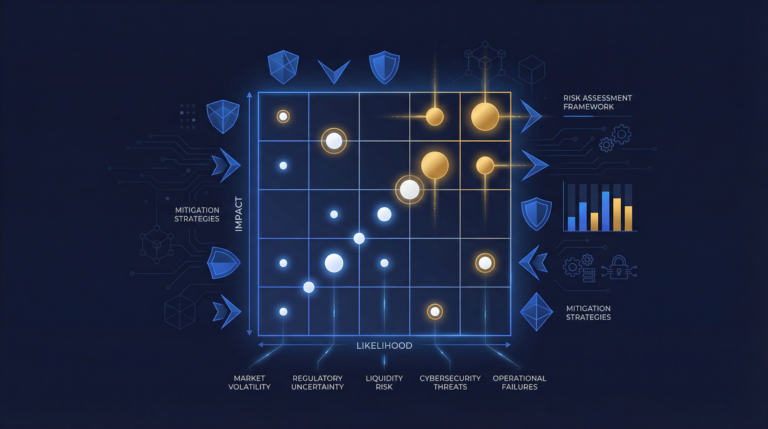
A robust risk assessment framework for tokenized securities evaluates concentration risk, platform dependency, and regulatory uncertainty. Investors must review the specific risk factors outlined in the offering memorandum and understand the disaster recovery protocols if the issuance platform ceases operations.
Every private placement memorandum contains a dedicated section detailing risk factors. Read this section entirely. It outlines the specific business, market, and technical threats that could result in a total loss of capital. Evaluate your concentration risk to ensure this single investment does not make up an outsized portion of your total portfolio. You must also assess the risks of investing in tokenized assets related to platform dependency. If the issuance platform or custody provider goes bankrupt, you need a clear legal mechanism to recover your underlying assets. The smart contracts should include recovery functions that allow an authorized administrator to burn lost tokens and reissue them to rightful owners.
Regulatory uncertainty remains a persistent risk factor in the digital asset economy. Changes in securities laws, tax treatment, or banking regulations could materially affect the viability of the investment or the platform facilitating it. Cross-border investments carry additional jurisdictional risks, as conflicting international regulations can complicate token transfers and dividend payments. Investors should maintain a tokenization glossary to stay current on evolving legal definitions and technical terminology. A comprehensive tokenized securities due diligence process requires acknowledging these risks upfront and sizing your investment accordingly.
Conducting tokenized securities due diligence demands a hybrid approach. Investors must apply the rigorous financial and legal analysis used in traditional private markets while simultaneously evaluating the novel technical infrastructure of blockchain networks. Verifying SEC exemptions, auditing smart contract security, and analyzing secondary market liquidity are non-negotiable steps before allocating capital. The efficiency of digital securities does not eliminate the fundamental risks of early-stage investing or private market illiquidity. By systematically working through this due diligence checklist, investors can look past the technological novelty and make objective, data-driven decisions about the underlying asset quality and legal protections.
Frequently Asked Questions
What is the most common SEC exemption for tokenized securities?
Regulation D Rule 506(c) is the most common exemption used for tokenized securities in the United States. This rule allows issuers to raise unlimited capital through general solicitation, provided they take reasonable steps to verify that all investors are accredited.
How long is the lock-up period for Reg D security tokens?
Security tokens issued under Regulation D typically carry a mandatory 12-month lock-up period under SEC Rule 144. During this time, investors cannot sell or transfer their tokens in secondary markets, though some platforms may enforce even longer restrictions based on their own compliance protocols.
How do I verify a token issuance platform’s regulatory status?
You can verify a platform’s regulatory status by searching the FINRA BrokerCheck database. If the platform facilitates secondary trading, you should also check the SEC’s active list of Alternative Trading Systems to confirm they hold the appropriate licenses to operate.
Why do security tokens need smart contract audits?
Smart contract audits verify that the token’s underlying code functions correctly and contains no security vulnerabilities. Reputable firms review the code to ensure hackers cannot exploit the contract and that mandatory compliance rules, like transfer restrictions, execute exactly as programmed.