Best Blockchain for Tokenization: Ethereum vs Polymesh
Selecting the best blockchain for tokenization is the most consequential technical decision a founder or institutional issuer will make when structuring a digital asset. Unlike traditional software applications where migrating databases is a routine operational task, moving a regulated financial asset across distributed ledgers after issuance requires complex legal restructuring, token burning, and massive coordination with custodians. The market has matured rapidly past its experimental phases, with major asset managers now deploying billions of dollars in capital directly onto public networks. Because this infrastructure choice is effectively permanent, understanding the specific trade-offs between general-purpose networks and purpose-built compliance chains is mandatory for project success.
Founders must evaluate blockchain networks across multiple conflicting dimensions, balancing regulatory compliance capabilities against liquidity access and operational costs. The blockchain you select dictates your asset’s absolute limits regarding ecosystem size, institutional perception, and secondary market trading capabilities. A network with high throughput and low costs might lack the necessary smart contract standards to enforce jurisdictional transfer restrictions, rendering it useless for compliant security tokens. Conversely, a highly regulated, permissioned network might satisfy compliance officers but fail to attract the decentralized finance liquidity that makes tokenization valuable in the first place. This guide provides a definitive technical comparison of the leading networks to help issuers select the optimal foundation for their digital assets.
Why blockchain infrastructure dictates tokenized asset success
The blockchain network you choose determines your asset’s compliance enforcement mechanisms, transaction costs, settlement speed, and total addressable market. Switching ledgers post-issuance requires burning existing tokens and reissuing them on a new chain, making your initial infrastructure selection a permanent operational commitment that dictates institutional adoption.
Understanding exactly how tokenization works requires acknowledging that the underlying ledger serves as the ultimate source of truth for asset ownership and transfer restrictions. When an issuer creates a security token, the blockchain must enforce compliance rules simultaneously with the transfer of value. On general-purpose blockchains, this enforcement happens at the application layer through complex smart contracts that check investor whitelists before allowing a transaction to settle. If the underlying blockchain lacks the execution environment to process these complex checks efficiently, the network becomes unusable for regulated financial instruments. Furthermore, the network must support institutional-grade custody solutions, as regulated funds cannot hold private keys in standard retail web wallets. If major custodians like Fireblocks, Anchorage, or BitGo do not support the specific blockchain you choose, institutional investors simply cannot buy your tokenized asset.
Ecosystem size and network effects play an equally critical role in the long-term viability of a tokenized product. A token issued on an obscure network with minimal developer activity will suffer from a lack of integrated decentralized exchanges, lending protocols, and portfolio management tools. Liquidity naturally aggregates on networks where capital already resides, which forces issuers to choose between launching on a crowded, expensive network with deep liquidity or a fast, cheap network with isolated capital pools. Transaction costs also scale differently depending on the network architecture, directly impacting the economic feasibility of the asset. If a tokenized money market fund generates a 5% annual yield, but network gas fees consume 2% of that yield during routine transfers and dividend distributions, the tokenized structure destroys value rather than creating it. Therefore, issuers must model their expected transaction velocity against the network’s historical fee volatility.
Ethereum tokenization and the dominance of EVM networks
Ethereum remains the dominant choice for tokenized real-world assets, holding approximately 70% of the market share by total value locked according to industry data from RWA.xyz. Its massive developer ecosystem, battle-tested security model, and universal support among institutional custodians make it the default infrastructure for regulated digital assets.
The institutional migration to Ethereum is observable through major asset deployments, most notably BlackRock’s Institutional Digital Liquidity Fund (BUIDL), which launched directly on the Ethereum mainnet. Ethereum’s primary advantage lies in its absolute dominance of the developer tooling and standardization landscape. The network hosts the most comprehensive suite of compliance tools, specifically the ERC-3643 security token standard, which enforces identity verification and transfer restrictions at the smart contract level. When an issuer uses Ethereum, they gain immediate compatibility with virtually every institutional custodian, crypto-native wallet, and decentralized finance protocol in existence. This composability allows a tokenized treasury bill issued on Ethereum to be seamlessly used as collateral in lending protocols, maximizing the capital efficiency of the asset. The institutional perception of Ethereum has shifted from a volatile cryptocurrency network to a global, neutral settlement layer for institutional finance.
However, Ethereum’s base layer suffers from severe scalability constraints and prohibitive transaction costs that can render high-velocity tokenization economically unviable. During periods of high network congestion, executing a complex compliance smart contract on the Ethereum mainnet can cost upwards of $50 per transaction. To mitigate this, the tokenization industry is aggressively expanding into the Ethereum Layer 2 ecosystem, utilizing networks like Polygon, Arbitrum, Optimism, and Coinbase’s Base network. These Layer 2 solutions inherit the base layer security of Ethereum while reducing transaction costs to fractions of a cent. Polygon has seen significant traction with platforms like Franklin Templeton experimenting on its architecture, while Base is rapidly becoming a preferred venue for regulated assets due to Coinbase’s underlying compliance infrastructure. Issuers must weigh the lower costs of Layer 2 networks against the slight reduction in immediate liquidity and the added complexity of bridging assets across different Ethereum-aligned environments.
Polymesh versus Ethereum for regulated security tokens
Polymesh is a purpose-built Layer 1 blockchain engineered specifically for regulated securities, handling identity and compliance at the core protocol level rather than through smart contracts. While it offers deterministic finality and superior regulatory clarity, it possesses a significantly smaller ecosystem and less DeFi composability than Ethereum.
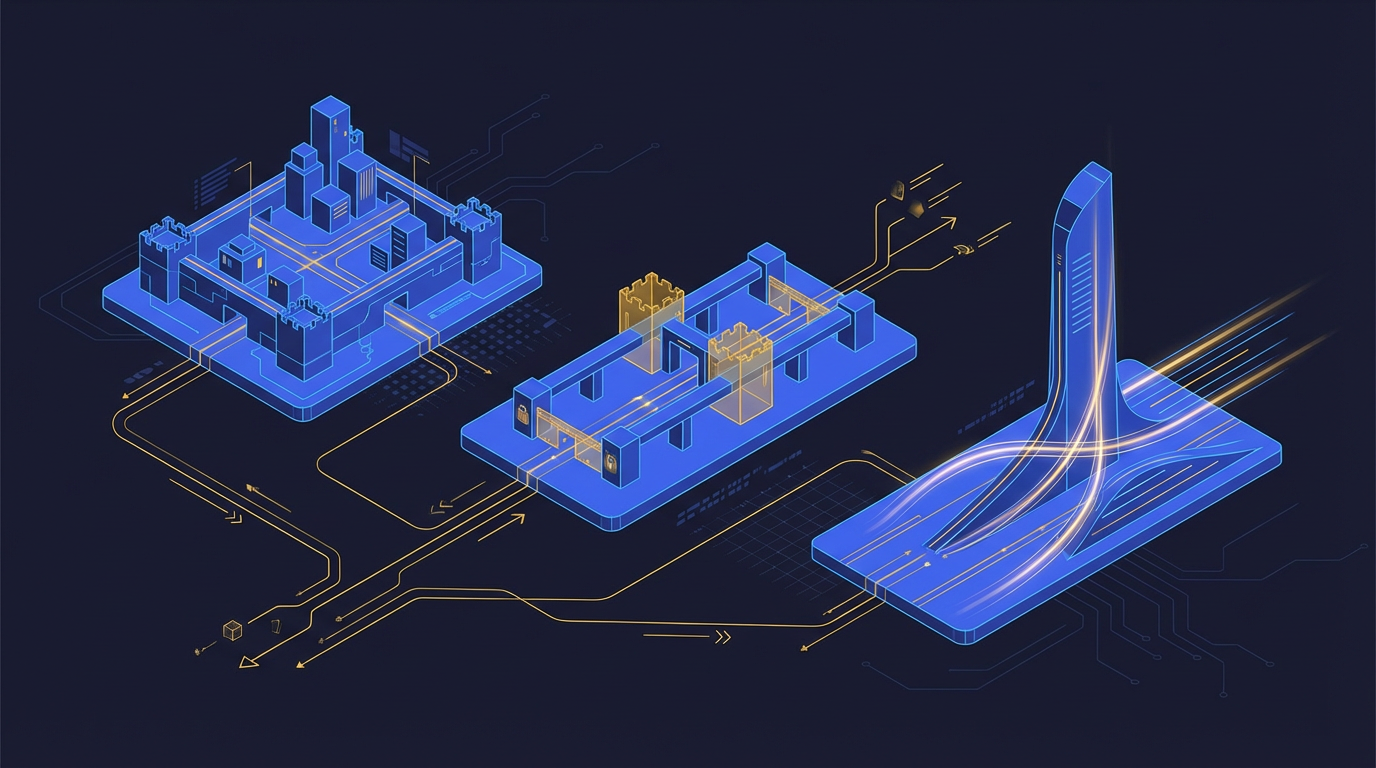
The fundamental architectural difference in the Polymesh vs Ethereum debate centers on where compliance logic resides. On Ethereum, anyone can create an anonymous wallet and interact with the network, forcing issuers to build complex smart contract walls around their specific tokens to keep non-compliant actors out. Polymesh inverts this model by requiring all network participants to pass identity verification before they can even generate a wallet or interact with the chain. This native identity framework means compliance rules are processed by the blockchain’s core consensus mechanism. Furthermore, block production on Polymesh is restricted to known, regulated financial entities, entirely eliminating the regulatory ambiguity associated with anonymous miners or validators processing sanctioned transactions. For compliance officers at conservative financial institutions, this permissioned architecture provides a level of legal certainty that public, permissionless networks struggle to match.
Despite its technical superiority for strict regulatory compliance, Polymesh requires issuers to accept substantial trade-offs regarding market access and ecosystem integration. A detailed Polymath and Polymesh review reveals that the network lacks the massive decentralized finance infrastructure that makes Ethereum attractive. There are fewer decentralized exchanges, lending markets, and third-party developer tools available on the network. Institutional custodians are also slower to integrate purpose-built chains, often prioritizing broad EVM compatibility over niche security token networks. Issuers choosing Polymesh are making a deliberate bet that institutional investors value legal certainty and deterministic settlement over immediate access to global, permissionless liquidity pools. This makes the network highly suitable for private equity, closed-end real estate funds, and institutional debt instruments where secondary market trading velocity is naturally low and compliance requirements are exceptionally strict.
Evaluating Solana Avalanche and Stellar for tokenization
Alternative networks offer specialized architectures that solve specific tokenization challenges, from high-frequency trading capabilities to isolated institutional environments. Solana provides unparalleled speed and low costs, Avalanche enables custom-built permissioned subnets, and Stellar maintains a strong track record for processing high-volume tokenized funds.
Solana presents a compelling but complicated proposition for asset tokenization. The network boasts theoretical speeds of 65,000 transactions per second and regularly processes roughly 4,000 actual transactions per second with sub-cent fees. This performance profile makes Solana theoretically ideal for high-velocity tokenized assets, such as tokenized foreign exchange, consumer payment instruments, or high-frequency trading collateral. However, Solana severely trails EVM networks in dedicated compliance tooling and institutional security token standards. The network is historically associated with retail decentralized finance, consumer applications, and non-fungible tokens rather than regulated securities. While institutional interest in Solana is growing, issuers will find a smaller selection of out-of-the-box compliance providers and fewer qualified custodians ready to support complex restricted assets on the network. Solana is best suited for utility-heavy tokenized assets where transaction throughput is the absolute primary requirement and regulatory restrictions are relatively light.
Avalanche and Stellar offer distinctly different value propositions that have successfully attracted major institutional issuers. Avalanche’s architecture allows institutions to deploy “Evergreen Subnets”-custom, application-specific blockchains where the issuer controls exactly who can operate a validator node and who can access the network. This allows banks to create private, compliant environments that can still communicate with the broader public Avalanche network when necessary, offering a middle ground between private enterprise ledgers and fully public blockchains. Stellar, conversely, has carved out a highly successful niche in the tokenized money market space. Franklin Templeton notably chose Stellar for its FOBXX tokenized fund, citing the network’s efficiency in processing high volumes of low-value transactions and its integrated decentralized exchange features. Any comprehensive RWA tokenization guide must acknowledge that while Ethereum dominates total value, networks like Stellar and Avalanche are securing major, highly visible institutional deployments based on their specific architectural strengths.
Tokenization blockchain comparison and decision framework
Choosing the optimal blockchain requires mapping your specific asset characteristics against network capabilities. Issuers must evaluate transaction velocity, required compliance strictness, target investor demographics, and necessary ecosystem integrations to determine which ledger architecture best supports their financial product.
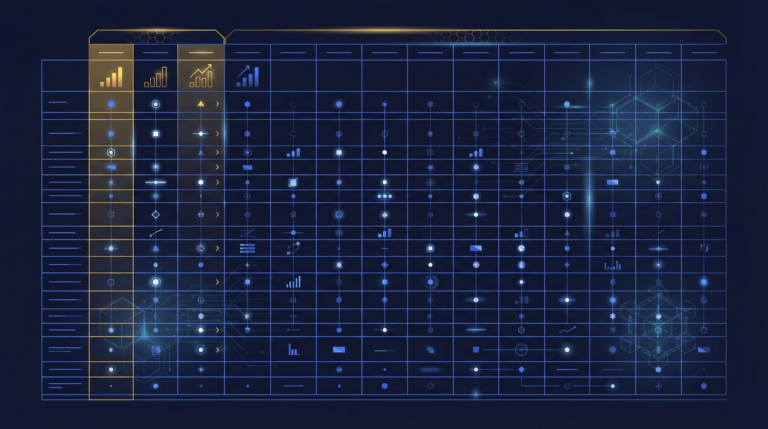
To facilitate this decision, we have aggregated the critical technical and practical dimensions of the leading networks into a comprehensive comparison framework. This data reflects current network states and institutional adoption metrics, providing a factual basis for infrastructure selection.
| Feature Dimension | Ethereum (L1) | Polymesh | Solana | Avalanche (Subnets) | Stellar |
|---|---|---|---|---|---|
| Actual TPS | ~15-30 | ~1,000 | ~4,000 | ~4,500 (per subnet) | ~1,500 |
| Time to Finality | ~12-15 minutes | Instant (Deterministic) | ~400 milliseconds | ~1-2 seconds | ~3-5 seconds |
| Avg. Transaction Cost | $2.00 – $50.00+ | < $0.01 | < $0.01 | Variable (Custom) | < $0.01 |
| Compliance Enforcement | Smart Contract Layer | Protocol Layer | Smart Contract Layer | Subnet/Validator Layer | Protocol Layer |
| Security Token Standards | ERC-3643, ERC-1400 | Native Assets | SPL (Custom logic) | ERC-20 (with custom logic) | Native Trustlines |
| Institutional Examples | BlackRock, Securitize | RedSwan CRE | Ondo Finance | Citi, Wellington | Franklin Templeton |
| Developer Ecosystem | Massive | Niche | Large | Medium | Medium |
| DeFi Composability | Very High | Low | High | Medium (Isolated) | Low |
| Wallet/Custody Support | Universal | Limited | Broad | Broad | Moderate |
| Regulatory Perception | Generally Accepted | Highly Favorable | Developing | Favorable (Subnets) | Favorable |
The decision framework for selecting among the best tokenization platforms ultimately comes down to prioritizing either ecosystem size or architectural compliance. Choose Ethereum or an EVM-compatible Layer 2 if your primary goal is maximizing the total addressable market, integrating with decentralized finance protocols, and ensuring universal custodian support. The higher gas costs and complex smart contract requirements are acceptable trade-offs for accessing the largest pool of digital asset liquidity. Choose Polymesh if you are issuing a highly regulated security where legal certainty, known validator nodes, and protocol-level identity enforcement are mandatory requirements from your internal compliance department or external regulators.
For specialized use cases, alternative networks provide the necessary technical capabilities that the market leaders lack. Choose Avalanche subnets if you represent a large financial institution that requires a walled-garden environment for interbank transfers but wants the option to interoperate with public networks eventually. Choose Solana only if your tokenized asset requires thousands of transactions per second and you possess the internal engineering resources to build custom compliance logic that the ecosystem currently lacks. Choose Stellar if you are issuing a high-volume payment instrument or yield-bearing retail product where simple, fast, and cheap transfers are the primary operational requirement. By aligning your asset’s financial characteristics with the correct ledger architecture, you establish a resilient foundation for your tokenized offering.
Frequently Asked Questions
Which blockchain has the most tokenized real-world assets?
Ethereum currently holds the largest market share for tokenized real-world assets, accounting for approximately 70% of total value locked. Major financial institutions like BlackRock choose Ethereum due to its massive developer ecosystem, universal custodian support, and battle-tested security standards.
Why would an issuer choose Polymesh over Ethereum?
Issuers choose Polymesh because it builds regulatory compliance directly into the core blockchain protocol rather than relying on smart contracts. Polymesh requires all node operators to be regulated financial entities and mandates identity verification for all users, providing superior legal certainty for strict security tokens.
Are Ethereum gas fees too high for tokenization?
Ethereum mainnet gas fees can be prohibitively expensive for high-velocity token transfers or small retail transactions. To solve this, the tokenization industry is rapidly adopting Ethereum Layer 2 networks like Polygon, Arbitrum, and Base, which reduce transaction costs to fractions of a cent while maintaining security.
Can Solana be used for regulated security tokens?
Solana can host regulated security tokens, but its ecosystem currently lacks the deep institutional compliance tooling found on EVM networks. While its high throughput and low costs are attractive, issuers often have to build custom compliance architecture to enforce transfer restrictions on the Solana network.