RWA Tokenization: The Real-World Asset Revolution Explained
RWA tokenization represents the most significant structural shift in financial plumbing since the transition from paper certificates to electronic book-entry systems in the 1970s. By placing traditional financial instruments-from US Treasuries and corporate debt to real estate and commodities-on distributed ledgers, institutions are fundamentally altering how value settles and transfers globally. The hype surrounding digital assets has historically focused on native cryptocurrencies, but the dominant narrative in institutional blockchain adoption since 2023 is squarely focused on tokenized real world assets. This migration of legacy assets to blockchain infrastructure promises atomic settlement, programmable compliance, and fractional ownership for previously illiquid markets. However, the transition requires navigating complex regulatory frameworks, fragmented liquidity pools, and nascent technological standards. Asset managers and investment banks are not building these systems as experimental side projects; they are deploying billions of dollars in active funds to capture the efficiency gains inherent in cryptographic ledgers. This comprehensive guide examines the current state of the market, the specific products driving institutional adoption, the infrastructure powering these systems, and the precise conditions required to bridge the gap between today’s billions in assets under management and the trillions projected by the end of the decade.
What RWA tokenization means for capital markets
RWA tokenization is the process of representing legal ownership of physical or traditional financial assets as digital tokens on a blockchain. This mechanism allows institutions to issue, trade, and settle assets like government bonds, private credit, and real estate using distributed ledger technology rather than legacy clearinghouses.
The financial industry has recognized that blockchain technology offers a superior database architecture for managing asset ownership and transfer. Since early 2023, the focus has shifted entirely from speculative crypto assets toward institutional tokenization, driven by a high-interest-rate environment that made tokenized US Treasuries highly attractive to decentralized finance participants. When yields on stablecoins plummeted, crypto-native corporate treasuries needed a mechanism to capture the 5% yields available in traditional government debt, sparking the initial wave of RWA crypto products. This created a bridge between traditional finance and decentralized finance, establishing the technical and legal frameworks necessary to bring off-chain assets on-chain. The process involves establishing a special purpose vehicle to hold the underlying asset, utilizing smart contracts to define the token’s rules, and deploying these tokens on public or permissioned blockchains. If you read any asset tokenization definitive guide, you will find that the legal wrapper is just as critical as the smart contract code. Without a legally binding connection between the digital token and the physical asset, the token holds no intrinsic value.
Building this ecosystem requires robust infrastructure spanning multiple technology layers across different network environments. Ethereum currently dominates the landscape for tokenized real world assets, holding the vast majority of total value locked due to its deep liquidity, battle-tested security, and established developer tooling. However, platforms like Polygon, Avalanche, Stellar, Mantle, and purpose-built chains like Polymesh are aggressively capturing market share by offering lower transaction costs and specialized compliance features baked directly into the protocol layer. Choosing the best blockchain for tokenization depends heavily on the asset class, the regulatory jurisdiction, and the target investor base. Beyond the base layer ledger, these systems rely entirely on oracle networks to function securely. Chainlink’s Cross-Chain Interoperability Protocol (CCIP) has emerged as the standard for transmitting data and value across disparate networks, ensuring that off-chain pricing data for assets accurately reflects in the on-chain token. This oracle infrastructure prevents pricing discrepancies and enables the automated execution of smart contracts based on real-world events, such as distributing dividend payments when an off-chain company reports earnings.
The convergence of decentralized finance and traditional finance represents the most active segment of the current market. Protocols such as Centrifuge, Maple Finance, Goldfinch, and Ondo Finance operate at this intersection, building tokenized yield products that channel crypto capital into real-world business operations. Centrifuge, for example, has processed hundreds of millions in total originations, allowing businesses to finance real estate, trade invoices, and consumer credit through blockchain-based liquidity pools. Ondo Finance has captured significant market share with products like USDY, a tokenized note secured by short-term US Treasuries and bank demand deposits, bringing institutional-grade yield to decentralized platforms. While these systems offer higher yields than traditional bank accounts and operate with greater transparency, they introduce distinct risks. Investors face smart contract vulnerabilities, potential defaults by off-chain borrowers, and the reality that legal recourse in cross-border tokenized lending remains largely untested in courts. The technical bridge works flawlessly, but the legal enforcement mechanisms for liquidating collateral in the event of default are still being established.
Current market state and institutional adoption
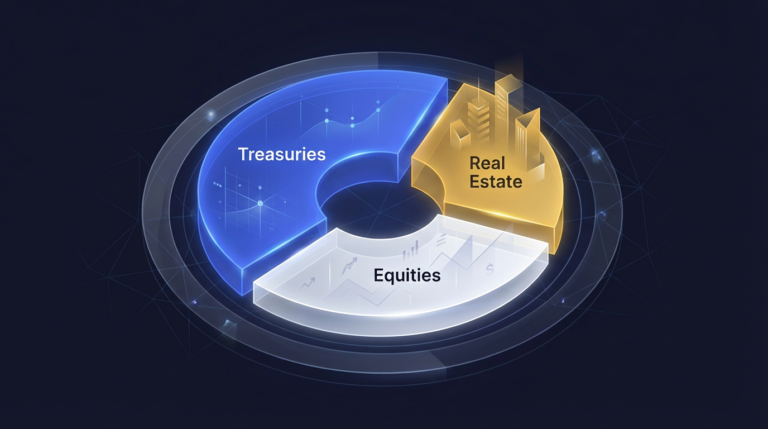
The current real-world asset tokenization market manages approximately $12 billion in total value locked, excluding fiat-backed stablecoins. According to data from rwa.xyz, tokenized private credit represents the largest sector at roughly $8 to $9 billion, followed by tokenized US Treasuries which have grown to approximately $3 billion.
This market composition reflects a pragmatic approach to blockchain adoption, prioritizing assets that benefit most from immediate settlement and automated yield distribution. The tokenized US Treasuries sector has seen explosive growth, serving as the primary gateway for institutional capital entering the blockchain ecosystem. Asset managers require a cash equivalent that generates yield while residing on-chain to interact with decentralized applications or to park capital between digital asset trades. The tokenized private credit market, while larger in total assets under management, consists primarily of debt facilities structured for emerging market businesses, trade finance, and real estate development projects. If you consult a real estate tokenization guide, you will notice that direct fractional ownership of physical properties remains a niche market compared to the massive volumes seen in tokenized debt and credit instruments. The market has clearly signaled that yield-bearing debt instruments are the killer application for current tokenization infrastructure, as they offer immediate utility to investors seeking predictable returns without the volatility of native cryptocurrencies.
The entry of the world’s largest asset managers has fundamentally validated the technology and accelerated institutional participation. BlackRock launched the BlackRock USD Institutional Digital Liquidity Fund, known as BUIDL, on the Ethereum blockchain in March 2024. The BlackRock BUIDL fund explained simply is a tokenized money market fund that invests entirely in cash, US Treasury bills, and repurchase agreements. With a minimum investment of $5 million, BUIDL quickly became the largest tokenized treasury product, surpassing $500 million in assets under management within months of its launch. Franklin Templeton pioneered this space earlier with its OnChain U.S. Government Money Fund (FOBXX), utilizing the BENJI token. Franklin Templeton deployed BENJI across multiple blockchains including Stellar and Polygon, allowing retail and institutional investors to hold shares of a government money fund in digital wallets. For those reading a tokenized US Treasuries investment guide, the distinction between BlackRock’s institutional-only approach and Franklin Templeton’s broader retail accessibility highlights the divergent strategies asset managers are deploying to capture market share in this rapidly expanding sector.
Beyond asset managers, global investment banks are deploying proprietary blockchain infrastructure to tokenize deposits, execute repo transactions, and issue digital bonds. JPMorgan’s Onyx platform operates as a permissioned blockchain that processes billions of dollars in daily transaction volume, primarily focusing on intraday repurchase agreements and cross-border payments through JPM Coin. Citi launched Citi Token Services to convert customer deposits into digital tokens, enabling institutional clients to execute instantaneous cross-border payments and automated trade finance solutions around the clock. HSBC introduced HSBC Orion, a digital assets platform that the bank has already used to issue tokenized bonds for the European Investment Bank and the Hong Kong government. Siemens demonstrated corporate adoption by issuing a €60 million digital bond directly on the Polygon blockchain, bypassing traditional central securities depositories entirely to reduce settlement times and administrative costs. These banking initiatives operate largely in siloed, permissioned environments, contrasting sharply with the public blockchain strategies pursued by asset managers, but they collectively prove that distributed ledger technology is ready for enterprise-grade financial operations.
The gap between market projections and current reality
Major consulting firms project the tokenization market will reach between $2 trillion and $30 trillion by 2030. Reaching these figures requires overcoming severe regulatory fragmentation, standardizing cross-chain interoperability, and migrating massive legacy systems to blockchain infrastructure to bridge the gap from today’s $12 billion market.
The financial industry has produced a wide range of tokenization market size projections over the past two years, reflecting both immense optimism and varying definitions of what constitutes a tokenized asset. A widely cited October 2024 report by Boston Consulting Group estimates that the tokenization of global illiquid assets will reach $16 trillion by 2030, driven by the fractionalization of real estate, private equity, and alternative funds. McKinsey & Company offers a more conservative baseline, projecting a $2 trillion market size by the end of the decade, explicitly excluding cryptocurrencies and stablecoins from their calculation. At the upper end of the spectrum, a joint report by Standard Chartered and Synpulse forecasts that tokenized real-world assets could reach $30 trillion by 2034, driven primarily by trade finance, institutional lending, and sovereign bonds. These figures assume a compounding annual growth rate that dwarfs almost any other sector in global finance. However, comparing these multi-trillion-dollar projections against the current $12 billion in active, non-stablecoin tokenized assets reveals a massive chasm between theoretical potential and present-day execution.
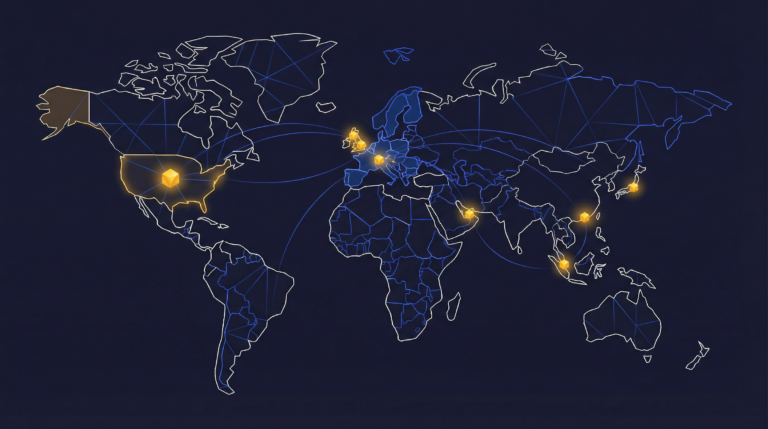
Closing this gap requires solving several structural and regulatory challenges that currently constrain growth and keep conservative capital on the sidelines. Regulatory fragmentation stands as the primary barrier, as different jurisdictions treat tokenized assets under entirely different legal frameworks. An asset tokenized in Singapore under the Monetary Authority of Singapore’s Project Guardian framework cannot easily be sold to a US investor due to strict Securities and Exchange Commission regulations governing digital asset securities. Additionally, liquidity fragmentation across dozens of incompatible blockchains creates isolated pools of capital, negating the efficiency benefits that tokenization is supposed to deliver. Smart contract risk remains a persistent threat, as any vulnerability in the code managing a tokenized asset can lead to catastrophic financial loss. Custodial risk also complicates adoption, as institutional investors require qualified custodians that can legally and technically secure cryptographic private keys while satisfying stringent regulatory audits and insurance requirements.
The transition from $12 billion to $16 trillion will not occur through a sudden, massive migration of global equities or real estate markets. Instead, the market will scale through the steady tokenization of specific, high-friction asset classes where blockchain provides immediate, measurable cost reductions. Repurchase agreements, private credit, and money market funds will continue to lead this charge because they suffer from T+1 or T+2 settlement delays in traditional systems, whereas blockchain enables atomic, instantaneous settlement. As oracle networks mature and legal precedents establish clear mechanisms for recovering off-chain assets when on-chain defaults occur, institutional confidence will grow. The ultimate success of RWA tokenization depends entirely on the technology fading into the background. When asset managers and investors utilize tokenized assets simply because they are faster and cheaper to settle, without needing to understand the underlying cryptographic architecture, the multi-trillion-dollar projections will finally materialize.
RWA tokenization is systematically upgrading the infrastructure of global capital markets. The transition from legacy ledgers to blockchain-based asset management is no longer a theoretical concept championed only by crypto enthusiasts; it is an active, multi-billion-dollar reality driven by the world’s largest financial institutions. While the current market size of approximately $12 billion remains a fraction of the trillions projected by major consulting firms, the foundational architecture is now firmly in place. Products like BlackRock’s BUIDL and Franklin Templeton’s BENJI have proven that institutional capital will adopt digital assets when presented with familiar, yield-bearing structures housed within compliant legal frameworks. As regulatory clarity improves and cross-chain interoperability standards solidify, the friction between traditional finance and decentralized systems will continue to decrease. For financial professionals, investors, and technology executives, understanding RWA tokenization is no longer optional. It is the definitive mechanism by which value will be issued, traded, and settled in the next decade of global finance.
Frequently Asked Questions
What is RWA tokenization?
RWA tokenization is the process of representing legal ownership of physical or traditional financial assets as digital tokens on a blockchain. This allows assets like government bonds, real estate, and private credit to be traded and settled instantaneously using distributed ledger technology.
How large is the tokenized asset market?
The current tokenized asset market manages approximately $12 billion in assets under management, excluding fiat-backed stablecoins. Tokenized private credit accounts for roughly $8 billion, while tokenized US Treasuries represent approximately $3 billion of the total market share.
Which blockchains are used for tokenization?
Ethereum currently dominates the institutional tokenization market due to its deep liquidity and established infrastructure. However, asset managers are increasingly deploying on networks like Polygon, Stellar, Avalanche, and purpose-built institutional chains like Polymesh to reduce transaction costs and enhance compliance controls.
What is BlackRock’s BUIDL fund?
BlackRock’s BUIDL is a tokenized money market fund launched on the Ethereum blockchain that invests in cash, US Treasury bills, and repurchase agreements. It requires a $5 million minimum investment and pays yield daily via token airdrops to qualified institutional investors.
What are the main risks of tokenized assets?
The primary risks include regulatory fragmentation across jurisdictions, smart contract vulnerabilities that could lead to asset loss, and liquidity fragmentation across incompatible blockchains. Investors also face challenges in enforcing legal rights to off-chain assets during on-chain defaults.