Tokenization in India: SEBI Regulation & 30% Crypto Tax
India presents one of the most complex environments for digital assets globally. With a population exceeding 1.4 billion and rapidly expanding capital markets, the country offers enormous scale for financial technology operators. However, founders and institutions looking to launch tokenized assets face a formidable barrier of regulatory ambiguity and punitive taxation. Understanding India SEBI tokenization regulation requires navigating a fractured framework where the central bank remains skeptical, the securities regulator has yet to issue formal guidelines, and the tax authority treats all digital assets with heavy penalties. This guide examines the current legal structure governing tokenized securities in India, the mechanics of the 30% crypto tax, the ongoing digital rupee pilot, and the emerging offshore alternative located in GIFT City.
The evolution of India’s digital asset regulatory framework
India’s digital asset regulations evolved from an outright banking ban to a punitive tax regime. The Reserve Bank of India prohibited banks from serving crypto businesses in April 2018, a directive the Supreme Court overturned in March 2020. The government subsequently abandoned a blanket ban in favor of heavy taxation.
The regulatory history of digital assets in India is defined by sharp reversals and institutional friction. The Reserve Bank of India (RBI) issued a circular on April 6, 2018, that effectively severed the domestic cryptocurrency industry from the formal banking system. This directive prohibited all RBI-regulated entities from dealing in or providing services to businesses dealing with virtual currencies. The ban severely restricted market access and forced several early domestic exchanges to shut down or relocate their operations offshore. The industry fought back through the judicial system, leading to a definitive ruling in March 2020. In the case of Internet and Mobile Association of India v. Reserve Bank of India, the Supreme Court of India struck down the RBI circular, ruling that the central bank’s action was disproportionate and violated the freedom to carry on trade guaranteed by the Indian Constitution.
Following the Supreme Court ruling, the Indian government explored legislative options to control the digital asset market. Lawmakers drafted the Cryptocurrency and Regulation of Official Digital Currency Bill in 2021, which initially proposed banning all private cryptocurrencies while laying the groundwork for a central bank digital currency. The government ultimately chose not to table this bill in Parliament. Instead of a statutory ban, authorities implemented a strategy of containment through taxation. The Finance Act 2022 established a comprehensive and restrictive tax framework for all virtual digital assets, treating them similarly to speculative activities like gambling. This shift from prohibition to heavy taxation defines the current operating environment for any platform handling digital tokens in the domestic market, distinguishing India’s approach from other jurisdictions outlined in our guide to tokenization regulations by country.
SEBI’s position on tokenized securities and digital assets
The Securities and Exchange Board of India (SEBI) has not published a dedicated regulatory framework for tokenized securities. If a digital token meets the definition of a security under the Securities Contracts (Regulation) Act 1956, it falls under SEBI’s jurisdiction, subjecting issuers to traditional prospectus and compliance requirements.
The Securities and Exchange Board of India (SEBI) regulates the domestic capital markets under the SEBI Act 1992, but it has maintained a cautious distance from the broader digital asset sector. Unlike regulators in other major Asian financial hubs, SEBI has not established a specific regime for security tokens or distributed ledger technology in public markets. The legal classification of a tokenized asset depends entirely on whether it meets the definition of a security under the Securities Contracts (Regulation) Act 1956 (SCRA). The SCRA defines securities broadly to include shares, scrips, stocks, bonds, debentures, and other marketable securities of a like nature. If a tokenized instrument represents debt or equity in a corporate entity, it automatically falls under SEBI’s jurisdiction. Consequently, issuers must comply with the exact same prospectus, disclosure, and listing requirements as traditional public offerings.
The lack of a tailored framework creates significant friction for institutional tokenization. Traditional securities regulations mandate specific procedures for clearing, settlement, and depository operations that do not easily translate to blockchain infrastructure. SEBI requires securities to be held in dematerialized form through registered depositories like the National Securities Depository Limited (NSDL) or Central Depository Services Limited (CDSL). Integrating a public or permissioned blockchain with these legacy depository systems remains a major structural hurdle. Recent SEBI committee reports and consultation papers have acknowledged the existence of digital assets, but the regulator has consistently deferred to the government’s broader macroeconomic policy rather than rushing to legitimize tokenized instruments. This regulatory holding pattern contrasts sharply with the proactive Singapore MAS tokenization framework, which provides clear guidelines for digital asset service providers and tokenized securities.
The 30% crypto tax and its impact on tokenization
The Finance Act 2022 introduced Section 115BBH, imposing a flat 30% tax on income from virtual digital asset transfers. Section 194S requires a 1% tax deducted at source on transactions exceeding specific thresholds. The regime prohibits offsetting losses against other income, severely limiting market viability.
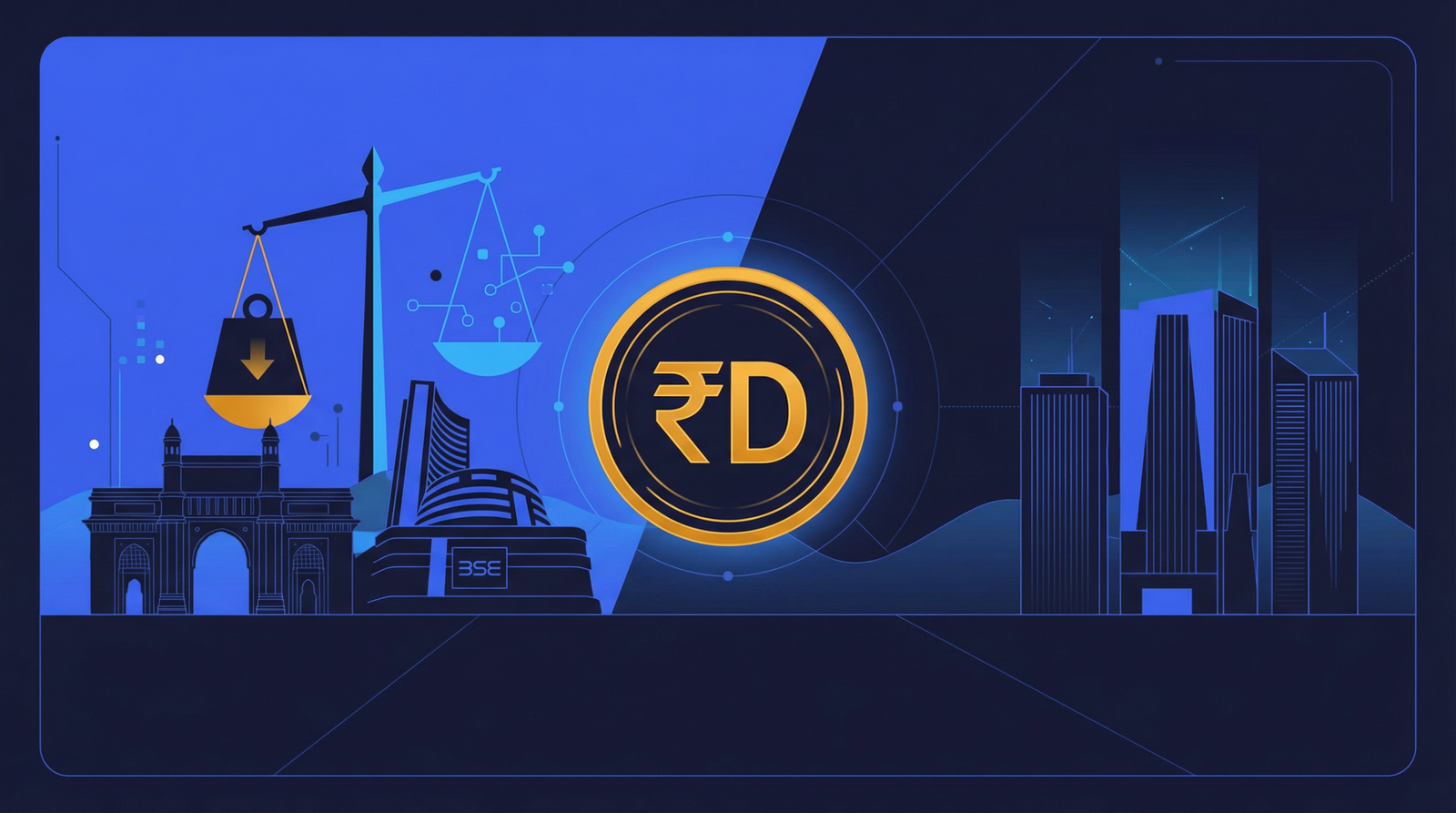
The most significant barrier to domestic tokenization in India is the current tax regime. The Finance Act 2022 introduced Section 115BBH of the Income Tax Act, which imposes a flat 30% tax on any income derived from the transfer of virtual digital assets (VDAs). The statutory definition of a VDA is exceptionally broad and captures almost any cryptographically generated token, which would likely include tokenized real estate, private equity, or other real-world assets. The tax rules prohibit taxpayers from deducting any expenses or allowances from this income, aside from the initial cost of acquisition. Furthermore, investors cannot set off losses from the transfer of one VDA against income from another VDA, nor can they carry forward these losses to subsequent tax years. This creates an asymmetric risk profile where the government takes a third of all profits while the investor bears the entirety of any losses.
In addition to the flat income tax, Section 194S of the Income Tax Act mandates a 1% Tax Deducted at Source (TDS) on the payment for the transfer of a VDA. This TDS applies to all transactions exceeding INR 10,000 in a financial year, or INR 50,000 for specified persons such as individuals or Hindu Undivided Families with limited business income. The 1% TDS mechanism drains liquidity from high-frequency trading and creates severe compliance burdens for decentralized exchanges and tokenization platforms. Platforms must build infrastructure to withhold and remit this tax to the government for every secondary market transaction. Following the implementation of these tax rules in 2022, domestic trading volumes plummeted by over 70% across major Indian exchanges. The combination of the 30% flat tax and the 1% TDS has paralyzed the domestic retail market for digital assets. Founders building tokenization platforms must carefully evaluate these tax implications, which are detailed further in our comprehensive tokenization tax guide.
The digital rupee (e-Rupee) as a settlement layer
The Reserve Bank of India launched the Digital Rupee (e-Rupee) pilot in November 2022. The wholesale pilot focuses on settling secondary market transactions in government securities, while the retail pilot facilitates digital cash payments. The e-Rupee could eventually provide the fiat settlement layer for tokenized assets.
While the Reserve Bank of India maintains a hostile stance toward private digital assets, it has aggressively pursued its own Central Bank Digital Currency (CBDC). The RBI launched the pilot phase for the Digital Rupee, or e-Rupee, in November 2022. The initiative is divided into two distinct tracks. The wholesale pilot (e₹-W) is restricted to financial institutions and focuses specifically on the settlement of secondary market transactions in government securities. The retail pilot (e₹-R) operates as a digital equivalent of physical cash for person-to-person and person-to-merchant transactions. Several major financial institutions participate in these pilots, including State Bank of India, Bank of Baroda, Union Bank of India, HDFC Bank, and ICICI Bank. The RBI aims to test the reliability of the underlying technology and the economic impact of a digital currency on the banking system.
The development of the wholesale e-Rupee holds particular importance for the future of institutional tokenization in India. A major challenge in tokenizing real-world assets is the delivery versus payment mechanism. If the asset lives on a blockchain but the payment settles through traditional banking rails like NEFT or RTGS, the transaction loses the benefits of atomic settlement. The e₹-W provides a programmable, blockchain-compatible fiat currency issued directly by the central bank. If SEBI eventually approves a regulatory framework for tokenized securities, the wholesale e-Rupee would likely serve as the mandatory settlement layer. This would allow institutional investors to trade tokenized bonds or equities with instant, risk-free fiat settlement. For those new to these settlement mechanics, reviewing what is asset tokenization helps clarify why central bank money on-chain is a critical infrastructure requirement.
GIFT City and IFSCA: India’s digital asset sandbox
The International Financial Services Centres Authority (IFSCA) regulates GIFT City, India’s offshore financial hub. IFSCA has established a progressive framework for virtual asset trading and sandbox testing for tokenized instruments, offering a viable alternative to the restrictive onshore regulatory environment.
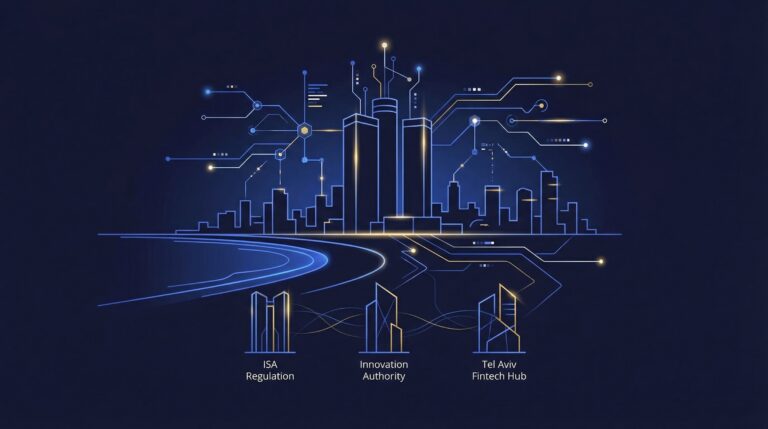
Founders facing the restrictive domestic market have a viable alternative within India’s borders. Gujarat International Finance Tec-City (GIFT City) operates as India’s designated International Financial Services Centre (IFSC). Financial activities within GIFT City are regulated by a unified authority, the International Financial Services Centres Authority (IFSCA), under the IFSCA Act 2019. By law, the IFSC is treated as an offshore jurisdiction for financial and foreign exchange purposes, exempting it from many of the restrictive regulations and taxes that apply in domestic India. IFSCA has adopted a significantly more progressive stance on digital assets compared to the RBI and SEBI. The authority has published specific frameworks for operating virtual asset trading platforms and managing digital asset portfolios, drawing inspiration from global hubs like the UAE VARA tokenization regulation.
IFSCA actively encourages financial innovation through its regulatory sandbox. Startups and established financial institutions can apply to test tokenization models for financial instruments in a controlled environment. If a company successfully demonstrates a tokenized bond issuance or a real estate tokenization platform within the sandbox, IFSCA can grant specific regulatory exemptions to allow commercial deployment within GIFT City. Entities operating in the IFSC also benefit from a ten-year tax holiday and exemptions from the punitive 30% VDA tax that applies onshore. This bifurcated regulatory system means India effectively has two distinct approaches to tokenization. The onshore market remains heavily restricted, while the offshore market in GIFT City is actively building the infrastructure to become a regional digital asset hub.
| Feature | Onshore India (Domestic) | GIFT City (IFSC) |
|---|---|---|
| Primary Regulator | SEBI, RBI | IFSCA |
| Digital Asset Framework | None currently available | Specific VDA framework published |
| Income Tax on Tokens | 30% flat rate | Tax holiday for 10 years (corporate) |
| Loss Offset | Prohibited entirely | Permitted within corporate tax rules |
| 1% TDS on Transfers | Mandatory for all users | Exempt for non-residents |
| Foreign Investor Access | Heavily restricted | Fully permitted and encouraged |
Market potential and strategic outlook for founders
India offers massive long-term potential for tokenized assets due to its population and capital market growth. However, short-term onshore operations are economically unviable due to taxation. Founders should utilize GIFT City for immediate entry while monitoring SEBI and tax policy shifts.
The strategic outlook for tokenization in India requires separating the onshore reality from the offshore opportunity. The domestic market possesses incredible fundamentals. India has a rapidly expanding middle class, high smartphone penetration, and a retail investor base that has shown massive appetite for equities and digital assets. However, the current regulatory and tax environment makes launching a compliant, profitable tokenization platform onshore nearly impossible. The 30% flat tax with no loss offset destroys the unit economics for retail investors. Furthermore, the lack of clarity from SEBI means institutional players will not risk deploying capital into tokenized securities. Until the Ministry of Finance revises Section 115BBH or SEBI publishes a dedicated digital asset framework, the domestic market remains closed to legitimate tokenization operators.
For founders and international platforms looking to enter the Indian market, GIFT City represents the only viable immediate strategy. Establishing an entity in the IFSC allows operators to build infrastructure, secure licenses, and serve non-resident Indians and foreign institutional investors under a clear regulatory framework. Companies should closely monitor the RBI’s digital rupee pilot, as the integration of the wholesale CBDC with private tokenization platforms will likely be the catalyst for broader institutional adoption. The vocabulary and technical standards developed in GIFT City will eventually inform onshore regulations. Reviewing our tokenization glossary can help teams align their technical documentation with the terminology preferred by international regulators. While India requires patience and significant legal structuring, preparing for the eventual integration of tokenized assets into the world’s fastest-growing major economy provides a clear strategic advantage.
Frequently Asked Questions
Is tokenization legal in India?
Tokenization is legal in India but operates without a specific regulatory framework onshore. If a token represents a traditional security, it must comply with existing SEBI regulations under the Securities Contracts (Regulation) Act 1956. However, heavy taxation makes onshore tokenization economically difficult.
Does SEBI regulate digital tokens?
SEBI regulates digital tokens only if they qualify as securities under Indian law. The regulator has not issued dedicated guidelines for digital assets or blockchain-based securities. Issuers must follow the same prospectus and depository rules required for traditional public offerings.
How are tokenized assets taxed in India?
India taxes tokenized assets under Section 115BBH of the Income Tax Act. The government imposes a flat 30% tax on profits from virtual digital assets, prohibits the offset of losses against other income, and mandates a 1% tax deducted at source on transfers.
What is the role of GIFT City in tokenization?
GIFT City serves as India’s offshore financial hub with a separate regulatory authority called IFSCA. IFSCA offers a progressive framework for virtual digital assets and a regulatory sandbox, allowing companies to test tokenization models without facing the restrictive onshore tax and compliance burdens.