Estate Planning Tokenized Securities: Complete Guide
Investors allocate significant capital to digital assets, yet many fail to implement proper estate planning tokenized securities strategies. Unlike traditional equities held at a centralized brokerage, tokenized assets often rely on cryptographic keys that, if lost, render the underlying value permanently inaccessible. A comprehensive digital asset estate plan ensures that heirs can legally and technically recover these investments after an investor passes away or becomes incapacitated. This guide examines the specific legal frameworks, wallet recovery mechanisms, and trust structures required to secure tokenized wealth for the next generation. We will cover how different custody models affect inheritance, the role of specialized legal documents, and the practical steps needed to transfer digital securities across various platforms.
The unique mechanics of tokenized asset inheritance
Tokenized asset inheritance requires transferring both the legal right to the asset and the technical means to access it. While regulated platforms offer traditional account transfer processes upon death, self-custodied tokenized securities require heirs to possess the specific private keys or seed phrases to recover the funds.
The spectrum of custody dictates the complexity of crypto inheritance planning. When investors hold tokenized securities in self-custodial hardware wallets, they assume the highest risk of permanent loss. If the investor dies without passing on the seed phrase, the blockchain network will not grant access to the heirs, regardless of what a will or probate court dictates. Conversely, holding tokens in institutional custody or on regulated issuance platforms mirrors the traditional brokerage experience more closely. Platforms like Securitize and tZERO maintain centralized records of beneficial ownership and can reassign tokens to heirs once presented with a death certificate and letters testamentary. However, even these centralized platforms require specific documentation and proactive planning to ensure a smooth transition of assets across generations.
The legal framework governing digital asset succession has matured significantly over the past decade to address these modern challenges. In the United States, the Revised Uniform Fiduciary Access to Digital Assets Act (RUFADAA) has been adopted in all 50 states and the District of Columbia. RUFADAA provides a standardized legal mechanism for fiduciaries, including executors and trustees, to access the digital assets of a deceased or incapacitated person. The act establishes a strict hierarchy of authority for access that supersedes standard probate assumptions. A user’s explicit instructions via an online tool provided by the custodian take precedence over all other documents. If no online tool is used, the instructions within traditional estate planning documents, such as a will or trust, govern access. If neither exists, the custodian’s standard terms of service apply.
While RUFADAA effectively compels centralized custodians to cooperate with executors, it offers little practical help for self-custodied assets where no custodian exists to receive a court order. This limitation highlights the fundamental difference between legal entitlement and technical access. International jurisdictions are also adapting their legal frameworks to address these gaps in digital property rights. The UK Law Commission recently concluded a consultation on treating digital assets as a distinct category of personal property, which would clarify how tokenized securities are treated under English property and inheritance law. Understanding these jurisdictional nuances is essential when evaluating tokenized asset risks across different geographic regions and custody models.
Seed phrase management and wallet recovery strategies
Effective wallet recovery after death requires securely communicating private keys to heirs without exposing them to theft during the investor’s lifetime. Common strategies include Shamir’s Secret Sharing, dead man’s switch protocols, multi-signature wallet configurations, and secure physical storage with a designated legal fiduciary or trust company.
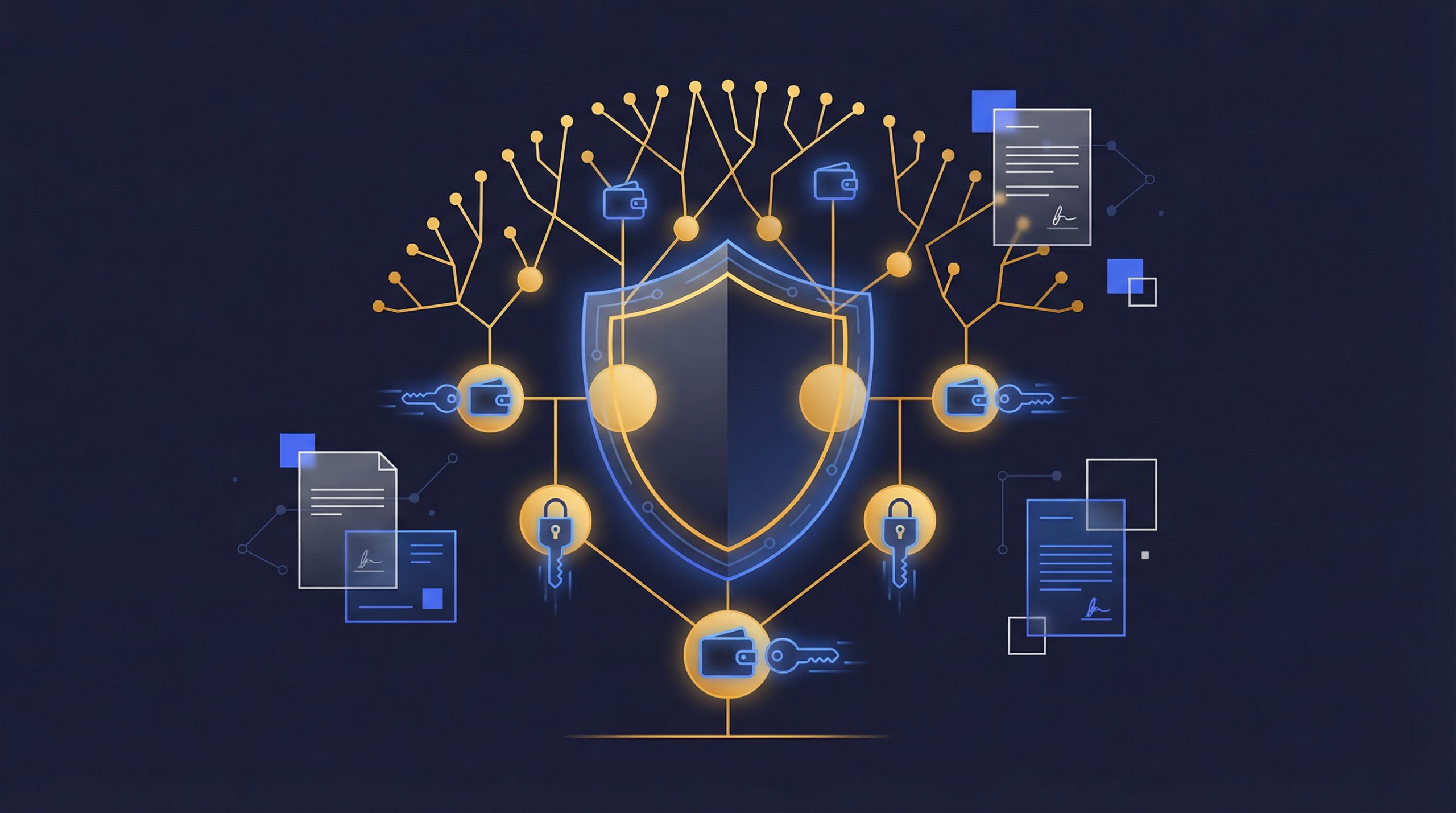
The central technical challenge of a digital asset estate plan is transferring cryptographic access material securely. One highly effective cryptographic method is Shamir’s Secret Sharing, a threshold secret sharing scheme that divides a seed phrase into multiple fragments. An investor can configure the scheme so that a specific threshold of fragments is required to reconstruct the original key. For example, a 3-of-5 setup distributes five fragments among family members, an attorney, and a secure vault, requiring any three to come together to access the wallet. This prevents a single compromised fragment from resulting in theft while ensuring that the loss of one or two fragments does not result in permanent lock-out after the investor passes away.
Dead man’s switch services offer an automated approach to security token succession planning. Platforms like Safe Haven, Sarcophagus, and Casa provide mechanisms that release access credentials or transfer assets only after a predefined period of inactivity. Sarcophagus utilizes a decentralized architecture where encrypted files containing private keys are stored on a blockchain network and decrypted by independent node operators if the user fails to interact with a smart contract. Casa offers specialized inheritance protocols for multi-signature setups, allowing a designated successor to request access that the original owner can veto within a waiting period. If the owner is deceased and cannot veto the request, the platform grants access to the successor. These services balance the need for strict security during the investor’s life with guaranteed access for heirs.
Low-tech solutions involving fiduciaries remain a practical component of many estate plans. Investors frequently store seed phrases engraved on metal plates inside sealed tamper-evident envelopes, which are then placed in a bank safe deposit box or a vault managed by a trust company. The executor or successor trustee is granted legal authority to access the vault upon the investor’s death. While this method relies on physical security and traditional legal enforcement, it is easily understood by probate courts and traditional attorneys. When deciding how to invest in tokenized assets, investors must weigh the operational friction of these security models against the risk of catastrophic loss for their beneficiaries.
Trust structures and legal frameworks for digital assets
Trust structures provide a robust legal vehicle for managing and transferring tokenized securities. Revocable living trusts allow assets to bypass probate, while irrevocable trusts offer estate tax benefits. Specialized dynasty trusts in certain jurisdictions can manage tokenized wealth across multiple generations without violating perpetuity rules.
Integrating tokenized securities into a revocable living trust is a primary strategy for avoiding the public, time-consuming probate process. To execute this properly, the investor must retitle the tokenized asset accounts or the wallets themselves in the name of the trust. The trust document must contain specific digital asset provisions that explicitly grant the successor trustee the authority to manage, access, and transfer digital assets. These provisions should outline the exact procedures for accessing hardware wallets, interacting with centralized custodians, and executing transactions on blockchain networks. Without explicit language, a successor trustee may face significant friction from institutional custodians or legal ambiguity when attempting to liquidate or distribute the tokenized securities to heirs.
For high-net-worth investors, transferring tokenized securities into an irrevocable trust serves as a critical estate tax planning tool. Assets placed in an irrevocable trust are generally removed from the grantor’s taxable estate. This is particularly advantageous for tokenized assets that are expected to appreciate significantly over time. In 2024, the federal estate tax exemption stands at $13.61 million per individual. However, under the sunset provisions of the Tax Cuts and Jobs Act, this exemption is scheduled to revert to approximately $7 million, adjusted for inflation, at the end of 2025. Moving highly appreciating tokenized securities into a tokenized asset trust before this sunset can shield substantial future gains from estate taxation. Investors must coordinate this strategy closely with their overall US tax guide for tokenized assets to ensure compliance with IRS regulations.
Multi-generational tokenized wealth can be managed through dynasty trusts, which are designed to last for generations without incurring transfer taxes at each generational level. Certain US states, including South Dakota, Nevada, and Alaska, have abolished the rule against perpetuities, allowing trusts established in these jurisdictions to theoretically exist forever. A trust structured in South Dakota can hold digital securities, compound yields from tokenized real estate or private credit, and distribute income to beneficiaries across decades. During an investor’s lifetime, incapacity planning is equally critical. A standard financial power of attorney is rarely sufficient for digital assets. Investors must draft specific springing or immediately effective powers of attorney that explicitly grant their agent the authority to access wallets, manage private keys, and hire digital asset specialists if the investor becomes medically incapacitated.
Platform specific policies and creating your succession plan
Major tokenized asset platforms enforce distinct estate transfer policies requiring legal documentation. Creating a comprehensive digital asset estate plan involves inventorying all assets, securing private keys, updating legal documents with specific digital asset provisions, and informing trusted fiduciaries about the investments.
Transferring tokenized assets held on regulated platforms requires navigating specific corporate policies that resemble traditional financial compliance. Securitize, a leading transfer agent and issuance platform, requires executors to provide a certified death certificate, letters testamentary or letters of administration, and platform-specific transfer forms before they will reassign token ownership to an heir or estate account. Similarly, tZERO has an established estate transfer process that verifies the legal authority of the executor before permitting the liquidation or transfer of digital securities. Platforms offering tokenized real estate, such as RealT, often structure their assets as LLC membership interests. Transferring these assets upon death requires complying with both the platform’s terms of service and the underlying LLC operating agreement, which dictates how membership interests can be legally reassigned. Performing proper due diligence for tokenized securities includes understanding these specific transfer restrictions before investing capital.
The landscape changes entirely when dealing with decentralized finance protocols and permissionless tokenized assets like certain Ondo Finance yield products held in self-custody. Decentralized protocols operate via smart contracts that do not recognize legal death, probate court orders, or estate representatives. If an investor holds yield-bearing tokenized treasuries in a non-custodial wallet and fails to pass on the private keys, the assets will continue to accrue yield in a permanently inaccessible wallet. There is no customer support desk to petition for access. This stark reality underscores why technical access planning must occur parallel to legal planning. Heirs must have both the legal right to the assets and the cryptographic keys required to execute redemptions or transfers on the blockchain network.
Building a comprehensive digital asset estate plan requires a structured, multi-step approach. The foundation is a detailed digital asset inventory that lists all tokenized holdings, exchange accounts, hardware wallet locations, and approximate valuations. This inventory must be updated at least annually and kept entirely separate from the actual seed phrases or passwords to prevent theft. Next, investors must formally add digital asset provisions to their wills, trusts, and power of attorney documents, ensuring they align with the latest RUFADAA standards. Where available, investors should designate beneficiaries directly on custodial platforms to bypass probate entirely. Finally, the investor must inform at least one trusted person about the existence of the inventory and the location of the access instructions. Engaging an attorney who specializes in digital assets to draft these documents typically costs between $2,000 and $10,000, depending on the complexity of the estate and the trust structures involved.
As the regulatory and technical landscape evolves, investors must periodically review their estate plans to ensure they remain functional. Adding new wallets, shifting assets across different blockchains, or changing custody providers can inadvertently break an existing succession plan. Furthermore, understanding the tax implications for heirs, such as the step-up in basis rules discussed in our guide to capital gains on tokenized securities, is crucial for maximizing the inherited value. By combining secure key management, robust trust structures, and clear legal documentation, investors can ensure their tokenized wealth successfully transfers to the next generation. If you are unfamiliar with the technical terms used in this process, reviewing a comprehensive tokenization glossary can help clarify the specific mechanisms involved in digital asset custody and transfer.
Proper estate planning for tokenized securities bridges the gap between traditional inheritance law and cryptographic security. The unique nature of digital assets means that relying solely on a conventional will or standard legal documents is insufficient to guarantee the safe transfer of wealth. Investors must proactively manage their private keys using threshold sharing, dead man’s switches, or secure fiduciary storage to prevent permanent loss. Simultaneously, legal structures like revocable living trusts and dynasty trusts provide the necessary framework for seamless, tax-efficient succession. By maintaining an updated digital asset inventory and formally authorizing fiduciaries under frameworks like RUFADAA, investors can protect their portfolios against both technical lockouts and legal disputes. The cost and effort of establishing a comprehensive digital asset estate plan today are minor compared to the risk of total asset loss for your heirs tomorrow. Take the first step by documenting your tokenized holdings and consulting with a specialized digital asset attorney to review your current estate documents.
Frequently Asked Questions
What happens to tokenized securities if I lose my private keys before I die?
If you lose the private keys to a self-custodial wallet holding tokenized securities, the assets become permanently inaccessible. There is no customer support for a blockchain. This is why implementing secure key backup strategies, such as Shamir’s Secret Sharing or multi-signature wallets, is critical during your lifetime.
Does a standard will cover my tokenized assets?
A standard will legally transfers the ownership of your tokenized assets, but it does not provide the technical means to access them. Furthermore, standard wills often lack the specific digital asset language required by custodians under RUFADAA, which can cause severe delays during the probate process.
Can a trust hold tokenized real estate?
Yes, a revocable or irrevocable trust can hold tokenized real estate. You must retitle the wallet or the platform account holding the tokens into the name of the trust. This allows the assets to bypass probate and be managed directly by your successor trustee upon your death.
How much does it cost to set up a digital asset estate plan?
Engaging a specialized attorney to draft a comprehensive digital asset estate plan typically costs between $2,000 and $10,000. The exact cost depends on the complexity of your assets, the type of trust structures required, and the specific jurisdiction where you establish the plan.