How to Tokenize a SaaS Company: Valuation & Token Design
SaaS companies operate on predictable, recurring revenue models that make them exceptionally well-suited for digital asset markets. When founders decide to tokenize a SaaS company, they transform abstract software metrics into tangible, tradable financial instruments that appeal directly to data-driven investors. Software businesses typically boast gross margins between 70% and 85%, generating measurable unit economics like customer acquisition cost and lifetime value that investors can verify through real-time dashboards. These characteristics make software companies easier to value and structure than traditional brick-and-mortar businesses. By issuing security tokens backed by either company equity or a percentage of recurring revenue, founders can bypass the traditional venture capital gauntlet while still raising substantial capital. This approach allows scaling software companies to leverage their most valuable asset, predictable cash flow, to attract a global pool of investors who understand the mechanics of subscription economics. We will explore how to structure these digital assets, the specific metrics that drive token pricing, and the practical steps required to execute a compliant digital fundraising campaign.
Token design options for software businesses
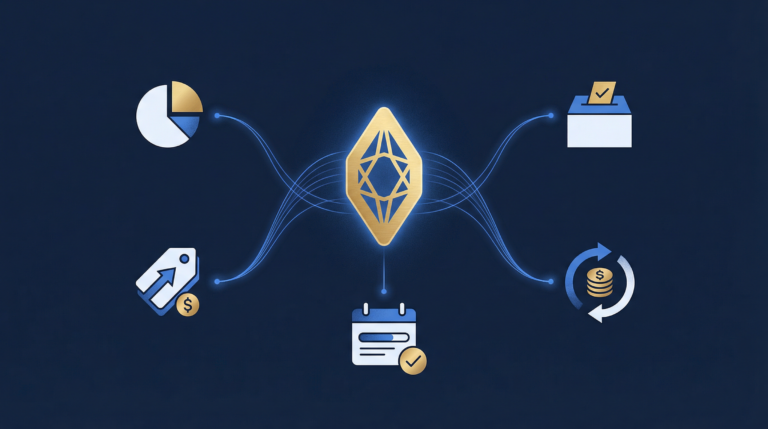
Founders can structure SaaS tokens as traditional equity tokens, revenue-share tokens, or hybrid instruments. Equity tokens represent fractional ownership, while revenue-share tokens distribute a percentage of monthly recurring revenue to investors. Regardless of the structure, both models generally qualify as securities under the Howey test and require regulatory compliance.
The most straightforward approach to digital fundraising involves issuing equity tokens, which represent a direct digital wrapper around traditional company shares. Investors who purchase these tokens receive standard shareholder rights, including voting privileges and a claim on the company’s ultimate exit value or liquidation event. This model mirrors traditional venture capital structures, making it highly familiar to institutional buyers who already understand how to evaluate software startups. For founders, navigating the complete guide to tokenizing startup equity reveals that this path requires the least amount of financial engineering, as the token simply acts as a more efficient, programmable cap table entry. Issuing equity means diluting ownership, which many bootstrapped software founders actively try to avoid when their businesses are already generating healthy cash flows.
To preserve ownership, many founders opt for a revenue-based token design that entitles holders to a specific percentage of the company’s top-line revenue. In a typical arrangement, a SaaS company might pledge 1% to 5% of its monthly or annual recurring revenue, distributed quarterly to token holders via smart contracts. This structure provides investors with immediate, predictable cash flow without requiring them to wait five to ten years for an acquisition or public offering. While this model functions similarly to debt or royalty financing, legal precedent established by the Securities and Exchange Commission dictates that revenue-share tokens still pass the Howey test and must be regulated as securities. This classification means founders cannot simply sell revenue rights to the public without utilizing proper regulatory exemptions like Regulation Crowdfunding or Regulation D.
Advanced token issuers frequently deploy hybrid models that combine the upside potential of equity with the downside protection of revenue sharing. These instruments function similarly to preferred stock with a dividend yield, offering investors a baseline return generated from software subscriptions alongside a smaller equity stake in the overall enterprise. When mapping out the token economics design for security tokens, founders must carefully balance the percentage of revenue pledged against the company’s operating expenses to ensure the business remains adequately capitalized for growth. Committing too much top-line revenue to token holders can starve a scaling software company of the exact capital it needs to acquire new customers and improve the product.
Essential SaaS metrics that drive token valuation
Token valuation for software companies relies heavily on Annual Recurring Revenue multiples, growth rates, and unit economics. Investors expect to see Net Revenue Retention above 100%, gross margins exceeding 70%, and a lifetime value to customer acquisition cost ratio of at least 3:1 to justify premium token pricing.
The primary engine driving any SaaS company security token valuation is Annual Recurring Revenue and its historical growth trajectory. Private software companies are typically valued at 3x to 10x their ARR, depending heavily on their year-over-year growth rate, market size, and macroeconomic conditions. Investors scrutinize month-over-month growth metrics meticulously, looking for consistent expansion rather than erratic spikes in customer acquisition. Early-stage software startups generally need to demonstrate 10% or higher monthly growth to command premium multiples, while more mature, scaling companies can maintain strong valuations with steady 5% to 8% monthly growth. When evaluating tokenization vs traditional fundraising, founders will find that digital asset investors apply the exact same rigorous revenue analysis as traditional venture capitalists, requiring audited financials and verifiable dashboard access.
Beyond top-line growth, the underlying health of a software business is measured through Net Revenue Retention and churn rates. A healthy SaaS company must demonstrate an NRR baseline of at least 100%, indicating that revenue expansion from existing customers fully offsets any revenue lost to cancellations or downgrades. Companies achieving an NRR of 120% or higher are considered excellent and can price their tokens at the absolute top of the market multiple range. Gross monthly churn rates must remain strictly controlled, with acceptable benchmarks varying by customer segment. Enterprise software companies should target gross monthly churn under 1%, mid-market platforms under 3%, and small-to-medium business tools under 5% to prove they have achieved sustainable product-market fit.
Token buyers also evaluate the efficiency of a company’s growth engine through Customer Acquisition Cost, payback periods, and Lifetime Value. A fundamentally sound software business should maintain an LTV:CAC ratio of 3:1 or higher, meaning the company generates at least three dollars of gross profit for every dollar spent acquiring a customer. The CAC payback period, defined as how many months it takes to recover acquisition costs, should ideally sit between nine and fifteen months for a scaling business. Tokenized SaaS companies must demonstrate median gross margins between 70% and 85% to prove they are truly selling scalable software rather than tech-enabled services. These robust unit economics give token investors the confidence that the capital raised will be deployed efficiently to generate measurable returns.
Valuation methodology and pricing your SaaS token
Pricing a SaaS token involves applying revenue multiples, conducting discounted cash flow analysis for later-stage companies, and analyzing comparable transactions. Tokenized offerings typically carry a 10% to 30% valuation discount compared to traditional venture capital rounds due to smaller investor pools and lower secondary market liquidity.
Determining the exact price per token requires applying established valuation methodologies to the company’s financial profile. The revenue multiple approach remains the most common strategy for early-stage and pre-profit software companies, where a multiple is applied to the current forward-looking ARR based on growth rates and market comparables. For later-stage SaaS companies with predictable, positive cash flows, a Discounted Cash Flow analysis provides a more rigorous valuation framework that token investors increasingly demand. This mathematical approach projects future unlevered free cash flows and discounts them back to present value using the company’s weighted average cost of capital. Founders must understand that digital asset investors expect comprehensive financial modeling that clearly bridges the gap between raw software metrics and the ultimate token price offered in the prospectus.
While the core valuation mechanics mirror traditional finance, founders must account for the structural realities of the current digital asset market. Tokenized equity and revenue-share offerings typically experience a valuation discount of 10% to 30% compared to equivalent traditional venture capital rounds. This discount exists because the security token market, while growing rapidly, still possesses a smaller aggregate investor base and lower brand recognition than mainstream venture firms. Investors demand this pricing concession to compensate for the perceived liquidity risks and the pioneering nature of digital securities. When founders calculate the tokenization ROI for startups, the valuation discount is frequently offset by the ability to retain board control, avoid restrictive venture capital liquidation preferences, and access a global pool of retail and institutional capital.
To minimize this valuation discount, founders must proactively address the specific due diligence expectations of security token investors. Unlike speculative cryptocurrency traders, buyers of SaaS security tokens operate like traditional private equity analysts. They require concrete evidence of product-market fit, detailed total addressable market analysis, and transparent competitive positioning documentation. These investors expect institutional-grade governance structures, including regular quarterly financial reporting, standardized key performance indicator disclosures, and a clearly articulated path to either profitability or a strategic exit. Providing this level of professional transparency directly influences the success of the token offering and the ultimate price the market is willing to pay for the digital assets.
Real-world case studies and regulatory execution
Executing a SaaS tokenization strategy requires selecting the right regulatory exemption and technology partner. Companies typically utilize Regulation Crowdfunding to raise up to $5 million annually from retail investors, or Regulation D 506(c) for unlimited raises strictly from accredited investors through established tokenization platforms.
The infrastructure for launching software-backed tokens has matured significantly, with several prominent platforms establishing clear precedents for this asset class. Platforms like Republic have successfully listed numerous SaaS startups, allowing founders to raise capital through security tokens and crowd-safe instruments that eventually convert to digital assets. These case studies demonstrate that software companies with strong community engagement and clear metrics can successfully bypass traditional venture channels. When evaluating the best tokenization platforms, founders should prioritize technology providers that have specific experience integrating smart contracts with fiat revenue streams, particularly if they intend to issue revenue-share tokens. Platforms such as Securitize and tZERO have built robust compliance engines capable of handling the automated dividend distributions and cap table management required for complex SaaS token architectures.
Selecting the appropriate legal framework is equally critical to the success of the offering. According to SEC guidelines, Regulation Crowdfunding allows companies to raise up to $5 million in a 12-month period from both accredited and non-accredited investors, making it an ideal choice for consumer-facing SaaS products with passionate user bases. For B2B software companies targeting larger capital injections, SEC Rule 506(c) under Regulation D permits unlimited fundraising amounts, provided the issuer takes reasonable steps to verify that all purchasers are accredited investors. Founders conducting a Reg D vs Reg CF vs Reg A+ comparison will find that Regulation A+ offers a pathway to raise up to $75 million with immediate secondary market liquidity, though it requires significantly more upfront legal capital and SEC qualification time.
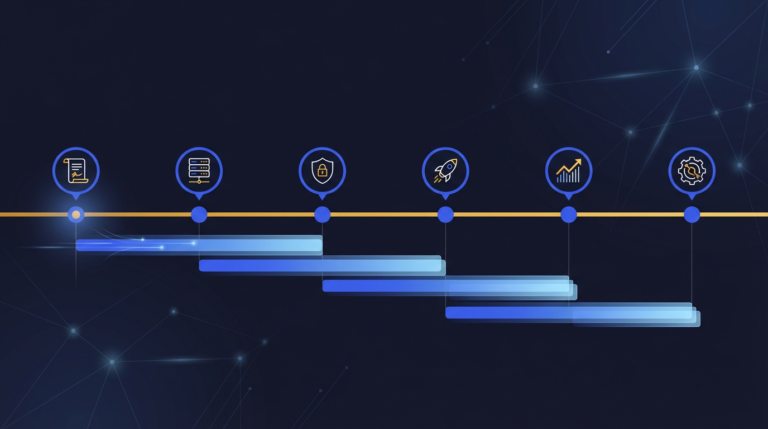
The practical reality of launching a compliant token offering requires significant preparation and realistic timeline expectations. From the initial decision to tokenize until the actual issuance of digital assets, founders should anticipate a comprehensive three to six-month process. This window includes legal structuring, smart contract auditing, platform onboarding, and the creation of detailed offering memorandums. The total cost to tokenize a startup can range from $50,000 to over $150,000 depending on the chosen regulatory exemption, legal complexity, and platform fees. Despite these upfront costs and time commitments, the ability to programmatically distribute revenue, access global capital markets, and maintain operational control makes tokenization an increasingly logical financing mechanism for fundamentally sound software businesses.
The decision to tokenize a SaaS company represents a strategic shift in how software founders capitalize their businesses. By converting predictable recurring revenue and strong unit economics into digital securities, companies can access a modern capital market that values transparency and data-driven performance. Whether utilizing traditional equity wrappers or innovative revenue-share models, the underlying fundamentals remain the same. Investors demand healthy gross margins, strong net revenue retention, and efficient customer acquisition metrics. While tokenized offerings currently face a slight valuation discount compared to traditional venture capital, the benefits of maintaining founder control and avoiding predatory term sheets provide substantial long-term value. Founders who take the time to properly structure their digital assets today will position their companies at the forefront of the tokenized economy.
Frequently Asked Questions
What is the best token structure for a SaaS company?
Revenue-share tokens are highly effective for SaaS companies because they preserve founder equity while offering investors predictable cash flow. Equity tokens are also popular and function similarly to traditional shares. The choice depends on whether the founder prioritizes ownership retention or traditional valuation models.
Are revenue-share tokens considered securities?
Yes, revenue-share tokens are generally classified as securities under the SEC’s Howey test. Because investors are committing capital with the expectation of earning profits derived from the managerial efforts of the company, issuers must comply with federal securities laws and utilize proper exemptions.
How much of a valuation discount do tokenized SaaS companies face?
Tokenized SaaS companies typically experience a 10% to 30% valuation discount compared to traditional venture capital rounds. This discount compensates investors for the smaller secondary market liquidity and the novel nature of digital securities compared to established private equity markets.
Which regulatory exemption is best for early-stage SaaS tokenization?
Regulation Crowdfunding is often the best choice for early-stage SaaS companies looking to raise up to $5 million annually. It allows founders to accept capital from both accredited and unaccredited retail investors, making it ideal for software companies with large, engaged user bases.