Zero-Knowledge Proofs for Tokenization Privacy Explained
Public blockchains operate on a foundation of absolute transparency, broadcasting every transaction, wallet balance, and asset transfer to the global internet. For retail cryptocurrency trading, this transparency is a feature, but for traditional financial markets, it represents an insurmountable barrier to entry. Institutional investors simply cannot execute trades if their portfolio positions, trading strategies, and client identities are visible to competitors and the general public. Zero-knowledge proofs tokenization privacy offers a mathematical solution to this fundamental incompatibility.
By allowing parties to verify data without actually revealing the underlying information, zero-knowledge proofs bridge the gap between the public nature of distributed ledgers and the strict confidentiality requirements of capital markets. This guide examines how zero-knowledge cryptography functions in financial applications, the ways it enables regulatory compliance without public disclosure, and the practical timeline for its integration into institutional tokenized asset platforms.
The transparency problem in tokenized securities
The primary transparency problem in tokenized securities is that public blockchains expose sensitive financial data to the entire network. Institutional investors refuse to broadcast their trading strategies, while asset issuers must protect cap table confidentiality and accredited investor identities to maintain commercial competitiveness and legal compliance.
When financial institutions evaluate what is asset tokenization, they immediately encounter the friction between blockchain architecture and market realities. Public networks like Ethereum record every state change permanently, meaning any observer can trace the movement of a security token from issuance to secondary trading. This level of visibility creates severe commercial disadvantages for trading desks that rely on executing large block trades without moving the market against themselves. If a competitor can see a fund accumulating a specific tokenized bond or real estate asset, they can front-run those trades or reverse-engineer the fund’s proprietary investment strategy. Asset managers consider their portfolio allocations to be highly confidential intellectual property, and exposing this data on a public ledger violates their fiduciary duty to clients.
The transparency problem extends far beyond institutional trading strategies to encompass the core mechanics of corporate finance and regulatory compliance. Companies issuing tokenized equity or debt instruments maintain cap tables that detail exactly who owns their enterprise, information that is traditionally guarded closely by private corporations. Broadcasting this ownership structure globally gives competitors deep insights into a company’s financial backing, capitalization, and potential strategic moves. Furthermore, verifying investor eligibility involves processing highly sensitive personal information, including net worth statements, tax returns, and identity documents. Publishing even cryptographic hashes of this data on a public ledger introduces severe tokenized asset risks regarding data privacy and long-term security. The traditional financial system relies on information asymmetry and controlled disclosure, making the default transparency of public blockchains fundamentally incompatible with existing market structures.
How zero-knowledge proofs enable confidentiality
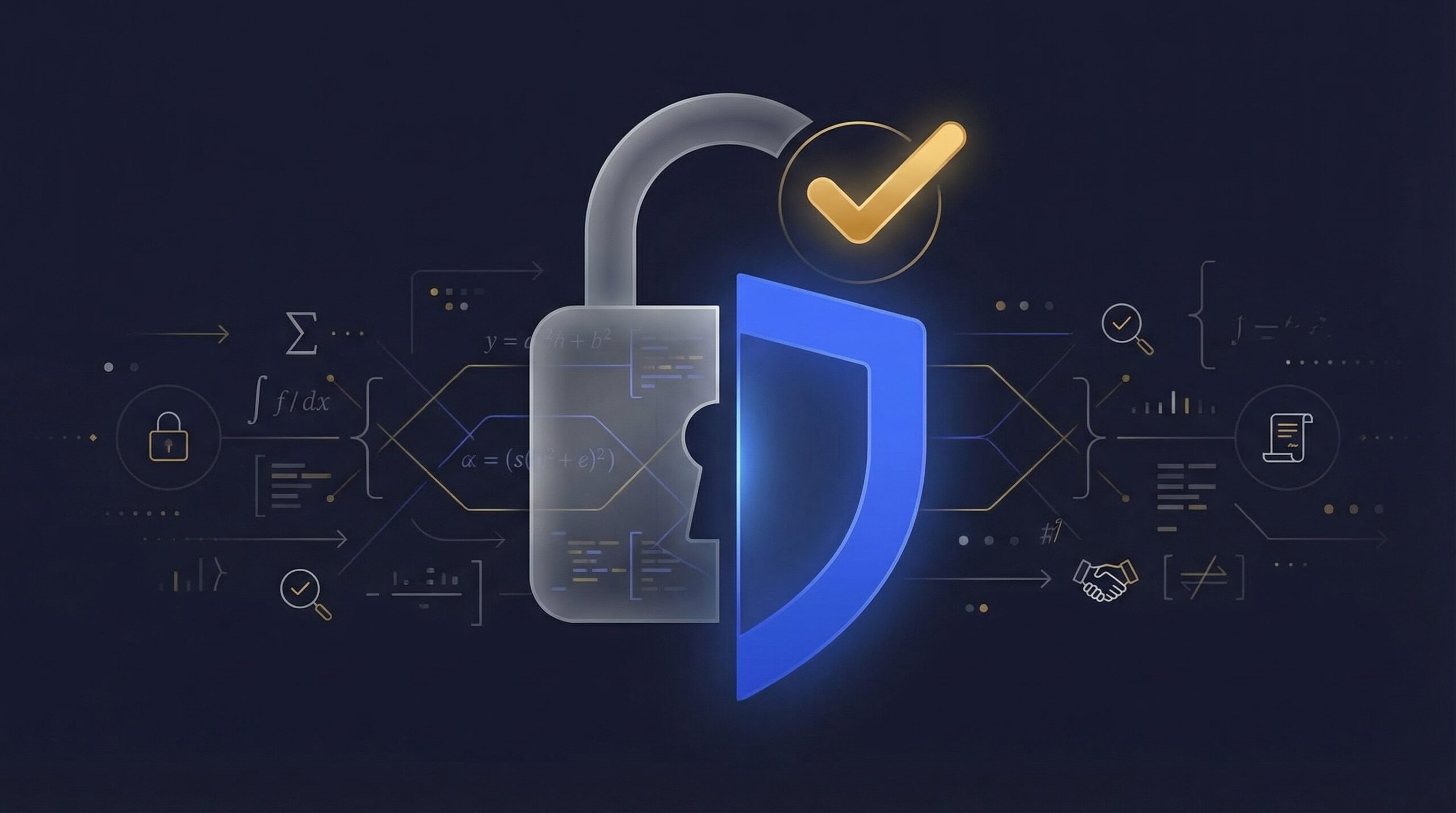
Zero-knowledge proofs allow one party to mathematically prove a statement is true without revealing any underlying data. In tokenized markets, this technology enables confidential tokenized transactions where buyers and sellers can verify transaction validity, asset ownership, and compliance status while keeping the actual details entirely hidden from public view.
Understanding how this cryptographic breakthrough functions requires looking past complex mathematics to the practical application of verifiable claims. A zero-knowledge proof allows a prover to convince a verifier that they possess specific information or meet certain criteria without transmitting the information itself. The classic analogy involves proving you are over the legal drinking age without showing your exact birth date, driver’s license number, or home address. Applied to capital markets, an investor can generate a mathematical proof demonstrating their net worth exceeds the $1 million threshold required for accredited status under SEC Rule 506(c). The blockchain network verifies this proof and authorizes the token transfer, but the ledger records only the verification, never the investor’s actual financial figures. This mechanism fundamentally alters how tokenization works by separating transaction settlement from data disclosure.
Developers currently rely on two primary zero-knowledge proof systems to build these confidential architectures, each presenting distinct engineering trade-offs. ZK-SNARKs (Succinct Non-Interactive Arguments of Knowledge) generate extremely small proof sizes that blockchain networks can verify in milliseconds, making them highly efficient for high-volume trading environments. However, SNARKs typically require a trusted setup phase where initial cryptographic parameters are generated, introducing a theoretical vulnerability if the setup participants collude to retain the underlying keys. Conversely, ZK-STARKs (Scalable Transparent Arguments of Knowledge) eliminate the need for a trusted setup and rely on collision-resistant hash functions that provide quantum-resistant security. The trade-off is that STARKs produce significantly larger proof sizes, which consume more network bandwidth and incur higher transaction costs when verified on base-layer blockchains.
Several specialized protocols are actively building infrastructure to support fully private tokenized asset transfers using these cryptographic primitives. The Aztec Network developed Noir, a specialized zero-knowledge programming language designed specifically to help developers construct private decentralized finance applications and confidential smart contracts. Mina Protocol takes a different approach by utilizing recursive zero-knowledge proofs to maintain a constant-size blockchain of just 22 kilobytes, enabling lightweight verification while preserving user privacy. Other systems like Railgun deploy smart contracts directly on Ethereum to anonymize DeFi transactions, a model that tokenization platforms can adapt for private securities trading. Penumbra operates as a dedicated proof-of-stake network specifically engineered for trading shielded tokens, demonstrating how entire blockchains can be optimized around zero-knowledge privacy from the genesis block.
ZK compliance and scaling tokenized assets
Zero-knowledge compliance is the most valuable application of this technology for tokenized securities, allowing networks to enforce regulations automatically without exposing sensitive data. ZK rollups simultaneously solve the scalability challenge by compressing thousands of transactions into a single proof, drastically reducing gas costs while increasing network throughput.
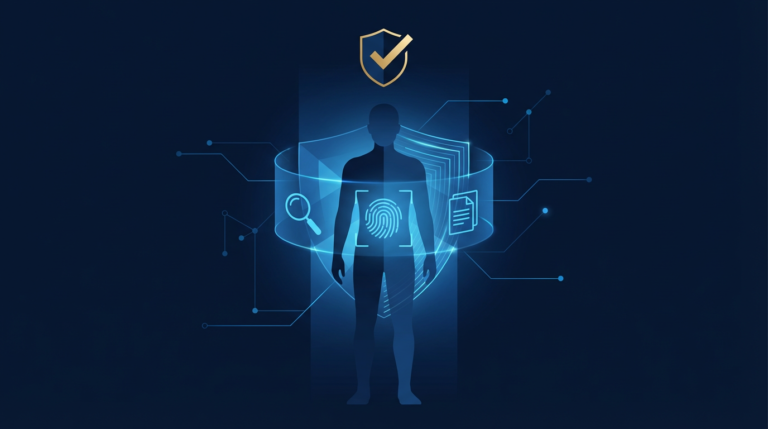
The ability to achieve zero knowledge compliance transforms how financial institutions interact with regulatory frameworks on distributed ledgers. Asset issuers can enforce jurisdiction whitelisting by requiring investors to submit a proof that their residency aligns with approved countries, completely obscuring their exact physical location or IP address. Anti-money laundering screening processes can be conducted off-chain by regulated entities, who then issue a cryptographic proof that the funds are clean, allowing the transaction to settle without broadcasting the user’s entire financial history. Secondary market transfers of restricted securities can utilize proofs to confirm that the mandatory holding periods under regulations like Reg D have expired. Even complex tax reporting requirements can be satisfied by proving that capital gains calculations are mathematically accurate without publishing the trader’s complete historical ledger of buys and sells.
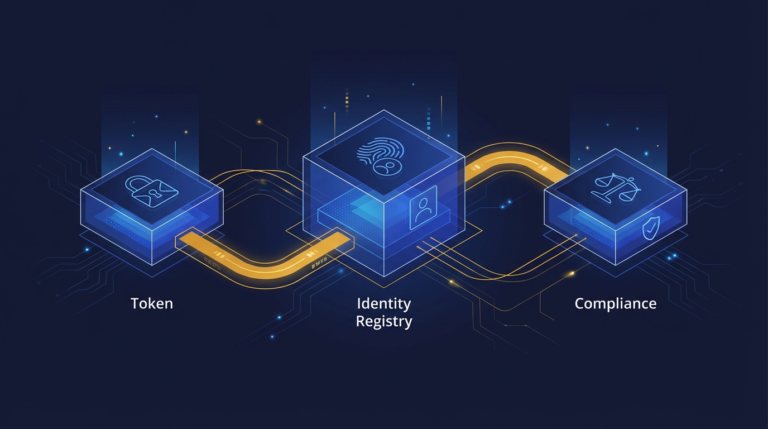
Enterprise adoption of these compliance mechanisms is already underway through specialized institutional protocols and major accounting firms. The Polymesh network integrates a privacy-preserving identity system specifically tailored for security tokens, ensuring that only authorized participants can engage in asset transfers while keeping their underlying identity data confidential. Ernst & Young developed the Nightfall protocol to enable private transactions directly on the public Ethereum mainnet, specifically targeting enterprise supply chain and financial use cases that require strict confidentiality. When evaluating platforms in a comprehensive Centrifuge review or similar analysis, the integration of these privacy-preserving layers is becoming a primary differentiator for institutional clients. These systems demonstrate that financial institutions do not have to choose between the liquidity of public networks and the privacy of traditional databases.
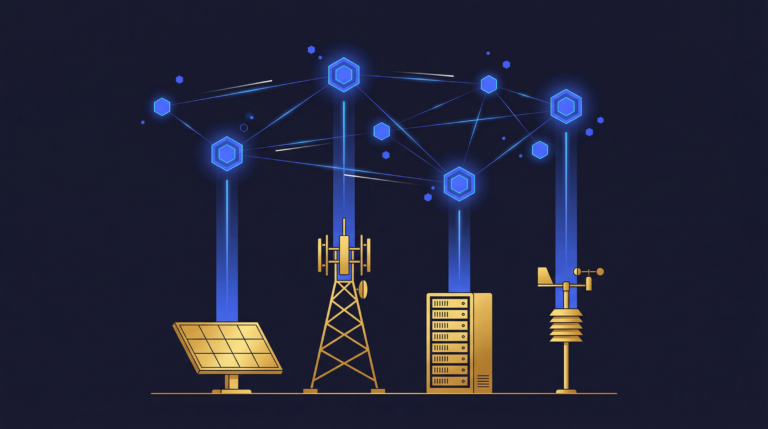
Beyond privacy, zero-knowledge technology provides the scaling infrastructure necessary to support global capital markets on blockchain networks. ZK rollups like zkSync, Polygon zkEVM, Scroll, and StarkNet execute transactions off-chain and bundle hundreds of operations into a single cryptographic proof submitted to the Ethereum mainnet. This architecture reduces gas costs by a factor of 10 to 100 compared to base-layer transactions while increasing network throughput from Ethereum’s standard 15 to 30 transactions per second to hundreds or thousands of transactions per second. Because the underlying mathematics guarantee the validity of every bundled transaction, users inherit the full security guarantees of the base layer without paying its exorbitant fees. This scalability is particularly critical for cross-chain tokenized assets and high-frequency trading applications where transaction costs must remain negligible to maintain market efficiency.
Regulatory acceptance and practical timelines
Regulatory acceptance of zero-knowledge proofs remains uncertain, as authorities weigh mathematical guarantees against their historical preference for full data visibility. While the technology aligns well with European data minimization laws, widespread institutional deployment faces significant hurdles regarding computational costs, complex auditing requirements, and immature developer tooling.
The intersection of zero-knowledge cryptography and securities law presents a complex challenge for global financial regulators. Advocates argue that ZK proofs offer superior compliance guarantees because regulators can mathematically verify that a transaction meets all rules without needing to audit massive databases of raw information. This approach aligns perfectly with the data minimization principles outlined in the European Union’s General Data Protection Regulation (GDPR), which mandates that organizations collect and process only the data strictly necessary for a specific purpose. To bridge the gap between privacy and oversight, developers can implement regulatory trapdoors, which are cryptographic keys held exclusively by authorized agencies that allow them to decrypt and audit specific transactions when investigating financial crimes. However, implementing these backdoors reintroduces centralization risks and creates high-value targets for malicious actors seeking to compromise the network.
Despite these mathematical guarantees, securities regulators in the United States and other major jurisdictions have historically demanded comprehensive disclosure and direct access to raw transaction data. The Securities and Exchange Commission relies heavily on analyzing complete order books and trading histories to detect market manipulation, insider trading, and systemic risks. Regulators may fundamentally distrust mathematical proofs generated by complex, unaudited circuits that their internal technologists do not fully understand. Until regulatory bodies issue formal guidance explicitly recognizing zero-knowledge proofs as valid evidence of compliance, institutional compliance officers will likely hesitate to abandon traditional, fully transparent reporting mechanisms. The transition requires a massive educational effort to convince policymakers that cryptographic certainty is a valid substitute for raw data visibility.
The practical implementation of ZK proofs in tokenized securities faces severe technical limitations that will dictate the timeline for enterprise adoption. Generating these proofs is highly computationally intensive, often requiring seconds or even minutes of processing time for complex compliance checks, which is unacceptable for real-time trading environments. Building and auditing ZK circuits requires highly specialized mathematical expertise, and any bug in the circuit logic can be catastrophic, potentially allowing malicious actors to generate fake proofs and bypass compliance controls entirely. Given these constraints, the industry expects initial ZK compliance products to enter limited production environments between 2026 and 2027. Broad adoption by major tokenization platforms will likely follow in the 2028 to 2029 timeframe, with comprehensive regulatory frameworks formally recognizing these systems arriving by 2030 or later. Understanding these timelines is essential for anyone studying a tokenization glossary and planning long-term infrastructure investments.
The integration of zero-knowledge cryptography into digital asset infrastructure represents the most viable path forward for institutional blockchain adoption. Public ledgers offer unprecedented efficiency and global liquidity, but their inherent transparency remains fundamentally incompatible with the confidentiality requirements of traditional capital markets. By separating the verification of a transaction from the disclosure of its underlying data, developers are building systems that satisfy both institutional privacy demands and strict regulatory mandates.
While the technology requires significant advancements in computational efficiency and developer tooling, the trajectory is clear. Financial institutions, asset managers, and technology providers must begin testing these privacy-preserving protocols today to prepare for the next phase of digital market infrastructure. As regulatory frameworks adapt to recognize mathematical certainty alongside traditional reporting, zero-knowledge proofs tokenization privacy will transition from an experimental cryptographic concept to the foundational compliance layer of the global financial system.
Frequently Asked Questions
What is zero-knowledge compliance?
Zero-knowledge compliance is the use of cryptography to prove a transaction meets regulatory requirements without revealing the underlying sensitive data. It allows investors to prove they are accredited or pass AML screening without publicly publishing their net worth or identity documents on a blockchain.
Are ZK proofs legal for tokenized securities?
Regulatory acceptance of ZK proofs is currently an open question with no formal guidance from major agencies like the SEC. While the technology provides mathematical certainty of compliance, regulators historically prefer direct access to raw data to monitor for market manipulation and systemic risks.
What is the difference between ZK-SNARKs and ZK-STARKs?
ZK-SNARKs produce smaller proof sizes that are faster to verify but typically require a trusted setup phase that introduces potential security vulnerabilities. ZK-STARKs do not require a trusted setup and are quantum-resistant, but they generate larger proof sizes that cost more to verify on-chain.
How do ZK rollups reduce tokenization costs?
ZK rollups reduce costs by executing hundreds of transactions off-chain and compressing them into a single mathematical proof submitted to the main blockchain. This architecture cuts gas fees by 10 to 100 times while inheriting the full security guarantees of the base layer network.