Securitize review 2026: Platform, fees, and BlackRock BUIDL
The institutional adoption of digital assets depends entirely on regulated infrastructure that can bridge traditional finance with blockchain technology. Securitize has positioned itself at the center of this transition by assembling a comprehensive suite of regulatory licenses and technology solutions. As capital markets increasingly move on-chain, prospective issuers need clear data regarding platform capabilities, costs, and operational friction. This Securitize review 2026 examines the platform’s exact mechanisms, from initial issuer onboarding through secondary market trading. We evaluate the system based on its technical architecture, regulatory compliance framework, and practical usability for both startup founders and enterprise institutions. Readers will learn exactly what it takes to launch a tokenized asset on this platform, how the fee structure operates, and why the world’s largest asset manager selected this specific infrastructure for its digital asset initiatives.
Platform overview and regulatory foundation
Securitize was founded in 2017 by Carlos Domingo and operates as a FINRA-registered broker-dealer, an SEC-registered transfer agent, and an Alternative Trading System operator. The platform has processed over $2 billion in tokenized issuances, most notably powering the BlackRock USD Institutional Digital Liquidity Fund. This combination of licenses allows the company to handle the entire lifecycle of a digital security.
The core value proposition of Securitize rests on its ability to collapse multiple financial service providers into a single unified platform. Traditional asset issuance requires separate entities to act as the underwriter, the transfer agent tracking ownership, and the exchange venue for secondary trading. Securitize holds the regulatory approvals to perform all three functions simultaneously. According to SEC EDGAR filings accessed in early 2026, the company maintains active status for its broker-dealer operations and transfer agent services. This regulatory moat is substantial because acquiring and maintaining these licenses requires years of compliance work and significant capital reserves. Issuers using the platform benefit directly from this infrastructure because they do not need to stitch together a patchwork of service providers to remain compliant with federal securities laws.
The platform gained unprecedented institutional validation when it partnered with BlackRock to launch the BUIDL fund. The BlackRock fund tokenizes US Treasuries and provides yield directly to token holders on the Ethereum blockchain. Data from rwa.xyz in early 2026 shows this product became the largest tokenized treasury fund in the market shortly after its inception. The fund requires a high minimum investment and targets qualified institutional buyers, demonstrating that Securitize can handle enterprise-grade compliance requirements. You can read more about the mechanics of this specific product in our analysis of BlackRock BUIDL tokenized treasuries. This partnership effectively forced the broader financial industry to recognize Securitize as a legitimate institutional service provider rather than a speculative crypto startup.
Operating an Alternative Trading System gives Securitize a distinct advantage in solving the liquidity problem that plagues private markets. Securitize Markets functions as a regulated venue where investors can buy and sell security tokens after the initial lock-up periods expire. The ATS handles the complex settlement process by ensuring that every transaction complies with the specific transfer restrictions encoded into the asset’s smart contract. While secondary trading volumes for private securities remain lower than public equities, Securitize operates the most active regulated secondary market for security tokens currently available. This end-to-end capability makes it a frequent finalist when institutions evaluate the best tokenization platforms for their digital asset strategies.
Hands-on testing results and onboarding
Creating a test account on Securitize requires completing a strict 14-step onboarding sequence that takes approximately 35 minutes for a prepared user. The process demands extensive corporate documentation, beneficial ownership disclosures, and rigorous Know Your Customer verification before users can access the primary dashboard. This friction is a necessary byproduct of the platform’s regulatory obligations as a broker-dealer.
Our editorial team initiated the onboarding process to evaluate the user experience from the perspective of a prospective issuer. The initial account creation is straightforward, requiring basic contact information and multi-factor authentication setup. Once inside the initial portal, the system prompts the user to define their role as either an individual investor, an institutional investor, or an asset issuer. Selecting the issuer path triggers a comprehensive data collection sequence. The platform requests articles of incorporation, employer identification numbers, and detailed information about the executive team. The interface guides users through these requirements clearly, though the sheer volume of required documentation will stall any user who does not have their corporate paperwork immediately available.
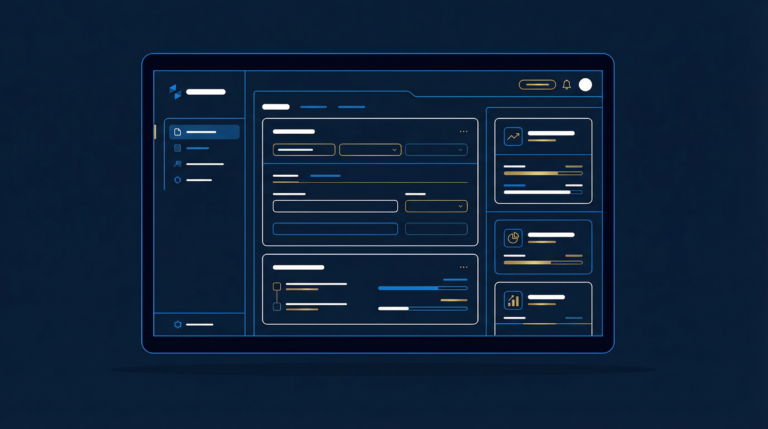
The identity verification system integrates third-party services to scan government-issued identification and perform live biometric checks. During our testing, this automated verification processed our documents in under three minutes. However, corporate entity verification requires manual review by the Securitize compliance team. Platform documentation states this manual review typically takes two to five business days. This delay means founders cannot simply create an account and begin configuring a token offering on the same afternoon. The dashboard design itself is highly professional, utilizing a clean layout with clear navigation menus that separate the cap table management, investor relations, and compliance settings.
Mobile responsiveness is adequate but clearly not the primary focus of the engineering team. The investor-facing portals render well on mobile devices, allowing users to check their portfolio balances and review offering documents from a smartphone. The issuer dashboard, however, contains dense data tables and complex configuration screens that require a desktop monitor for practical use. The documentation provided within the platform is thorough, offering detailed explanations of how to manage investor communications and process dividend distributions. Despite the initial onboarding friction, the system operates logically once the user clears the compliance hurdles.
Supported offerings and token standards
Securitize supports Regulation D exemptions for accredited investors, Regulation S for international participants, and Regulation CF through strategic partnerships. The platform deploys smart contracts primarily on the Ethereum, Polygon, and Avalanche blockchains utilizing its proprietary DS Protocol alongside support for the ERC-3643 standard.
Understanding the regulatory exemptions is critical for any issuer planning a digital asset offering. Securitize handles Regulation D Rule 506(c) offerings, which allow issuers to publicly advertise their capital raise provided they take reasonable steps to verify that all purchasers are accredited investors. The platform’s integrated compliance engine automates this verification process by collecting income statements or letters from certified public accountants. For companies looking to raise capital globally, the platform supports Regulation S offerings. The system automatically enforces the required holding periods and geographic restrictions, ensuring that offshore tokens do not illegally flow back into the United States secondary market. Issuers utilizing Regulation CF for retail crowdfunding can also use the platform, though Securitize typically facilitates these through partnerships with specialized funding portals rather than acting as the primary portal itself.
The technology stack relies heavily on the DS Protocol, which is Securitize’s proprietary compliance framework built on top of public blockchains. The DS Protocol embeds regulatory restrictions directly into the token’s smart contract. If an investor attempts to transfer a token to an unverified wallet, the smart contract checks the on-chain registry maintained by Securitize and automatically blocks the transaction. This ensures continuous compliance even if the token moves outside the immediate Securitize ecosystem. According to the company’s technical documentation, the platform also supports ERC-3643, which is an open-source standard for permissioned tokens. The choice between a proprietary protocol and an open standard represents a significant architectural decision for issuers, which we explore further in our Securitize vs tZERO vs Polymath comparison.
Blockchain selection offers issuers flexibility regarding transaction costs and institutional comfort. Ethereum remains the primary network for high-value institutional issuances like the BlackRock fund due to its established security model and deep liquidity. However, Ethereum’s high gas fees make it impractical for offerings that expect high-frequency trading or involve smaller retail investments. To solve this, Securitize fully supports Polygon and Avalanche. These alternative networks offer fractional transaction costs and faster settlement times. Issuers must weigh the institutional familiarity of Ethereum against the operational efficiency of Polygon or Avalanche when configuring their offering on the platform.
Pricing and fee structure
Securitize does not publish a standard fee schedule, requiring prospective issuers to negotiate pricing directly through sales consultations. Based on industry data gathered in March 2026, minimum engagement costs typically range between $50,000 and $100,000 for smaller issuances, with enterprise offerings priced according to custom requirements.
The lack of transparent pricing creates a significant planning hurdle for startup founders and mid-market companies. Unlike software-as-a-service platforms that list tiered monthly subscriptions, Securitize operates on an enterprise sales model. The total cost of an issuance generally includes an initial setup fee, ongoing technology licensing fees, and variable costs related to investor onboarding and cap table management. Our research into tokenization platform fees comparison indicates that the initial setup fee covers the creation of the smart contracts, the configuration of the compliance rules, and the integration with the transfer agent services. This upfront cost represents a substantial capital commitment before a single dollar of investment is raised.
Ongoing maintenance fees are tied to the number of investors and the complexity of the corporate actions required. If an issuer plans to distribute monthly yields or requires frequent cap table updates, the annual maintenance costs increase accordingly. The platform also charges fees for processing KYC and AML checks on prospective investors. These verification costs are typically passed through to the issuer, meaning a highly successful public marketing campaign that attracts thousands of small investors could generate significant compliance expenses. For secondary trading on Securitize Markets, the platform charges transaction fees similar to traditional brokerage models, though these are generally borne by the trading participants rather than the issuer.
Enterprise clients like BlackRock negotiate entirely custom fee structures based on assets under management and total transaction volume. For smaller issuers, the $50,000 to $100,000 estimated minimum engagement cost means the platform is generally not suitable for capital raises under $5 million. The fixed costs of legal structuring and platform fees would consume too large a percentage of a small offering. Prospective users must secure a direct consultation with the Securitize sales team to receive an accurate binding quote based on their specific regulatory exemption, chosen blockchain, and anticipated investor count.
Pros and cons
The platform offers the strongest regulatory position in the industry by combining broker-dealer, transfer agent, and ATS registrations under one corporate umbrella. This unified structure eliminates the need for issuers to manage multiple vendor relationships. The partnership with BlackRock provides unmatched institutional credibility, proving the technology can handle enterprise-scale asset management. Furthermore, Securitize Markets operates as the most active and established secondary trading venue for private security tokens. The platform boasts the most extensive track record of completed issuances in the sector, giving new clients confidence in its operational stability.
Conversely, the absolute opacity regarding pricing makes financial planning difficult for prospective issuers without engaging in a lengthy sales process. The high estimated minimum costs effectively exclude smaller startups and real estate syndicators who might benefit most from tokenization. Technologically, relying heavily on the proprietary DS Protocol creates a potential vendor lock-in risk. If an issuer decides to migrate away from Securitize in the future, transitioning a proprietary token standard to a new transfer agent involves significant technical and legal friction. Finally, the platform currently lacks support for the European Union DLT Pilot Regime, which limits its utility for issuers specifically targeting the European digital asset market.
Scoring and platform evaluation
We evaluated the platform across six specific criteria to generate an objective assessment of its capabilities. Each category receives a score from 1 to 10 based on our established testing methodology and verified industry data.
Regulatory compliance
Score: 9/10. Securitize holds the strongest regulatory position in the United States market. Operating simultaneously as a FINRA broker-dealer, an SEC transfer agent, and an ATS provides a complete legal framework for digital securities. The only factor preventing a perfect score is the lack of comprehensive European regulatory licenses under the new DLT frameworks.
Ease of use
Score: 7/10. The user interface is professional and logical once accessed. However, the mandatory 14-step onboarding process and the manual compliance reviews create significant friction for first-time users. The platform is built for compliance first and user experience second, which is appropriate for securities law but slows down operations.
Pricing transparency
Score: 5/10. The complete absence of public pricing data forces prospective clients into a sales funnel just to determine basic viability. While enterprise pricing is naturally custom, the failure to provide baseline ranges or standard software licensing costs is a notable negative compared to more transparent competitors.
Secondary market
Score: 8/10. Securitize Markets is the most active regulated secondary market for security tokens currently operating. It successfully settles trades using blockchain infrastructure while maintaining strict regulatory compliance. Liquidity remains lower than traditional public markets, but this is a function of the private securities market rather than a platform defect.
Token standards
Score: 7/10. The platform supports the proprietary DS Protocol and the open-source ERC-3643 standard across Ethereum, Polygon, and Avalanche. This provides good flexibility regarding network choice. However, the heavy reliance on the proprietary DS Protocol creates a long-term vendor lock-in risk that issuers must carefully consider.
Track record
Score: 10/10. No other platform matches this operating history. Founded in 2017, the company has survived multiple market cycles and processed over $2 billion in issuances. Securing the BlackRock BUIDL fund partnership represents the most significant milestone in the history of institutional asset tokenization.
Overall Score: 7.7/10. The platform excels in regulatory infrastructure and institutional reliability but struggles with pricing transparency and accessibility for smaller issuers.
How we evaluated
Our assessment process follows strict editorial guidelines designed to produce objective and verifiable analysis. We do not accept compensation for platform reviews. Our team evaluates tokenization providers by examining their regulatory filings, testing their software interfaces, and analyzing on-chain data related to their smart contracts. We compare these findings against competing platforms to establish relative market positioning. For a detailed explanation of our scoring system and testing procedures, please review our complete review methodology. Readers interested in how this platform compares to other major industry players should also read our comprehensive tZERO review to understand the different approaches to secondary market liquidity.
The digital asset landscape requires infrastructure that can satisfy both aggressive technological demands and conservative regulatory mandates. This Securitize review 2026 demonstrates that the platform has successfully built that exact infrastructure. The combination of broker-dealer, transfer agent, and ATS licenses creates a powerful engine for asset tokenization. While the opaque pricing and high minimum costs will deter smaller issuers, enterprise clients and established financial institutions will find a highly capable partner. The fact that the world’s largest asset manager chose this infrastructure for its flagship tokenized treasury fund serves as the ultimate validation of the platform’s technical and regulatory architecture. Issuers with sufficient capital to meet the entry requirements will find Securitize to be a highly reliable foundation for their digital asset strategies.
Frequently Asked Questions
What is the minimum cost to use Securitize?
Securitize does not publish official pricing, but industry data from 2026 indicates minimum engagement costs typically range between $50,000 and $100,000. These costs include initial setup fees, smart contract deployment, and basic transfer agent services, making the platform best suited for capital raises exceeding $5 million.
Does Securitize operate a secondary trading market?
Yes, the company operates Securitize Markets, which is a FINRA-registered Alternative Trading System. This regulated venue allows investors to buy and sell security tokens after initial lock-up periods expire, providing a compliant mechanism for private market liquidity.
Which blockchains does Securitize support?
The platform primarily supports Ethereum, Polygon, and Avalanche for deploying digital securities. Issuers can choose between these networks based on their specific needs for institutional familiarity, transaction speed, and gas fee costs.
How does the BlackRock BUIDL fund use Securitize?
BlackRock uses Securitize as the transfer agent and tokenization platform for its USD Institutional Digital Liquidity Fund. Securitize handles the investor onboarding, compliance verification, and the on-chain issuance of the BUIDL tokens on the Ethereum network.