Security Tokens and STOs: Complete Guide to Digital Securities
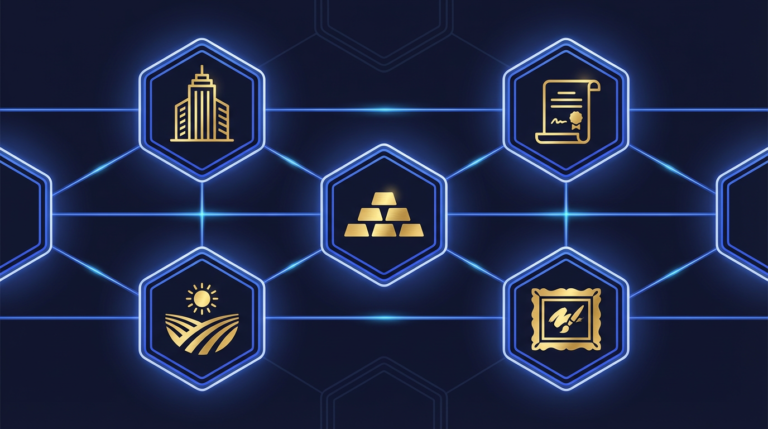
The financial industry spent the better part of a decade trying to reconcile the technological efficiency of blockchain networks with the strict regulatory requirements of global capital markets. Initial coin offerings demonstrated the unprecedented speed and global reach of tokenized fundraising, but they systematically ignored established securities laws, leading to massive investor losses and aggressive regulatory crackdowns. The security token offering emerged as the necessary evolution of this model, replacing unregulated utility tokens with compliant digital securities. By embedding legal frameworks directly into smart contracts, issuers can now raise capital globally while enforcing automated compliance with jurisdictional restrictions, investor accreditation rules, and mandatory lock-up periods.
Understanding how to structure and execute a security token offering requires a deep knowledge of both legacy financial regulations and modern blockchain architecture. This guide examines the mechanics of regulated digital securities, detailing the specific legal tests that define them, the technical standards that govern their transfer, and the reality of their secondary market liquidity. Founders, asset managers, and investors must navigate a complex ecosystem of tokenization platforms, digital transfer agents, and alternative trading systems to successfully participate in this market. The transition from analog securities to digital tokens represents a fundamental upgrade to capital market infrastructure, but it demands rigorous adherence to the legal frameworks that protect market integrity.
Core Distinction: An Initial Coin Offering (ICO) attempts to bypass securities laws by selling utility claims; a Security Token Offering (STO) embraces securities laws from day one—embedding SEC/MiFID II investor protections, KYC whitelists, and legal equity or debt rights directly into the token’s smart contract.
What is a security token offering and how it works
A security token offering is a fundraising method where an issuer creates digital tokens on a blockchain that represent investment contracts under applicable securities law. Unlike unregulated initial coin offerings, an STO requires strict regulatory compliance, including investor verification, automated transfer restrictions, and formal registration or legal exemptions.
The definition of a security token relies entirely on established legal frameworks rather than underlying technology. In the United States, the primary framework is the Howey test, derived from the 1946 Supreme Court case SEC v. W.J. Howey Co. According to this legal standard, an investment contract exists if there is an investment of money in a common enterprise with a reasonable expectation of profits derived from the efforts of others. When a digital asset meets these four criteria, financial regulators classify it as a security, regardless of what the issuer calls it. Many early blockchain projects attempted to bypass these rules by labeling their assets as utility tokens, claiming the tokens merely provided access to a software platform. Regulators universally rejected this argument when the economic reality demonstrated that purchasers bought the tokens expecting their value to increase based on the development team’s work.
Executing a security token offering involves a complex sequence of legal and technical steps that fundamentally differ from launching a standard cryptocurrency. The process begins with legal structuring, where the issuer and their securities counsel determine the appropriate regulatory framework for the capital raise. In the United States, companies typically rely on exemptions from full SEC registration, such as Regulation D Rule 506(c) for accredited investors, Regulation A+ for broader retail access with a $75 million cap, or Regulation S for offshore investors. This legal foundation dictates exactly who can buy the tokens, how long they must hold them, and how the tokenization platform must configure the compliance smart contracts. You can explore the broader context of these structures in our asset tokenization definitive guide, which covers the tokenization of various real-world assets beyond corporate equity.
The issuance process requires coordination among several specialized service providers to ensure the digital security remains compliant throughout its lifecycle. The issuer hires a tokenization platform to write and deploy the smart contracts, but they must also engage a digital transfer agent registered with the SEC or local regulator to maintain the official cap table. A KYC/AML provider verifies the identity and accreditation status of every potential investor before they can interact with the smart contract. Additionally, institutional offerings often involve a qualified custodian to hold the digital assets securely on behalf of investors who prefer not to manage their own private keys. This multi-party infrastructure ensures that the STO for startups launch process maintains the same level of legal rigor as a traditional private placement while benefiting from blockchain settlement speeds.
Comparing fundraising methods highlights the specific advantages and limitations of digital securities. The table below outlines the core differences between an unregulated initial coin offering, a regulated security token offering, and a traditional initial public offering.
| Feature | Initial Coin Offering (ICO) | Security Token Offering (STO) | Initial Public Offering (IPO) |
|---|---|---|---|
| Regulatory Status | Largely unregulated, often illegal | Fully regulated securities | Fully regulated public securities |
| Investor Access | Global retail (historically) | Mostly accredited, some retail via Reg A+ | Retail and institutional |
| Legal Compliance | Minimal to none | Automated via smart contracts | Manual via brokers and clearinghouses |
| Issuance Cost | Very low ($50k – $100k) | Moderate ($150k – $500k) | Very high ($2M+) |
| Time to Launch | Weeks | 3-6 months | 12-18 months |
| Secondary Liquidity | High (crypto exchanges) | Low to moderate (regulated ATS) | Very high (major stock exchanges) |
Founders deciding how to raise capital must carefully weigh these factors. While an STO provides a legal pathway to issue digital assets, it does not automatically guarantee the massive liquidity seen in the crypto markets. Investors are restricted by lock-up periods-often one year under Reg D-and can only trade on specialized alternative trading systems rather than global crypto exchanges like Binance or Coinbase. For a more granular breakdown of these trade-offs, review our STO vs ICO vs IPO detailed comparison to understand which path aligns with your specific capital requirements and timeline.
Technical standards for regulated digital securities
Technical standards for security tokens embed regulatory compliance directly into smart contracts. Standards like ERC-3643, ERC-1400, and Polymesh’s ST-20 ensure that tokens can only be transferred between verified wallets, automatically enforcing jurisdictional limits, lock-up periods, and investor accreditation rules without requiring manual intervention.
The standard ERC-20 token protocol, which powers most decentralized finance applications and utility tokens, lacks the functionality required for regulated securities. An ERC-20 token allows anyone with a compatible wallet to send and receive assets freely and anonymously. Securities laws explicitly forbid this, requiring issuers to know the identity of every shareholder and to prevent transfers to sanctioned individuals or unverified retail investors. To solve this, blockchain developers created specialized security token standards that separate the token transfer function from a distinct compliance layer. When a user attempts to send a security token, the smart contract first queries an on-chain registry to verify that both the sender and the receiver meet all legal conditions before executing the transaction.
The ERC-3643 standard has emerged as a dominant framework for institutional asset tokenization on Ethereum and compatible networks. Originally developed as the T-REX (Token for Regulated Exchanges) protocol, ERC-3643 uses a decentralized identity system called ONCHAINID to manage compliance. Before an investor can receive an ERC-3643 token, they must complete KYC/AML checks with a trusted third party, who then issues a verifiable credential to their ONCHAINID. When a transfer initiates, the token contract checks the identity registry to confirm the receiver’s credentials match the specific rules set by the issuer. This standard has seen significant adoption by major financial institutions because it allows issuers to freeze tokens, force transfers, and recover lost assets-all mandatory capabilities for regulated securities. Learn more about its architecture in our deep dive on the ERC-3643 institutional token standard.
Another major framework is the ERC-1400 standard, often referred to as the modular security token standard. Developed heavily by the Polymath team before they migrated to their own blockchain, ERC-1400 consolidates several different token proposals into a single, comprehensive suite of smart contracts. It introduces the concept of token partitions, allowing an issuer to divide a single asset class into different tranches with distinct compliance rules. For example, an issuer could use partitions to separate tokens subject to a Reg D lock-up period from tokens that are freely tradable under Reg S, all within the same overarching smart contract. ERC-1400 also supports document attachment, enabling issuers to link off-chain legal documents directly to the on-chain token metadata.
While Ethereum remains the most popular network for tokenization, generic blockchains struggle with the specific privacy and finality requirements of capital markets. This led to the development of Polymesh, an institutional-grade permissioned blockchain built specifically for regulated assets. Polymesh utilizes the ST-20 standard, which moves compliance checks from the smart contract layer down to the blockchain’s base layer. Every node operator and user on Polymesh must pass identity verification before interacting with the network. This architecture reduces the gas costs associated with complex compliance smart contracts and provides deterministic finality, ensuring that trades cannot be reversed once confirmed. By baking identity, compliance, confidentiality, and governance into the core protocol, Polymesh offers a compelling alternative to public networks for highly sensitive financial instruments.
Secondary markets and global regulatory landscape
Secondary markets for security tokens operate through regulated alternative trading systems like tZERO and Securitize Markets in the United States. While these platforms provide legal venues for trading digital securities, actual market liquidity remains notably thin compared to traditional public equities, requiring investors to accept longer holding periods.
The promise of instant, 24/7 global liquidity was one of the primary marketing narratives during the early days of security tokens. The reality has proven far more complex. To legally trade security tokens, investors must use specialized broker-dealers that operate Alternative Trading Systems (ATS) registered with the SEC and FINRA. The tZERO ATS and Securitize Markets are two of the most prominent venues in the United States, offering platforms where retail and accredited investors can buy and sell digital securities after mandatory lock-up periods expire. However, because these platforms cannot interface with unregulated crypto exchanges, their user bases remain relatively small. According to Security Token Market’s industry data, total monthly trading volume across all regulated security token ATS platforms typically hovers in the low tens of millions of dollars-a fraction of the billions traded daily on the NASDAQ or global crypto exchanges.
Liquidity fragmentation exacerbates this problem. Unlike traditional equities, which clear through the centralized Depository Trust & Clearing Corporation (DTCC), security tokens settle on various blockchains. An investor holding an ERC-3643 token minted via Tokeny cannot easily trade it on an ATS that only supports ERC-1400 tokens minted via Securitize. Furthermore, traditional institutional market makers have been slow to enter the digital securities space due to regulatory uncertainty regarding digital asset custody. The SEC’s Special Purpose Broker-Dealer rules provide a framework for custodying digital asset securities, but the compliance burden remains exceptionally high. Until major institutional capital flows into these alternative trading systems, founders and investors should view security tokens primarily as a mechanism for efficient issuance and cap table management rather than an immediate path to high-volume secondary trading. For practical guidance on navigating these venues, see our guide on where to buy security tokens.
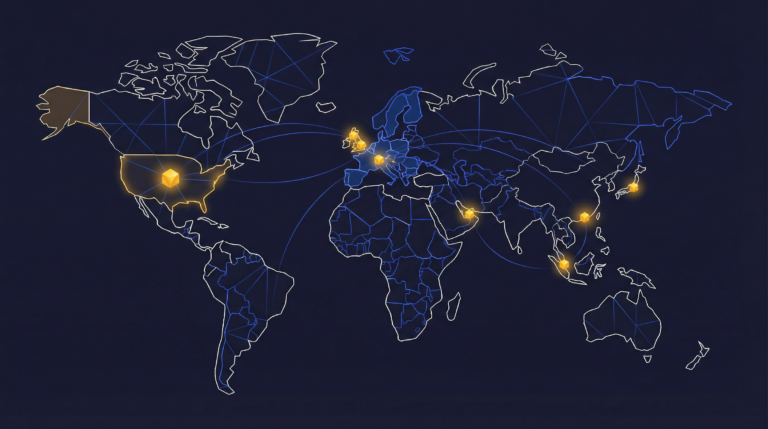
The regulatory landscape governing these markets varies drastically across jurisdictions, forcing issuers to navigate a patchwork of global rules. In the United States, the SEC maintains a strict enforcement approach, applying the Howey test to nearly all digital assets and requiring formal registration or strict adherence to Regulation D, Regulation A+, or Regulation CF exemptions. The SEC has repeatedly stated that existing securities laws provide adequate frameworks for digital assets and has shown little appetite for creating bespoke crypto regulations. Issuers must file standard Form D notices and work with registered transfer agents to remain compliant, treating their digital tokens exactly as they would treat uncertificated shares in a traditional private placement.
European and Asian regulators have taken more proactive steps to create specific legal frameworks for digital securities. In Germany, the Federal Financial Supervisory Authority (BaFin) operates under the Electronic Securities Act (eWpG), which legally abolished the requirement for a paper certificate to issue a security, explicitly allowing blockchain-based registries to serve as the definitive record of ownership. Switzerland’s Financial Market Supervisory Authority (FINMA) implemented the DLT Act, providing immense legal clarity for ledger-based securities and enabling the creation of specialized DLT trading facilities. In Asia, the Monetary Authority of Singapore (MAS) regulates security tokens under the Securities and Futures Act, while the Hong Kong Securities and Futures Commission (SFC) recently updated its guidance to allow retail investors to access specific security token offerings under strict licensing conditions. The UK’s Financial Conduct Authority (FCA) is currently testing the Digital Securities Sandbox to allow firms to experiment with blockchain settlement infrastructure. Check our tokenization glossary for specific definitions of these international regulatory frameworks.
Track record and market adoption
The track record for security token offerings shows steady institutional adoption following early retail experimentation. Issuers have successfully tokenized real estate, private equity, and corporate debt, though the market has also seen failures from poorly structured assets and SEC enforcement actions against unregistered token offerings masquerading as utility tokens.
The market for regulated digital securities has matured significantly since the first experimental offerings in 2017. According to data from industry trackers and SEC EDGAR filings, hundreds of security token offerings have been completed globally, raising several billion dollars in aggregate capital. Early pioneers focused heavily on venture capital and real estate. Blockchain Capital’s BCAP token, launched in 2017, was one of the first successful attempts to tokenize a venture fund, raising $10 million and providing a template for future fund tokenization. Real estate platforms like RealT have successfully tokenized dozens of individual properties, allowing investors to purchase fractional ownership and receive daily rental yields directly to their digital wallets via stablecoins. These early successes proved that the underlying smart contract infrastructure worked and that automated compliance could handle complex dividend distributions.
Larger corporate issuers eventually entered the market, utilizing the Regulation A+ exemption to conduct public offerings of digital securities. INX Limited made history by completing the first SEC-registered token IPO, raising approximately $85 million from over 7,200 retail and institutional investors. The INX token provided holders with a share of the company’s net revenues, demonstrating how smart contracts could automate complex profit-sharing agreements. Similarly, the crypto wallet provider Exodus raised $75 million through a Reg A+ offering, issuing digital common stock tokens on the Algorand blockchain. These high-profile raises proved that retail investors possessed a strong appetite for regulated digital securities when offered by established companies with clear business models and transparent regulatory filings.
However, the track record also reveals distinct failure patterns that founders must study. The most common reason for an STO failure is a poor underlying asset. Tokenization cannot fix a bad business model or an overpriced real estate asset. Many early STOs failed to reach their funding targets because issuers assumed the novelty of the blockchain would attract capital regardless of the asset’s fundamental financial metrics. Institutional investors evaluate a security token offering using the exact same underwriting standards they apply to traditional private placements. If the yield, risk profile, and management team do not meet institutional standards, the token will not sell, regardless of how advanced the ERC-3643 smart contracts are.
Furthermore, the SEC’s aggressive enforcement actions have sharply defined the boundaries of the market. The commission has pursued numerous high-profile cases against companies that attempted to raise capital through unregistered token offerings. The most notable example involved Telegram, which raised $1.7 billion in an offering the SEC successfully halted, arguing the tokens were unregistered securities despite Telegram’s claims they were utility tokens for a future network. The SEC’s consistent application of the Howey test has forced the industry to abandon regulatory arbitrage. Today, serious financial institutions and startups understand that launching a digital asset requires full compliance with securities laws from day one, cementing the STO as the only viable path for tokenized capital formation.
Conclusion
The transition from unregulated crypto offerings to compliant digital securities represents a maturation of the blockchain industry. Security token offerings provide a legally robust framework for issuing, managing, and transferring investment contracts on digital ledgers. By leveraging standards like ERC-3643 and ERC-1400, issuers can automate compliance, reduce administrative overhead, and access a global pool of investors while respecting the jurisdictional boundaries enforced by regulators like the SEC, BaFin, and FINMA.
While the technology has proven its capability to streamline cap table management and automate corporate actions, market participants must remain realistic about secondary liquidity. Trading volumes on regulated alternative trading systems remain a fraction of traditional markets, requiring investors to approach security tokens with a long-term holding mindset. However, as institutional adoption accelerates and regulatory clarity improves globally, the infrastructure supporting these digital assets will continue to scale. Founders planning to raise capital should consult with qualified securities counsel and evaluate tokenization platforms to determine if a security token offering aligns with their strategic financial goals.
STO vs. ICO vs. Traditional Private Placement: Full Comparison
| Feature | Security Token Offering (STO) | Traditional VC / Private Placement | Initial Coin Offering (ICO) |
|---|---|---|---|
| Legal Backing | Enforceable equity shares, bond indentures, or LP fund units. | Enforceable paper/book-entry stock or debt agreements. | Unregulated utility promise; high SEC enforcement exposure. |
| Regulatory Framework (US) | SEC Reg D 506(c), Reg S, Reg A+, or Reg CF. | SEC Reg D 506(b) / 506(c). | Often non-compliant under the Howey Test. |
| Cap Table & Compliance | Automated via ERC-3643 / ERC-1400 + registered Transfer Agent. | Manual legal ledger (Carta, Pulley, law firm spreadsheets). | Anonymous ERC-20 wallets; no KYC or cap table control. |
| Secondary Liquidity Path | Regulated ATS venues (tZERO, Securitize Markets, INX) after lockup. | Illiquid for 7–10 years until M&A or IPO (or high-fee broker secondaries). | Instant DEX/CEX listing, but extreme legal & volatility risk. |
Practitioner Reality: The 4 Licensed Intermediaries Required for a U.S. STO
1. Corporate & Securities Legal Counsel
Drafts the Private Placement Memorandum (PPM), Subscription Agreement, Token Purchase Agreement, and Form D filings, ensuring the smart contract’s transfer rules match the written legal disclosures word-for-word.
2. SEC-Registered Transfer Agent (TA)
Maintains the official master securityholder file required under U.S. corporate law, reconciles on-chain wallet balances with legal investor identities, and executes court-ordered or lost-wallet token recoveries.
3. FINRA-Registered Broker-Dealer (Placement Agent)
If anyone is paid a commission based on capital raised—or if the offering is listed on a marketplace—U.S. federal law requires a licensed Broker-Dealer to supervise investor suitability, AML checks, and escrow release.
4. Alternative Trading System (ATS)
Once the mandatory 12-month Rule 144 holding period expires for Reg D tokens, secondary trading in the U.S. can only occur legally on an SEC-registered ATS—never on an unpermissioned public DEX.
Frequently Asked Questions
What is the difference between a utility token and a security token?
A security token represents a legal investment contract with an expectation of profit derived from the efforts of others, subjecting it to strict financial regulations. A utility token merely provides access to a specific software product or service and is not designed as an investment vehicle.
How much does it cost to launch a security token offering?
Launching a compliant STO typically costs between $150,000 and $500,000. These costs include legal structuring, SEC filing fees, smart contract development by a tokenization platform, digital transfer agent integration, and comprehensive KYC/AML verification services for prospective investors.
Can retail investors buy security tokens?
Retail investors can buy security tokens if the issuer utilizes specific regulatory exemptions like Regulation A+ or Regulation CF in the United States. However, most digital securities are issued under Regulation D Rule 506(c), which restricts participation exclusively to verified accredited investors.
Where can I trade security tokens after buying them?
Security tokens can only be traded on regulated Alternative Trading Systems (ATS) or specialized digital broker-dealers, such as tZERO or Securitize Markets. You cannot trade regulated digital securities on standard cryptocurrency exchanges like Binance or Coinbase due to strict compliance requirements.
What happens if I lose access to my security token wallet?
Unlike standard cryptocurrencies, security tokens can be recovered if you lose your private keys. Because the digital transfer agent maintains the official legal cap table, they can burn the lost tokens and reissue new compliant tokens to your updated wallet address.