Brickken Review 2026: European Tokenization & DeFi Tested
The European digital asset market has formalized over the past three years, creating a distinct divide between enterprise-grade infrastructure providers and decentralized finance protocols. Startup founders and mid-market issuers often find themselves caught between these extremes. Enterprise platforms demand massive upfront fees and complex integrations, while pure decentralized finance protocols offer zero compliance guardrails for regulated securities. This gap in the market created the specific conditions for hybrid platforms to emerge. Our comprehensive Brickken review 2026 examines how this Barcelona-based software provider attempts to bridge the gap between traditional securities compliance and decentralized financial automation. By combining a self-service token creation interface with smart contract-based revenue distribution, the platform targets issuers who need regulatory compliance without the enterprise price tag. We tested the platform’s core features, analyzed its pricing structure, and evaluated its regulatory positioning to determine if it delivers on its promise of accessible digital asset creation.
Platform Overview: European Tokenization Meets DeFi
Brickken is a Barcelona-based tokenization platform founded in 2020 that provides a no-code Token Factory for digital securities. The platform bridges traditional compliance with decentralized finance protocols, offering automated revenue distribution and self-service token creation primarily for European issuers and real estate operators.
The company entered the market with a specific thesis about making digital asset creation accessible to non-technical founders. While established competitors like Tokeny built heavy, institutional-grade infrastructure for banks and large funds, Brickken focused on the mid-market segment. The platform operates on a software-as-a-service model, providing the technical layer for tokenization while leaving the legal structuring to the issuer and their counsel. This approach significantly lowers the barrier to entry for companies looking to raise capital or digitize existing assets. The core architecture relies on public blockchains, specifically Ethereum and Polygon, allowing issuers to tap into the broader decentralized finance ecosystem once their tokens are minted and distributed.
Positioning a platform between traditional finance and decentralized finance requires careful technical architecture. Brickken handles this by utilizing standard ERC-20 tokens augmented with specific compliance modules rather than adopting heavier, purpose-built security token standards. This design choice makes Brickken tokens highly compatible with existing decentralized exchanges and lending protocols, assuming the issuer’s compliance rules permit such interactions. The platform has gained traction among small to medium enterprises seeking the [best tokenization platforms for Europe](/platforms/best-tokenization-platforms-europe) because it provides a functional middle ground. Issuers get the necessary whitelisting and transfer restriction capabilities required by European regulators, but they also retain the flexibility to utilize automated smart contracts for corporate actions.
Hands-On Testing: The Brickken Token Factory
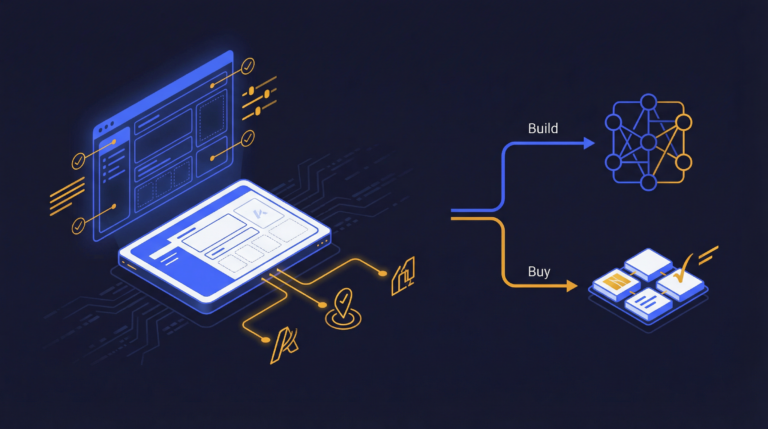
The Brickken Token Factory is a self-service application that allows issuers to configure, mint, and manage ERC-20 compliant security tokens without writing code. Users can define token supply, set transfer restrictions, and deploy smart contracts directly to Ethereum or Polygon networks through a visual interface.
Testing the Token Factory reveals a user experience designed explicitly for founders rather than blockchain developers. The interface guides users through a logical sequence of configuration steps, beginning with basic token parameters like name, ticker symbol, and total supply. The system then prompts the issuer to establish compliance rules, which form the core of the security token’s functionality. Users can set up investor whitelists, define transfer restrictions based on jurisdiction or investor accreditation status, and implement lock-up periods directly through the dashboard. The no-code environment translates these plain-English rules into smart contract parameters before deployment.
When comparing this experience to other white-label tokenization platforms on the market, Brickken’s interface closely resembles the Stobox DS Dashboard in its self-service approach. Both platforms prioritize accessibility and visual configuration over custom code. However, Brickken places a stronger emphasis on post-issuance management within the same interface. Once the token is deployed to either the Ethereum mainnet or the Polygon network, the dashboard transforms into an active management console. Issuers use this space to monitor token distribution, manage the cap table in real-time, and update compliance rules if regulatory requirements change. The deployment process itself is seamless, handling the complex gas fee calculations and contract interactions behind the scenes while providing the issuer with clear confirmation of their on-chain actions.
DeFi Integration and Revenue Distribution
Brickken integrates decentralized finance mechanics to automate corporate actions like dividend payments and rental income distribution. Smart contracts route stablecoins directly to whitelisted token holder wallets, eliminating traditional payment reconciliation while introducing specific smart contract risks that require thorough security auditing.
The automated revenue distribution system represents Brickken’s most distinctive technical feature. Traditional security token platforms often handle dividend payments off-chain, requiring issuers to calculate entitlements, convert fiat to digital assets, and manually execute airdrops to investor wallets. Brickken automates this entire sequence through smart contracts. An issuer can deposit a supported stablecoin into the platform’s distribution contract and configure the payment parameters. The smart contract then queries the real-time cap table, calculates the exact proportional entitlement for every token holder, and executes the transfers simultaneously. This mechanism drastically reduces the administrative overhead associated with managing a large pool of retail investors, making it economically viable to distribute micro-dividends on a frequent schedule.
This functionality has made the platform particularly attractive for property operators, as detailed in our real estate tokenization guide. Real estate projects frequently generate monthly rental yields that must be distributed to fractional owners. Brickken allows property managers to route these yields through the automated system, providing investors with predictable, verifiable income streams. Notable real estate projects utilizing the platform have leveraged this feature to distribute rental income automatically via Polygon, minimizing transaction fees while maximizing payout frequency. While this automation provides massive efficiency gains, it also centralizes risk within the distribution smart contracts. According to Brickken’s platform documentation, their core contracts undergo regular security audits, but issuers must still understand that automated on-chain payments cannot be easily reversed if an error occurs during configuration.
Regulatory Compliance and EU Positioning
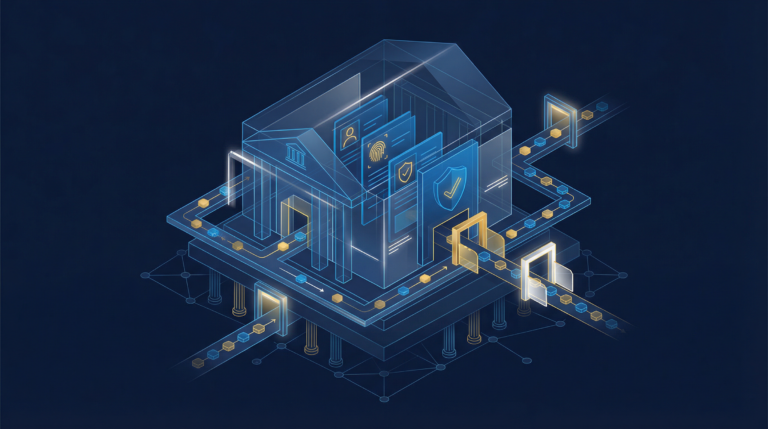
Brickken operates within the European Union regulatory framework and prepares issuers for Markets in Crypto-Assets compliance. The platform integrates third-party identity verification providers for investor onboarding but relies on issuers to structure their own legal wrappers rather than providing an end-to-end institutional regulatory umbrella.
Navigating the European regulatory landscape requires a clear distinction between software provision and financial services. Brickken positions itself strictly as a technology provider, meaning the platform itself does not hold the heavy financial licenses required to operate as a broker-dealer or a multilateral trading facility. Instead, it provides the technological tools that allow issuers to remain compliant with their respective national regulators. The platform integrates with established KYC and AML providers to handle investor onboarding, ensuring that only verified individuals can interact with the smart contracts. This modular approach allows issuers to plug in their preferred compliance partners while using Brickken’s infrastructure to enforce the resulting rules on-chain. As the European Union transitions into the Markets in Crypto-Assets regulatory era, Brickken has updated its compliance modules to help issuers meet the new disclosure and transparency requirements.
This regulatory stance contrasts sharply with platforms like Bitbond, which operates under direct supervision from the German Federal Financial Supervisory Authority, or Tokeny, which has built deep institutional regulatory infrastructure. Brickken’s model places the legal burden squarely on the issuer. A company using Brickken must secure its own legal counsel, draft its own prospectus, and ensure its offering complies with local securities laws. The platform simply ensures that the token behaves exactly as the legal documents dictate. For many startups, this is a feature rather than a bug, as it avoids the high costs associated with institutional platforms that bundle legal structuring into their software fees. However, conservative financial institutions often prefer platforms that carry their own regulatory licenses to minimize counterparty risk.
Pricing Model and Platform Costs
Brickken utilizes a transparent, tiered software-as-a-service pricing model combined with utility mechanics tied to its native BKN token. Issuers pay upfront setup fees starting around $5,000 for basic deployments, plus ongoing monthly maintenance costs, which scales based on the features and total issuance volume required.
Transparency in pricing remains a rare commodity in the digital asset infrastructure space, but Brickken publishes clear tiers for its software services. As of March 2026, the platform offers a structured approach that separates the initial token creation costs from the ongoing management fees. The basic tier, designed for simple capital raises or straightforward asset digitization, requires an initial setup fee of approximately $5,000. This covers access to the Token Factory, basic smart contract deployment, and standard compliance module configuration. Ongoing monthly fees cover cap table management, investor dashboard hosting, and access to the automated distribution tools. Premium tiers, which include custom integrations, dedicated support, and advanced decentralized finance routing, scale upward based on the total value of the assets being tokenized. This structure compares favorably against enterprise platforms in our tokenization platform fees comparison, which often require minimum commitments exceeding $50,000.
The pricing model also incorporates the platform’s native BKN token, adding a layer of utility economics to the software-as-a-service structure. Issuers can often reduce their fiat software costs by holding or paying with BKN tokens. Furthermore, certain advanced features within the decentralized finance integration suite require the staking or utilization of BKN to execute. This tokenomics model aligns the incentives of the platform developers with the active users, though it does introduce price volatility risk for issuers who choose to hold the utility token on their balance sheet. The combination of predictable fiat pricing tiers and optional token utility provides a flexible cost structure that accommodates both traditional corporate budgets and crypto-native treasuries.
Pros and Cons
Evaluating the platform requires weighing its accessibility against its technical and regulatory limitations. The most significant advantage Brickken offers is its genuinely accessible no-code Token Factory. Founders without any smart contract development experience can configure and deploy compliant security tokens in a matter of hours. The automated decentralized finance revenue distribution system stands out as a highly innovative feature, drastically reducing the administrative burden of managing dividend or yield payouts for large pools of investors. Furthermore, the transparent, tiered pricing model allows mid-market companies to budget accurately for their tokenization initiatives without engaging in lengthy enterprise sales negotiations. The platform’s strong focus on real estate functionality makes it an excellent choice for property operators looking to digitize their portfolios.
Conversely, the platform presents several drawbacks that potential issuers must consider. Brickken is a relatively young company founded in 2020, meaning it lacks the decade-long track record and massive assets under management figures of older institutional players. The regulatory infrastructure is less robust than competitors who hold direct financial licenses, requiring issuers to take full responsibility for their legal structuring. Another notable limitation is the absence of a proprietary secondary market venue. Issuers must rely on third-party decentralized exchanges or external bulletin boards to provide liquidity for their investors. Finally, the reliance on standard ERC-20 tokens with compliance add-ons, rather than purpose-built security standards like ERC-3643, may limit interoperability with strict institutional custody providers who require standardized identity frameworks.
Scoring and Evaluation
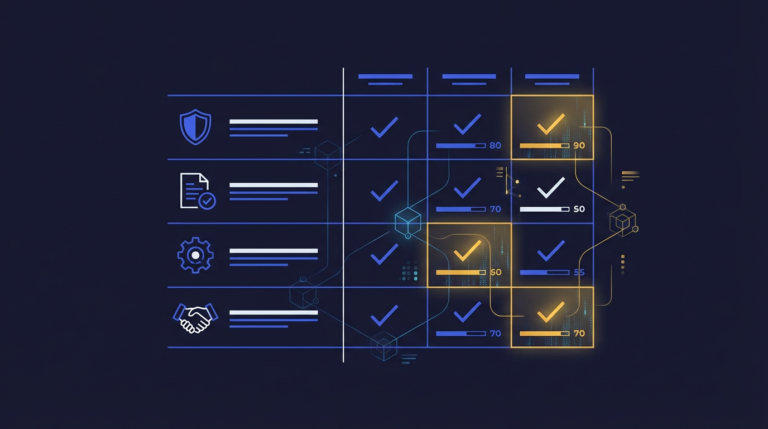
We rate Brickken an overall 6.2 out of 10 based on six core criteria relevant to security token issuers. The platform scores highly for ease of use and pricing transparency but loses points for its secondary market limitations and reliance on less sophisticated token standards.
| Evaluation Criteria | Score | Justification |
|---|---|---|
| Regulatory Compliance | 6/10 | EU-focused compliance tools, but lacks the institutional regulatory infrastructure of Tokeny or Bitbond. |
| Ease of Use | 8/10 | No-code Token Factory is genuinely accessible to non-technical founders with excellent dashboard UX. |
| Pricing Transparency | 7/10 | Tiered pricing is publicly available and more transparent than most enterprise competitors. |
| Secondary Market | 4/10 | Relies entirely on third-party DEXs and external exchanges; no proprietary trading venue. |
| Token Standards | 7/10 | Uses ERC-20 with compliance modules; highly DeFi-compatible but less sophisticated than ERC-3643. |
| Track Record | 5/10 | Younger platform (2020) with a growing but smaller portfolio than established institutional players. |
Regulatory Compliance
Brickken earns a moderate score in this category because it provides functional tools without comprehensive legal coverage. The platform gives issuers exactly what they need to enforce rules on-chain, including whitelisting and transfer restrictions. However, because Brickken operates purely as a software provider without direct financial regulatory licenses, conservative institutions may find the compliance umbrella insufficient. The burden of legal structuring remains entirely on the issuer.
Ease of Use
The platform excels in usability, earning its highest marks for the Token Factory interface. The developers successfully abstracted complex smart contract deployment into a straightforward, visual process. Founders can navigate the entire token creation journey without viewing a single line of Solidity code. The post-issuance management dashboard is similarly intuitive, making cap table management and dividend distribution simple for administrative staff.
Pricing Transparency
Unlike many platforms that hide their costs behind mandatory sales calls, Brickken publishes clear, tiered pricing information. This transparency allows startups to evaluate the financial viability of their tokenization projects early in the planning phase. The combination of flat setup fees and predictable monthly maintenance costs provides clear budget parameters, though the integration of the BKN utility token adds slight complexity for purely traditional finance users.
Secondary Market
This represents the platform’s weakest area in our evaluation. Brickken does not operate its own secondary trading venue or multilateral trading facility. Issuers must secure listings on external decentralized exchanges or partner with separate regulated broker-dealers to provide liquidity to their investors. This fragmentation forces the issuer to manage multiple platform relationships if they want to offer a complete primary issuance and secondary trading experience.
Token Standards
The choice to use augmented ERC-20 tokens provides excellent compatibility with the broader decentralized finance ecosystem. This standard allows Brickken tokens to interact easily with automated market makers and lending protocols. However, it lacks the deep, identity-first architecture of standards like ERC-3643, which are specifically designed for complex institutional securities. It is a practical compromise that favors flexibility over rigid institutional standardization.
Track Record
Founded in 2020, Brickken is still building its historical portfolio compared to platforms that launched during the initial security token wave of 2017. While the company has successfully processed numerous issuances and maintains a growing volume of assets under management, it has not yet captured the massive enterprise clients that define the top tier of the market. The platform is proving its reliability in real-time as its early cohorts of issuers continue to manage their assets on-chain.
How We Evaluated
Our evaluation of Brickken follows our standardized testing methodology for digital asset infrastructure. We assessed the platform through hands-on testing of the Token Factory, review of smart contract documentation, analysis of public pricing data, and comparison against established European tokenization competitors.
The data and conclusions presented in this analysis are derived from direct interaction with the platform’s public interfaces and published technical documentation as of early 2026. We executed simulated token deployments to evaluate the user experience and examined the smart contract architecture governing the automated revenue distribution systems. Furthermore, we cross-referenced Brickken’s feature set and pricing against the broader market context detailed in our guide to the best tokenization platforms. This comparative approach ensures that our ratings reflect actual market conditions rather than isolated product claims. Readers seeking deeper insight into our scoring mechanics and data verification processes can review our complete review methodology.
Conclusion
Brickken occupies a highly specific and valuable position in the digital asset infrastructure market. By combining accessible token creation with automated decentralized finance mechanics, the platform serves the exact needs of mid-market issuers and real estate operators who find enterprise solutions too expensive and pure decentralized protocols too risky. The no-code Token Factory delivers on its promise of usability, and the automated revenue distribution system provides genuine operational efficiency for managing fractional owners.
Founders evaluating this platform must accept the trade-offs inherent in its design. You will need to bring your own legal counsel, manage your own regulatory structuring, and find external solutions for secondary market liquidity. However, for companies willing to take responsibility for their legal wrappers, Brickken offers a highly functional, cost-effective technical foundation. As the European regulatory environment stabilizes under new frameworks, platforms that provide clear, self-service compliance tools will become increasingly vital. This Brickken review 2026 confirms that the platform is a strong contender for startups seeking practical, independent tokenization infrastructure.
Frequently Asked Questions
What blockchains does Brickken support for tokenization?
Brickken primarily supports Ethereum and Polygon for token deployment. These public networks provide high security and deep integration with decentralized finance protocols, allowing issuers to leverage automated smart contracts for revenue distribution and cap table management.
How much does it cost to use Brickken?
Brickken utilizes a tiered software-as-a-service model with initial setup fees starting around $5,000 for basic deployments. Issuers also pay ongoing monthly maintenance fees that scale based on total issuance volume, with options to offset costs using the native BKN token.
Does Brickken provide a secondary market for trading tokens?
No, Brickken does not operate a proprietary secondary market or multilateral trading facility. Issuers must rely on third-party decentralized exchanges or partner with external regulated broker-dealers to provide liquidity for their investors.
Is Brickken a regulated financial institution?
Brickken operates as a technology provider rather than a regulated financial institution. The platform supplies the compliance software and integrates with KYC providers, but the issuer remains entirely responsible for legal structuring and regulatory adherence.
Sources
- [1] Brickken Official Platform Documentation and Pricing Tiers (March 2026)
- [2] European Securities and Markets Authority (ESMA) Guidelines on MiCA Implementation
- [3] rwa.xyz Dashboard Data on Polygon Real Estate Tokenization Volumes
- [4] CertiK Smart Contract Audit Reports for Brickken Distribution Contracts