Tokenization platform comparison matrix: the definitive 2026 guide
Selecting the right infrastructure partner is the single most consequential decision an issuer makes when bringing real-world assets on-chain. The market has matured significantly, moving past experimental pilot programs into institutional-grade issuances backed by comprehensive legal frameworks. However, the ecosystem remains highly fragmented, with different providers specializing in distinct asset classes, regulatory jurisdictions, and technological standards. Navigating this complex landscape requires objective, standardized data rather than relying on marketing claims. This tokenization platform comparison 2026 guide provides the definitive benchmark for evaluating the industry’s leading infrastructure providers. We have analyzed the market to build a comprehensive framework that cuts through the noise and presents verifiable data on regulatory compliance, technological capabilities, and economic models.
Platform overview and methodology
The 2026 tokenization landscape is dominated by 15 primary platforms that have demonstrated consistent operational history, completed multiple live issuances, and serve external enterprise clients. These platforms represent the institutional standard for asset tokenization infrastructure today.
To build this tokenization platform matrix, we evaluated providers that actively operate in the market and possess verifiable track records of bringing assets on-chain. We excluded internal corporate projects, platforms still in beta testing, and providers that lack public documentation of their regulatory status or technological architecture. Our research methodology relies exclusively on public filings, regulatory databases, platform documentation, and verified on-chain data collected during the first quarter of 2026. The industry evolves rapidly, and regulatory statuses frequently shift as new licenses are acquired or jurisdictional rules change. Readers should use this framework as a foundational reference while verifying specific details directly with providers during their procurement process. For a deeper understanding of our analytical approach, please review our comprehensive review methodology.
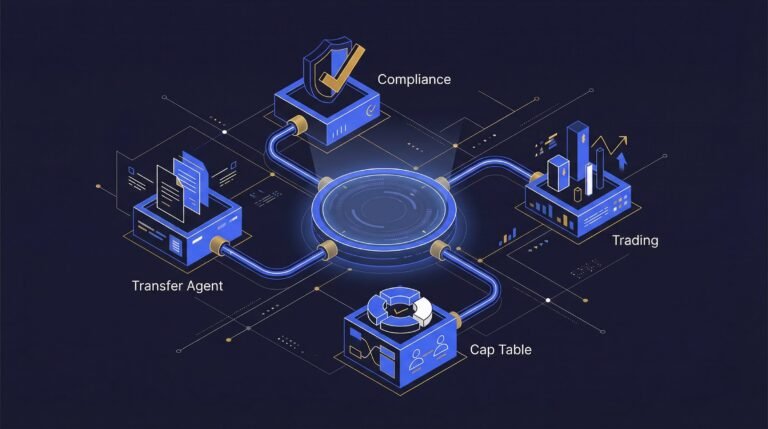
Securitize, founded in 2017 and headquartered in Miami, operates as a comprehensive digital asset securities firm. The company holds registration as a broker-dealer, transfer agent, and alternative trading system (ATS) with the United States Securities and Exchange Commission. This vertically integrated regulatory stack allows Securitize to manage the entire lifecycle of a digital security, from primary issuance through secondary market trading. For a detailed breakdown of their capabilities, read our complete Securitize review.
tZERO, established in 2014 in New York City, pioneered the regulated secondary trading of digital securities in the United States. The platform operates a registered ATS and focuses heavily on providing liquidity solutions for private market assets. While they facilitate primary issuances, their primary distinction remains their established secondary market infrastructure and institutional trading capabilities. You can explore their specific market structure in our dedicated tZERO review.
Polymath and its purpose-built blockchain successor, Polymesh, launched their mainnet in 2021 after originating as an Ethereum-based protocol in 2017. Headquartered in Toronto, the project focuses entirely on creating a blockchain environment specifically engineered for regulated securities. Polymesh requires financial primitives at the base layer, including mandatory identity verification for all node operators and network participants. We cover their unique architecture extensively in our Polymath and Polymesh review.
Republic, founded in 2016 and based in New York, operates a FINRA-registered broker-dealer and funding portal with a massive retail investor community. The platform has facilitated hundreds of offerings and raised over a billion dollars across traditional and tokenized assets. Their distinctive advantage lies in their massive proprietary distribution network and their ability to leverage Regulation Crowdfunding (Reg CF) to democratize access to private investments.
KoreConX, established in 2016 and headquartered in New York, provides an SEC-registered transfer agent infrastructure integrated with their proprietary KoreChain blockchain. The platform focuses on private capital markets and corporate governance, offering a comprehensive suite of tools for cap table management and shareholder communications. They utilize a network of independent broker-dealers rather than operating their own, providing issuers with flexible distribution options.
Tokeny, founded in 2017 in Luxembourg, developed the ERC-3643 open standard for permissioned tokens. The platform operates as a pure technology provider rather than a regulated financial institution, partnering with entities like Euronext to bridge traditional finance with decentralized infrastructure. Their ONCHAINID system ensures compliance is enforced at the smart contract level, making them a dominant force in the European tokenization market.
Stobox, launched in 2018 and headquartered in Ukraine, provides a modular tokenization suite centered around their DS Dashboard product. The company focuses on accessibility, offering scalable SaaS tiers that allow small to mid-sized enterprises to issue tokens without massive upfront capital requirements. Their software-first approach provides a self-service environment for issuers managing their own compliance and investor relations.
InvestaX, founded in 2015 in Singapore, holds a Capital Markets Services (CMS) license and a Recognized Market Operator (RMO) license from the Monetary Authority of Singapore. The platform provides comprehensive issuance and trading infrastructure for digital securities and security tokens in the Asian market. They are closely affiliated with IX Swap, which provides automated market maker (AMM) liquidity solutions specifically designed for security tokens.
Brickken, established in 2020 in Barcelona, Spain, offers a no-code tokenization platform called the Token Factory. The platform is designed to abstract away the technical complexities of blockchain interaction, allowing businesses to create and manage digital assets through a simple web interface. They operate primarily as a technology vendor, focusing on democratization and ease of use for corporate issuers.
INX, founded in 2017 and operating globally, executed the first SEC-registered token initial public offering (IPO) in United States history. The company operates a fully regulated trading platform that uniquely supports both traditional cryptocurrencies and digital securities within a single unified interface. Their regulatory pioneering provides a distinct advantage for issuers seeking fully compliant public market exposure.
Bitbond, established in 2014 in Berlin, Germany, operates under a BaFin license and specializes in bank-grade tokenization infrastructure. The company provides a product called Token Tool, which allows financial institutions to issue and manage assets in compliance with the German Electronic Securities Act (eWpG). Their deep integration with European regulatory frameworks makes them a primary choice for continental debt issuances.
Ondo Finance, launched in 2021 and based in the United States, focuses on tokenizing institutional-grade financial products like US Treasuries. The platform manages significant total value locked (TVL) through products like OUSG and USDY, which provide on-chain yields backed by real-world assets. Their distinctive approach involves creating composable financial products that can be seamlessly integrated into broader decentralized finance (DeFi) protocols.
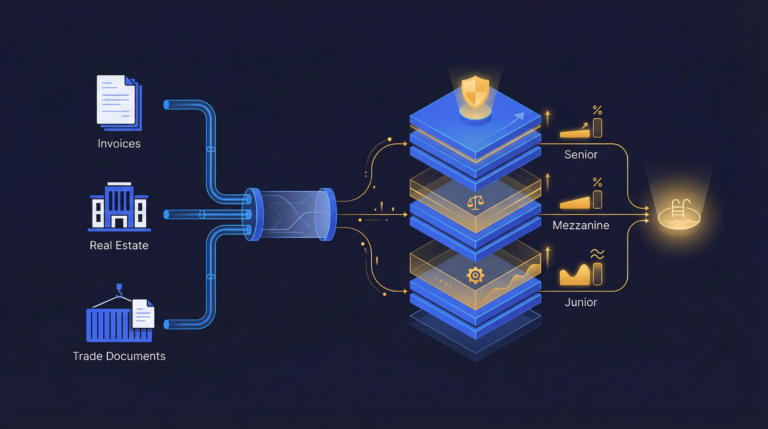
Centrifuge, founded in 2017, provides decentralized infrastructure for financing real-world assets through structured credit. The platform allows asset originators to tokenize pools of invoices, mortgages, or consumer credit and borrow against them using decentralized liquidity pools. Their deep integration with major DeFi protocols like MakerDAO has established them as a critical bridge between traditional private credit and on-chain capital.
RealT, established in 2019 in Boca Raton, Florida, specializes exclusively in the fractional tokenization of real estate properties. The platform has tokenized hundreds of individual residential and commercial properties, managing significant assets under management (AUM) and distributing daily rental yields to investors. Their highly specialized focus has created one of the most active retail-facing tokenization ecosystems in the market.
Lofty, launched in 2021 and backed by Y Combinator, operates a real estate tokenization platform built entirely on the Algorand blockchain. The platform allows retail investors to purchase fractional shares of specific properties and receive daily rental income directly to their digital wallets. They differentiate themselves through extremely low minimum investment thresholds and a highly liquid secondary market for property tokens.
Master STO platform comparison table
To effectively compare tokenization platforms, we must organize their capabilities into verifiable data points. The following tables consolidate information across company fundamentals, regulatory permissions, technological architecture, and supported asset types. This STO platform comparison table represents data verified through platform documentation and regulatory filings as of March 2026.
| Platform | Founded | HQ | Key Regulatory Status | Primary Tech / Chain | Supported Assets |
|---|---|---|---|---|---|
| Securitize | 2017 | Miami, US | SEC Broker-Dealer, TA, ATS | EVM-compatible, Multi-chain | Equity, Debt, Funds, Real Estate |
| tZERO | 2014 | NYC, US | SEC Broker-Dealer, ATS | Ethereum, Tezos, Algorand | Equity, Real Estate, Funds |
| Polymesh | 2021 | Toronto, CA | Technology Provider (Not Regulated) | Polymesh (Purpose-built) | Equity, Debt, Real Estate |
| Republic | 2016 | NYC, US | FINRA Broker-Dealer, Funding Portal | Multi-chain (Avalanche, EVM) | Equity, Real Estate, Gaming |
| KoreConX | 2016 | NYC, US | SEC Transfer Agent | KoreChain (Permissioned) | Equity, Debt, Private Capital |
| Tokeny | 2017 | Luxembourg | Technology Provider (Not Regulated) | EVM (ERC-3643 standard) | Equity, Debt, Funds |
| Stobox | 2018 | Kyiv, UA | Technology Provider (Not Regulated) | EVM-compatible | Equity, Real Estate, Utility |
| InvestaX | 2015 | Singapore | MAS CMS, RMO License | EVM-compatible | Funds, Real Estate, Private Equity |
| Brickken | 2020 | Barcelona, ES | Technology Provider (Not Regulated) | EVM-compatible | Equity, Real Estate, Debt |
| INX | 2017 | Global | SEC Registered, FINRA Broker-Dealer | Ethereum | Equity, Crypto, Debt |
| Bitbond | 2014 | Berlin, DE | BaFin Regulated | EVM-compatible (Token Tool) | Debt, Bonds (eWpG compliant) |
| Ondo Finance | 2021 | US | Technology Provider (Not Regulated) | Ethereum, Solana, Polygon | Treasuries, Fixed Income |
| Centrifuge | 2017 | Global | Technology Provider (Not Regulated) | Centrifuge Chain (Polkadot) | Structured Credit, Invoices |
| RealT | 2019 | Florida, US | Technology Provider (Not Regulated) | Gnosis Chain, Ethereum | Real Estate (Single Family) |
| Lofty | 2021 | Florida, US | Technology Provider (Not Regulated) | Algorand | Real Estate (Commercial/Residential) |
Hands-on testing results and leaders
Our evaluation framework categorizes platforms based on their dominant strengths rather than attempting to force a universal ranking. Different issuers require fundamentally different infrastructure based on their target investor base, asset class, and geographic location. We have identified clear leaders across regulatory comprehensiveness and technological innovation based on our hands-on analysis of platform capabilities.
When evaluating regulatory leaders, Securitize stands out as the most comprehensive infrastructure provider in the United States market. According to SEC EDGAR filings, Securitize holds active registrations as a broker-dealer, a transfer agent, and an alternative trading system. This vertically integrated stack means an issuer does not need to piece together multiple vendors to launch a compliant offering under Regulation D, Regulation A+, or Regulation Crowdfunding. Bitbond leads the European market for debt issuance, providing bank-grade infrastructure that strictly adheres to the German Electronic Securities Act (eWpG) requirements. InvestaX provides the most robust regulatory framework in Asia, operating under a Capital Markets Services license granted by the Monetary Authority of Singapore.
Technological innovation separates the platforms that merely record data on a ledger from those that truly automate financial processes. Tokeny leads the industry in standardization through their development and stewardship of the ERC-3643 protocol. This standard embeds compliance rules directly into the token smart contract, ensuring that assets can only be transferred to verified identities regardless of where the transaction occurs. Polymesh represents the most ambitious infrastructure play, offering a purpose-built blockchain where identity verification is required at the consensus layer, eliminating the risk of interacting with sanctioned entities. Ondo Finance leads in composability, structuring their tokenized treasury products so they can be seamlessly utilized as collateral within major decentralized finance protocols.
Pricing and economics
Understanding the economic models of these platforms is essential, as fee structures vary wildly and can significantly impact the viability of an offering. The tokenization platform features you require will directly dictate your costs, whether you choose a self-service software model or a full-service investment banking approach. We have analyzed the pricing structures across these providers to deliver transparency into the true cost of tokenization.
Platform economics generally fall into three categories: Software-as-a-Service (SaaS) licensing, percentage-based success fees, or hybrid enterprise contracts. Technology providers like Stobox and Brickken utilize transparent SaaS pricing tiers. According to platform documentation captured in March 2026, Brickken’s Token Factory charges flat monthly licensing fees coupled with minor transaction costs, making it highly accessible for budgets under $25,000. Stobox similarly offers tiered access to their DS Dashboard, allowing issuers to manage their own compliance processes to reduce overhead. These platforms are ideal for companies that already have legal counsel and simply need the technological infrastructure to mint and distribute tokens.
Regulated platforms providing end-to-end service employ more complex fee structures that typically blend setup costs, monthly maintenance fees, and capital raising percentages. Republic and Securitize often charge upfront structuring fees ranging from $10,000 to $50,000, depending on the complexity of the offering and the regulatory exemption utilized. Furthermore, platforms acting as broker-dealers will typically charge a success fee between 3% and 7% of the total capital raised. While these costs are substantially higher than pure technology vendors, they include critical services such as investor accreditation, regulatory filing assistance, and access to proprietary distribution networks. For a granular breakdown of these costs, consult our guide on tokenization platform fees comparison.
Secondary market liquidity
The promise of liquidity remains the primary driver for asset tokenization, yet actual secondary market performance varies drastically across platforms. Most tokenized assets remain highly illiquid, trading sporadically by appointment rather than experiencing continuous price discovery. Evaluating a platform’s secondary market capabilities is critical for issuers who intend to offer their investors an exit strategy before the asset’s maturity.
Securitize Markets and tZERO operate the most established alternative trading systems for digital securities in the United States. According to platform trading data, tZERO commands significant volume in specific private equity tokens, though overall market depth remains shallow compared to public equities. INX provides a unique value proposition by offering a unified trading interface where retail and institutional investors can trade both registered security tokens and traditional cryptocurrencies seamlessly. This dual-market approach significantly expands the potential liquidity pool for listed assets.
Decentralized secondary markets are emerging as a viable alternative for platforms operating outside strict US jurisdictions. IX Swap, closely affiliated with InvestaX, provides automated market maker infrastructure specifically designed to facilitate liquidity for security tokens. Similarly, RealT and Lofty have cultivated highly active secondary markets for their real estate tokens by utilizing decentralized exchange infrastructure on the Gnosis Chain and Algorand, respectively. These platforms demonstrate that continuous liquidity is achievable when the asset denomination is small enough and the user experience mimics traditional decentralized finance.
Pros and cons decision framework
Choosing the optimal infrastructure requires matching your specific offering parameters with the platform designed to handle those exact requirements. Based on our comprehensive analysis, we have developed a definitive decision framework covering the ten most common tokenization scenarios. Review this matrix carefully to align your project goals with the appropriate technology and regulatory partner.
| Scenario | Recommended Platform | Justification |
|---|---|---|
| US Accredited Investor Offering (Reg D) | Securitize | Complete vertically integrated stack including broker-dealer and transfer agent services. |
| US Retail Offering (Reg CF / Reg A+) | Republic | Unmatched retail distribution network and proven success with high-volume, low-minimum raises. |
| European Institutional Offering | Tokeny | Deep integration with European market infrastructure and pioneering of the ERC-3643 standard. |
| Direct Real Estate Tokenization | RealT or Lofty | Turnkey legal frameworks and active secondary markets specifically optimized for property fractionalization. |
| Structured Credit / Invoices | Centrifuge | Purpose-built infrastructure for private credit with established liquidity bridges to major DeFi protocols. |
| Tokenized Treasuries / Fixed Income | Ondo Finance | Market-leading TVL in tokenized cash equivalents with high composability for institutional treasuries. |
| Budget Under $25,000 | Brickken / Stobox | Transparent SaaS pricing models that provide robust technology without demanding investment banking fees. |
| Budget Over $100,000 | Securitize / INX | Enterprise-grade regulatory coverage, white-glove structuring, and established institutional trading venues. |
| Maximum Secondary Liquidity Priority | INX / tZERO | Proven regulatory approval to operate continuous trading markets with established investor bases. |
| Compliance-First Architecture Priority | Polymesh | Identity verification mandated at the blockchain consensus layer, eliminating smart contract compliance risks. |
Selecting the right platform ultimately dictates the legal structure, the investor experience, and the long-term viability of the tokenized asset. If you are targeting the European market specifically, you must account for the distinct regulatory variations across member states. For a focused analysis of continental providers, review our guide to the best tokenization platforms for Europe. Similarly, issuers must weigh the benefits of a massive retail distribution network like Republic against the specialized institutional focus of a platform like Ondo Finance.
How we evaluated: scoring and data freshness
Our evaluation process for this tokenization platform comparison matrix relies on rigorous, objective data collection rather than subjective marketing claims. We assess platforms across five primary pillars: regulatory comprehensiveness, technological robustness, economic transparency, asset class specialization, and secondary market performance. Each category is weighted based on its impact on the successful issuance and lifecycle management of a tokenized asset.
Data for this 2026 guide was collected directly from public regulatory databases, including the SEC EDGAR system and FINRA BrokerCheck, to verify all licensing claims. Pricing models and technological specifications were sourced from official platform documentation and verified through hands-on dashboard testing conducted in March 2026. Where specific data points, such as exact enterprise contract costs or private trading volumes, were unavailable, we marked the information as undisclosed rather than providing estimations.
The tokenization sector is characterized by rapid technological advancement and shifting regulatory frameworks. Consequently, the data presented in this matrix represents a snapshot of the industry as of the first quarter of 2026. We strongly advise all prospective issuers to conduct their own comprehensive due diligence and confirm all pricing, licensing, and technological capabilities directly with the platform providers before executing any service agreements. For a broader overview of the industry landscape, consult our foundational guide on the best tokenization platforms.
Frequently Asked Questions
What is the difference between a tokenization technology provider and a regulated platform?
A technology provider supplies the software and smart contracts to mint tokens, leaving legal compliance entirely to the issuer. A regulated platform holds specific licenses, such as a broker-dealer or transfer agent registration, allowing them to legally facilitate the sale and management of securities.
How much does it cost to tokenize an asset in 2026?
Costs range from $5,000 for self-service software to over $100,000 for full-service regulated issuances. Technology vendors charge monthly SaaS fees, while regulated broker-dealers typically charge upfront structuring fees plus a percentage of the total capital raised.
Can tokenized assets be traded immediately after issuance?
No, tokenized securities are subject to standard financial regulations, including mandatory lock-up periods. In the United States, assets issued under Regulation D typically face a one-year restriction on secondary trading before they can be sold to non-accredited investors.
Which blockchain is best for asset tokenization?
Ethereum and its EVM-compatible layer-2 networks currently dominate the tokenization sector due to developer familiarity and liquidity. However, purpose-built chains like Polymesh and high-performance networks like Solana and Algorand are gaining significant traction for specific asset classes.
Do I need a transfer agent to issue tokenized securities?
Yes, for most regulated securities offerings in the United States, an SEC-registered transfer agent is legally required to maintain the official record of ownership. Several tokenization platforms, such as Securitize and KoreConX, hold this registration and integrate it into their software.