Alternative Trading Systems (ATS) for Security Tokens
Secondary liquidity remains the ultimate goal for founders and investors navigating the digital securities landscape. An alternative trading system ATS provides the regulated infrastructure necessary to match buyers and sellers of security tokens without operating as a full national securities exchange. While primary issuance platforms mint tokens and allocate them to initial investors, the ecosystem relies entirely on these secondary venues to establish market prices and facilitate ongoing trade. Operating an ATS requires navigating complex technical integrations alongside strict regulatory oversight from both the Securities and Exchange Commission and the Financial Industry Regulatory Authority. This guide examines the structural differences between an ATS and a national exchange, details the capital requirements for operators, and analyzes the technical trade flows that make digital securities trading possible. Technology executives and compliance officers will understand exactly what it takes to build, operate, or list assets on these specialized trading venues.
Regulatory framework for alternative trading systems
An alternative trading system ATS is a trading venue regulated under SEC Regulation ATS that matches buy and sell orders for securities but is not registered as a national securities exchange. Every ATS must register as a broker-dealer with the SEC and become a member of FINRA. The Securities and Exchange Commission adopted Regulation ATS in 1998 to encourage market innovation while ensuring regulatory oversight of non-exchange trading venues. National securities exchanges like the New York Stock Exchange or Nasdaq hold self-regulatory organization status, meaning they must police their members and establish formal listing standards. An ATS does not possess self-regulatory organization status and cannot establish listing standards in the same manner, relying instead on FINRA for primary oversight. This lighter regulatory burden gives an alternative trading system ATS the flexibility to list non-standard assets, making the structure perfectly suited for the emerging digital securities market. However, operators face strict transparency requirements under Form ATS-N, a public filing adopted by the SEC in 2018 that forces venues to disclose detailed information about their order handling practices, fee structures, and potential conflicts of interest. Furthermore, if an ATS captures a significant percentage of the trading volume for a particular security, it triggers the fair access provisions under SEC Rule 301(b)(5), which prevents the venue from unreasonably denying access to qualified market participants. Operating this infrastructure requires strict adherence to broker-dealer net capital rules, specifically SEC Rule 15c3-1, which mandates a minimum of $250,000 in net capital for broker-dealers that carry customer accounts or receive customer funds.
Infrastructure and trade flow mechanics
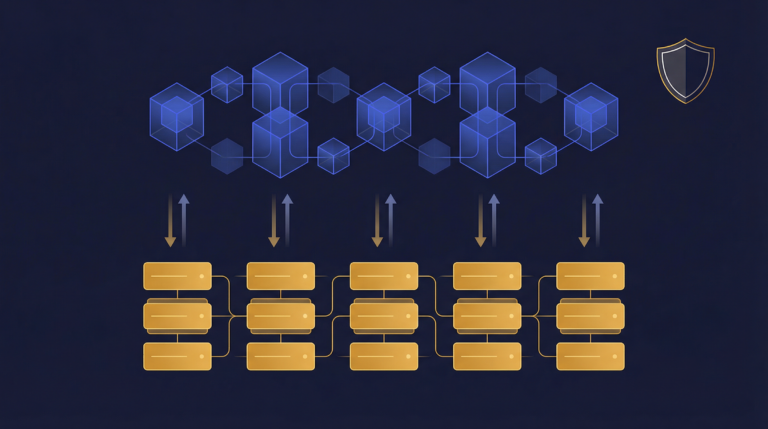
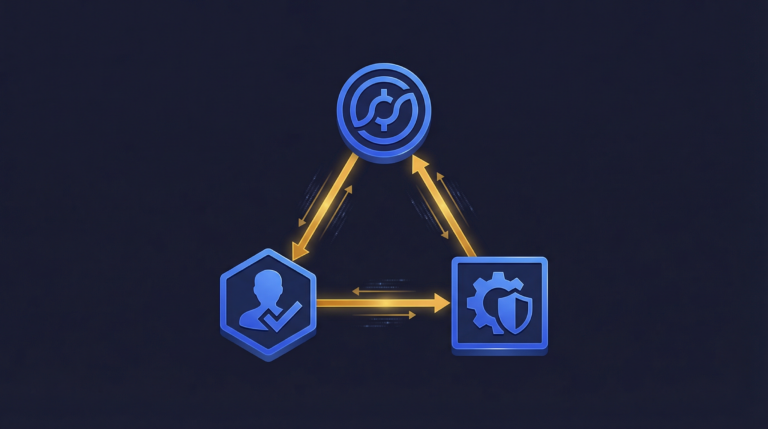
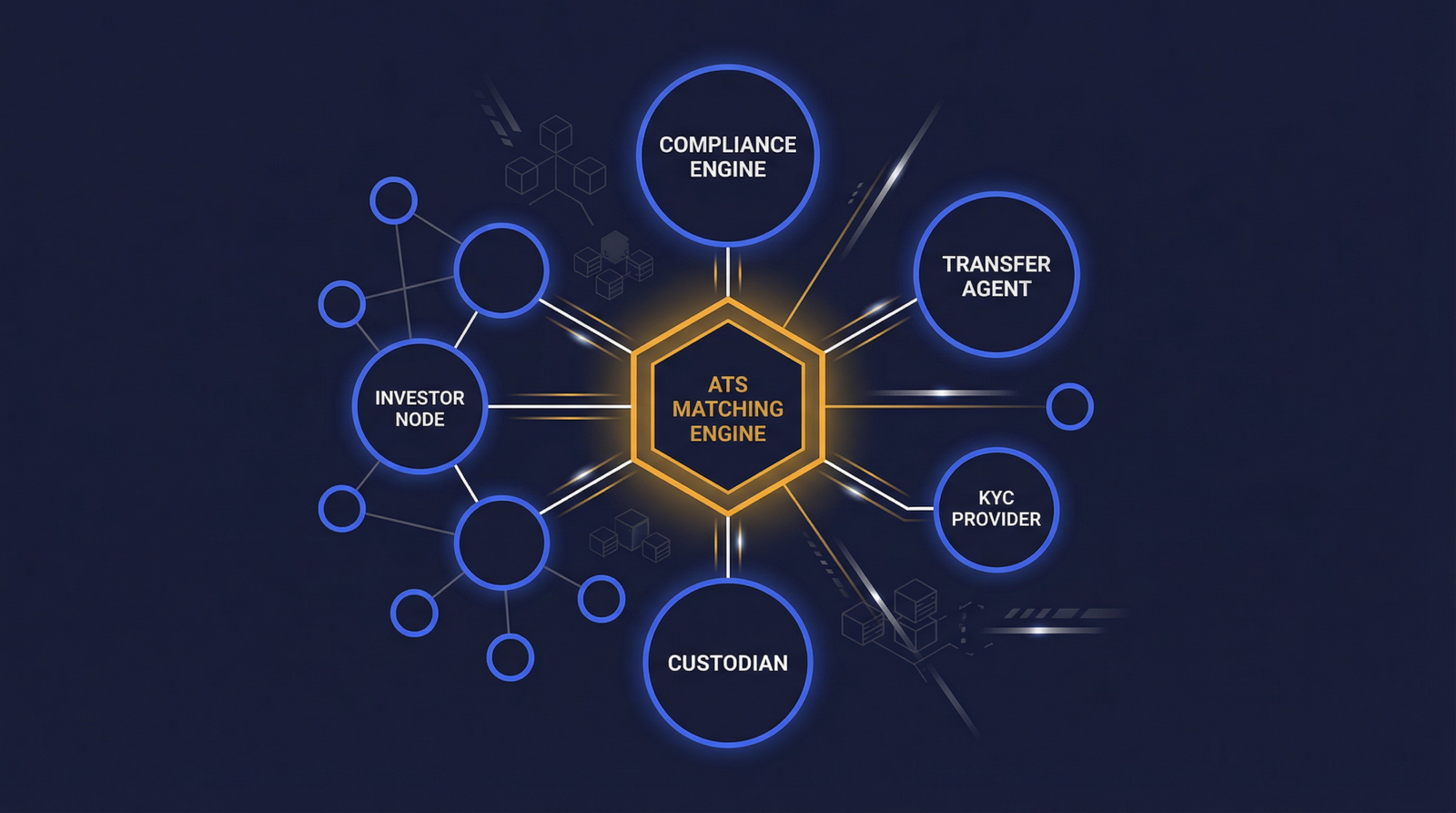
Digital securities trading requires direct integration between traditional broker-dealer compliance systems and blockchain-based settlement layers. An alternative trading system ATS connects directly to the token’s smart contract to execute compliance checks, verifying that both the buyer and seller meet the regulatory requirements before allowing the trade. When an investor decides where to buy security tokens, they submit an order through the ATS interface, which routes the request to a centralized matching engine. The matching engine pairs the buy and sell orders off-chain to ensure high-speed execution and prevent front-running by blockchain validators. Once matched, the system triggers automated compliance checks, verifying investor identity through integrated KYC and AML providers while confirming that the trade does not violate holding period restrictions hardcoded into the asset’s smart contract. If the transaction clears these hurdles, the ATS broadcasts the settlement instructions to the underlying blockchain network. This architecture allows digital securities to achieve atomic settlement, or T+0, where the exchange of the asset and the payment occurs simultaneously. Traditional equities markets operate on a T+1 settlement cycle, requiring clearinghouses to manage counterparty risk during the gap between trade execution and final settlement. The blockchain serves as the ultimate source of truth, but the ATS must also communicate the ownership change to a registered transfer agent to maintain the official capitalization table for the issuer. This complex orchestration between off-chain matching and on-chain settlement forms the backbone of secondary trading for security tokens and requires robust technology stacks capable of handling high-throughput messaging.
Leading ATS operators in digital securities
The digital securities market currently relies on a small group of specialized alternative trading systems that have successfully navigated both the technical and regulatory hurdles. Securitize Markets operates as the largest ATS for digital securities by volume, functioning under Securitize Capital, a registered broker-dealer. The platform supports the secondary trading of assets issued directly through the primary issuance portal, creating a closed-loop ecosystem integrated with their own transfer agent services. Our Securitize platform review details how this vertical integration reduces friction for investors and issuers by unifying the compliance checks across the entire lifecycle of the asset. Another major operator is tZERO, one of the earliest platforms to build ATS infrastructure specifically for digital securities. Operated by tZERO Crypto, the venue supports both digital securities and select digital assets, utilizing a proprietary routing and matching system that interfaces with public blockchains. A detailed tZERO platform review reveals their focus on institutional-grade matching engines designed to handle high-frequency trading flows. INX operates a dual-registered model, maintaining both a regulated ATS for security tokens and a separate digital asset exchange for cryptocurrencies, allowing users to trade different asset classes from a unified interface. Rialto Markets takes a slightly different approach, functioning as an ATS focused entirely on digital securities with multi-chain support, allowing issuers to choose their preferred blockchain network. These operators represent a fraction of the approximately 40 to 50 active ATS platforms registered in the United States, demonstrating how few traditional venues have upgraded their infrastructure to support blockchain-based assets.
Capital requirements and operational costs
Launching an alternative trading system ATS requires substantial upfront capital and significant ongoing operational expenditures to maintain regulatory compliance. The initial broker-dealer registration process typically costs between $50,000 and $200,000 in legal and consulting fees, depending on the complexity of the business model and the specific licenses requested from FINRA. Technology infrastructure represents another major capital outlay, as operators must license or build high-performance matching engines, market surveillance systems, and blockchain integration layers. Founders planning a security token offering guide often underestimate the costs associated with listing on these venues, which must pass their high operational expenses down to issuers. Ongoing compliance costs generally range from $200,000 to $500,000 annually, covering mandatory audits, legal counsel, and specialized reporting software required to submit trade data to regulatory repositories. Furthermore, the SEC requires broker-dealers operating an ATS to maintain strict net capital minimums, which generally start at $250,000 but can scale much higher if the firm engages in proprietary trading or holds customer funds directly. Staffing requirements add further financial pressure, as the venue must employ properly licensed professionals, including a Chief Compliance Officer holding specific FINRA series licenses. When combining the regulatory capital, technology build-out, and initial staffing, operators routinely spend upward of $500,000 in their first year of operation before executing a single trade. These high barriers to entry explain why many of the best tokenization platforms choose to partner with existing ATS operators rather than building their own secondary market infrastructure.
Market fragmentation and future liquidity
The current landscape of alternative trading systems suffers from severe market fragmentation, which actively suppresses liquidity across the digital securities ecosystem. Because ATS platforms operate as distinct liquidity pools, an investor looking to buy a specific tokenized asset must onboard with the specific ATS where that asset is listed. There is currently no unified order book or cross-platform routing mechanism that allows a user on Securitize Markets to purchase an asset listed exclusively on tZERO. This lack of interoperability stems from competing token standards, different blockchain networks, and the regulatory uncertainty surrounding how broker-dealers can share customer data and settle trades across disparate systems. The SEC continues to evaluate how to modernize Regulation ATS to address these decentralized technologies, particularly regarding venues that utilize automated market makers or decentralized finance protocols. Until the industry develops a consolidated digital securities exchange or establishes standardized routing protocols between existing ATS operators, liquidity will remain siloed. Market makers face significant challenges deploying capital efficiently across these fragmented venues, resulting in wider bid-ask spreads and lower trading volumes for tokenized real-world assets.
Alternative trading systems provide the critical infrastructure required to bring liquidity to the tokenized economy. While they operate under a lighter regulatory framework than national securities exchanges, ATS operators must still navigate severe capital requirements, complex FINRA oversight, and the technical challenges of bridging traditional matching engines with blockchain settlement layers. The market currently relies on a handful of specialized venues like Securitize Markets and tZERO to facilitate secondary trading. As the industry matures, the success of digital securities will depend heavily on solving the current liquidity fragmentation and establishing interoperability between these isolated trading venues. Founders and technology executives must carefully evaluate the costs and technical requirements before attempting to launch their own ATS, often finding that partnering with established operators provides the most efficient path to market.
Frequently Asked Questions
What is an alternative trading system ATS?
An alternative trading system ATS is a regulated trading venue that matches buy and sell orders for securities. It operates under SEC Regulation ATS and must register as a broker-dealer, offering a lighter regulatory framework than a national securities exchange while still requiring strict FINRA oversight.
How does an ATS differ from a national exchange?
An ATS does not hold self-regulatory organization (SRO) status and cannot establish its own listing standards. While national exchanges like the NYSE must police their own members, an ATS operates under the direct oversight of FINRA and has more flexibility in the types of assets it can list.
How much does it cost to start an ATS?
Operating an ATS typically requires upward of $500,000 in the first year. This includes $50,000 to $200,000 for initial broker-dealer registration, an ongoing $200,000 to $500,000 annually for compliance and technology, and a minimum of $250,000 in regulatory net capital.
How do ATS platforms settle digital security trades?
An ATS settles digital security trades by matching orders off-chain and broadcasting the settlement instructions to the underlying blockchain network. This allows for T+0 atomic settlement, where the exchange of the token and the payment occurs simultaneously, unlike the traditional T+1 settlement cycle.