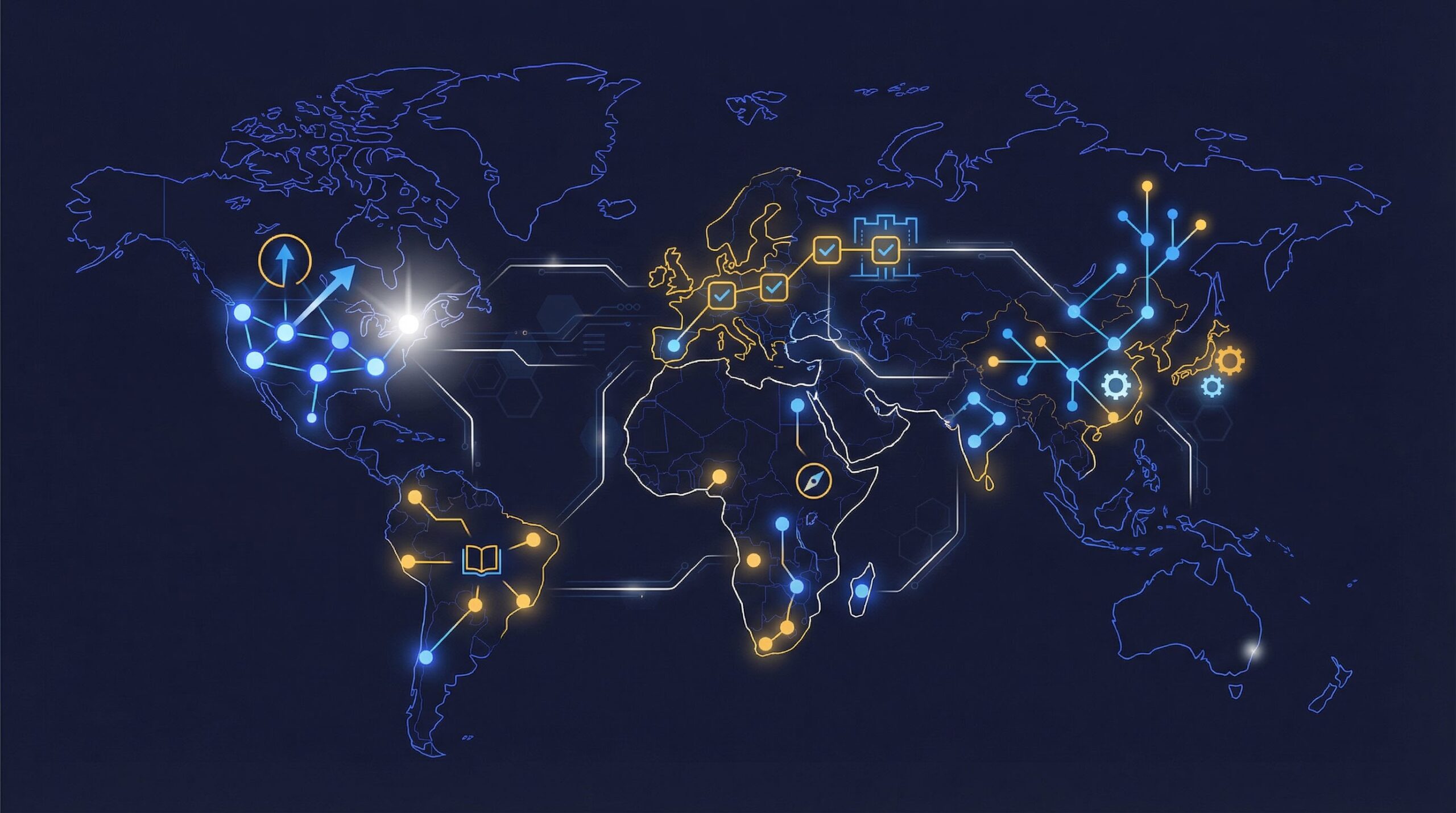
Global Tokenization Regulation Roundup Q2 2026
The second quarter of 2026 brought critical shifts to the digital asset sector as major jurisdictions transitioned from drafting rules to active enforcement. This tokenization regulation roundup Q2 2026 analyzes how global financial authorities are handling the issuance, trading, and custody of blockchain-based securities. Regulatory bodies across Europe, Asia, and the Americas have finalized compliance frameworks that directly impact how financial institutions and startups structure their tokenized assets. Founders and compliance officers face a maturing compliance environment where regulatory arbitrage is becoming increasingly difficult due to enhanced cross-border cooperation. This report breaks down the specific legislative updates, enforcement actions, and sandbox transitions that occurred between April and June 2026, providing a clear map of the current legal terrain for real-world asset tokenization.
Executive summary of global crypto regulation Q2
Global crypto regulation Q2 2026 focused heavily on the enforcement of existing digital asset frameworks and the launch of live testing environments for tokenized securities. The European Union shifted into active MiCA supervision, while the United Kingdom and Singapore advanced their respective digital securities sandboxes into live commercial phases.
The regulatory environment has matured past basic definitions of utility versus security tokens. Jurisdictions are now publishing specific technical standards for smart contract audits, secondary market trading facilities, and institutional custody of tokenized assets. According to the Financial Stability Board’s April 2026 interim report on digital asset risks, 14 of the G20 nations have now implemented bespoke regulatory regimes for tokenized real-world assets. This coordinated push aims to integrate distributed ledger technology into traditional financial plumbing while mitigating systemic risks associated with atomic settlement and decentralized finance protocols. Financial institutions are allocating significant capital to build compliant infrastructure that meets these new global standards.
Institutional adoption continues to force regulators to clarify capital requirements for banks holding digital securities. The Basel Committee on Banking Supervision issued revised guidelines in May 2026 regarding the prudential treatment of cryptoasset exposures. These revisions specifically lower the risk weight for tokenized traditional assets that meet strict legal finality conditions. This adjustment provides a massive tailwind for banks looking to hold tokenized bonds and money market funds on their balance sheets without facing punitive capital charges. Understanding these tokenization regulations by country is now a mandatory requirement for any digital asset strategist operating at an institutional level.
The Americas: Securities regulation changes Q2
Securities regulation changes Q2 in the Americas were dominated by the United States Securities and Exchange Commission increasing its enforcement actions against unregistered tokenized asset platforms. Concurrently, Brazil and Mexico expanded their regulatory sandboxes to accommodate secondary trading of tokenized debt instruments.
United States SEC and CFTC actions
The United States continues to rely on regulation by enforcement rather than bespoke legislative frameworks for digital assets. During Q2 2026, the SEC initiated five major enforcement actions against tokenization platforms that allegedly offered unregistered securities to retail investors. According to SEC enforcement filings from May 2026, the commission specifically targeted fractionalized real estate platforms that failed to restrict secondary market trading to accredited investors. The agency maintains that these fractional tokens represent investment contracts under the Howey Test, requiring full registration or a valid exemption such as Regulation D or Regulation A+. Platform operators must carefully navigate US SEC tokenization regulation to avoid costly litigation and forced rescission offers.
Despite the aggressive enforcement posture, the US regulatory landscape saw some positive guidance regarding institutional custody. Following intense pressure from the banking sector, the SEC issued updated staff accounting bulletins modifying the controversial SAB 121 rules. The June 2026 update allows heavily regulated bank holding companies to custody tokenized securities without recognizing the underlying assets as liabilities on their balance sheets, provided they use private, permissioned blockchains and maintain distinct legal bankruptcy remoteness. This subtle but critical shift removes a major barrier for Wall Street banks looking to offer custody services for tokenized money market funds and treasuries.
Latin America sandbox developments
Latin America took a decidedly more progressive approach to digital securities integration during the second quarter. Brazil’s Comissão de Valores Mobiliários (CVM) formally graduated three tokenization platforms from its regulatory sandbox into fully licensed operational status in April 2026. These platforms are now authorized to issue and trade tokenized receivables and agricultural debt instruments using the central bank’s Drex digital currency for atomic settlement. The Brazilian model demonstrates how emerging markets are leveraging tokenization to reduce capital costs for mid-sized enterprises while maintaining strict anti-money laundering controls. Mexico’s CNBV also announced the acceptance of a new cohort of tokenized debt issuers into its fintech sandbox, focusing heavily on cross-border remittance backing.
Europe: MiCA implementation and UK sandbox advances
European tokenization compliance updates in Q2 2026 centered on the full enforcement of the Markets in Crypto-Assets (MiCA) regulation across all 27 member states. Simultaneously, the United Kingdom’s Financial Conduct Authority moved its Digital Securities Sandbox into the live commercial testing phase.
European Union MiCA enforcement
The European Securities and Markets Authority (ESMA) transitioned from the implementation phase to active supervision of the MiCA framework in Q2 2026. Crypto-Asset Service Providers (CASPs) operating within the European Union must now hold full authorization to offer custody, trading, or advisory services for asset-referenced tokens and electronic money tokens. According to ESMA’s June 2026 supervisory briefing, national competent authorities have rejected approximately 15% of CASP applications due to insufficient capital reserves and inadequate IT security protocols. Firms dealing with financial instruments utilizing distributed ledger technology must also comply with the parallel DLT Pilot Regime, which ESMA officially extended for another three years following positive initial volume data. Navigating EU MiCA tokenization rules is now the primary barrier to entry for foreign platforms looking to access European capital.
Tax authorities across the European Union also began harmonizing their approach to tokenized asset reporting under the DAC8 directive. Starting in April 2026, CASPs are required to report domestic and cross-border transactions of digital assets to national tax authorities automatically. This reporting requirement specifically captures tokenized securities that generate yield, ensuring that dividend and interest payments distributed via smart contracts are subject to standard capital gains and income tax frameworks. Founders must integrate automated tax withholding mechanisms directly into their smart contract architecture or risk severe non-compliance penalties. Reviewing a comprehensive tokenization tax guide is essential for structuring these automated distributions correctly.
United Kingdom Digital Securities Sandbox
The United Kingdom achieved a major milestone in May 2026 when the Bank of England and the Financial Conduct Authority approved the first cohort of participants to enter the live operation phase of the Digital Securities Sandbox (DSS). Unlike earlier testing phases, these approved entities can now issue tokenized equities and corporate bonds to real institutional investors up to a capped limit of £500 million per issuance. The DSS allows traditional financial market infrastructure providers and crypto-native firms to operate hybrid models where a single entity can combine trading venue and central securities depository functions. This structure is strictly prohibited under legacy UK financial regulations, making the DSS a massive operational advantage for approved participants.
Asia-Pacific regulatory developments Q2
APAC regulatory developments Q2 2026 highlighted the region’s commitment to institutional tokenization. The Monetary Authority of Singapore expanded Project Guardian to include cross-border tokenized fund settlement, while Hong Kong’s Securities and Futures Commission issued new licensing requirements for tokenized asset custodians.
Singapore MAS and Hong Kong SFC
Singapore continues to lead the Asia-Pacific region in establishing clear guidelines for institutional decentralized finance and tokenization. In May 2026, the Monetary Authority of Singapore (MAS) published finalized technical standards for purpose-bound money and tokenized bank liabilities. This regulatory clarity directly supports the commercialization phase of Project Guardian, allowing major commercial banks to settle tokenized foreign exchange and sovereign bond trades on public permissionless blockchains. The MAS framework specifically requires strict smart contract auditing and mandates that tokenized securities must be backed 1-to-1 by traditional assets held in legally segregated trust accounts.
Hong Kong aggressively pursued its strategy to become the premier digital asset hub for institutional capital. The Securities and Futures Commission (SFC) released a comprehensive circular in April 2026 detailing the regulatory expectations for intermediaries distributing tokenized securities. The SFC explicitly stated that tokenized traditional securities are not subject to the complex product restrictions that apply to volatile cryptocurrencies, provided the underlying asset is a standard financial instrument. This clarification simplifies the distribution process, allowing wealth managers to offer tokenized green bonds and real estate funds to retail investors without requiring them to pass extensive digital asset knowledge tests.
Japan and Australia
Japan’s Financial Services Agency (FSA) focused its Q2 2026 efforts on refining the tax treatment and secondary market rules for security tokens. Following the successful issuance of several high-profile tokenized real estate funds in early 2026, the FSA proposed legislative amendments to allow proprietary trading networks to match retail orders for security tokens without requiring a full financial instruments exchange license. Meanwhile, the Australian Securities and Investments Commission (ASIC) issued formal guidance in June 2026 clarifying the application of the Corporations Act to tokenized managed investment schemes. ASIC specifically requires token issuers to hold an Australian Financial Services Licence with explicit digital asset authorizations to operate legally within the country.
Middle East and Africa tokenization compliance updates
Middle Eastern jurisdictions, particularly the United Arab Emirates and Bahrain, accelerated their tokenization compliance updates during Q2 2026. The focus centered on attracting real-world asset tokenization platforms by offering accelerated licensing tracks and tax-neutral operating environments.
UAE (VARA/ADGM) and Bahrain
The United Arab Emirates maintained its aggressive pace of regulatory innovation across its various free zones. Dubai’s Virtual Assets Regulatory Authority (VARA) updated its rulebook in May 2026 to include specific provisions for the tokenization of physical commodities, including precious metals and agricultural products. The updated framework requires issuers to maintain real-time proof of reserves through independent third-party oracles and mandates physical audits of the underlying commodities every 90 days. Simultaneously, Abu Dhabi Global Market (ADGM) enacted the DLT Foundations Regulations 2.0, providing an optimized legal wrapper for decentralized autonomous organizations managing tokenized treasury protocols. For startups evaluating the best country to launch STO campaigns, the UAE currently offers one of the most transparent and rapid licensing processes globally.
The Central Bank of Bahrain expanded its crypto-asset framework in June 2026 to explicitly cover the issuance of digital sukuk (Islamic bonds). The new regulations require tokenized Islamic financial products to obtain certification from an approved Sharia supervisory board before issuance on a distributed ledger. This regulatory development positions Bahrain to capture the growing demand for Sharia-compliant digital assets, providing a regulated pathway for Middle Eastern corporations to raise capital globally using blockchain infrastructure.
Cross-border regulatory cooperation Q2
Cross-border regulatory cooperation Q2 2026 saw financial authorities establishing formal data-sharing agreements to monitor global tokenized asset flows. The International Organization of Securities Commissions (IOSCO) launched a joint task force to harmonize smart contract audit standards across 20 major jurisdictions.
The borderless nature of distributed ledger technology has forced national regulators to abandon siloed approaches in favor of international coordination. During the spring meetings of the International Monetary Fund in April 2026, central bank governors from the G7 nations agreed to a standardized taxonomy for tokenized deposits and wholesale central bank digital currencies. This standardized taxonomy is critical for enabling cross-border atomic settlement, as it ensures that a tokenized asset issued in London can be legally recognized and settled against a digital euro or dollar without facing conflicting legal classifications. Market participants should consult a comprehensive tokenization glossary to understand how these standardized definitions impact cross-border compliance.
Enforcement agencies also enhanced their collaborative efforts to combat regulatory arbitrage. The US SEC, the UK FCA, and the European ESMA signed a trilateral memorandum of understanding in June 2026 specifically targeting unregistered cross-border token sales. Under this agreement, the agencies will automatically share enforcement data regarding tokenization platforms that attempt to solicit investors in their respective jurisdictions without proper licensing. This heightened level of cooperation indicates that founders can no longer rely on geo-blocking alone to avoid regulatory scrutiny; they must proactively comply with the securities laws of every jurisdiction where their tokenized assets are accessible.
Q2 2026 regulatory changes summary table
The following table summarizes the most significant legislative actions, enforcement trends, and sandbox developments across key global jurisdictions during the second quarter of 2026.
Tracking these regulatory shifts is essential for legal teams and platform operators structuring tokenized asset issuances. The data below highlights the distinct divergence in approaches, with the European and Asian markets focusing on comprehensive legislative frameworks, while the United States continues to rely primarily on agency guidance and enforcement actions.
| Jurisdiction | Regulatory Body | Q2 2026 Key Action | Primary Impact |
|---|---|---|---|
| European Union | ESMA | MiCA active supervision begins | Mandatory CASP licensing enforced for all custody and trading services. |
| United States | SEC | SAB 121 accounting modifications | Allows regulated banks to custody digital securities off-balance sheet. |
| United Kingdom | FCA / BoE | DSS live commercial phase | Firms can issue up to £500M in tokenized securities to institutional investors. |
| Singapore | MAS | Project Guardian technical standards | Finalized rules for tokenized bank liabilities and purpose-bound money. |
| Hong Kong | SFC | Tokenized securities distribution circular | Exempts tokenized traditional assets from complex digital asset restrictions. |
| United Arab Emirates | VARA | Commodity tokenization rulebook | Mandates 90-day physical audits and real-time oracle proof of reserves. |
| Brazil | CVM | Sandbox graduations | Three platforms fully licensed for tokenized debt issuance and secondary trading. |
The second quarter of 2026 demonstrated that financial regulators are treating blockchain technology as core financial infrastructure rather than a fringe experiment. The transition of the UK Digital Securities Sandbox into live commercial operations, the strict enforcement of the EU’s MiCA framework, and the SEC’s targeted enforcement actions all point to a maturing industry. Regulators demand the same level of compliance, transparency, and consumer protection in the digital asset space as they do in traditional capital markets.
For startups and financial institutions operating in this sector, the compliance burden has undeniably increased. This regulatory clarity also unlocks massive pools of institutional capital that were previously sidelined by legal uncertainty. Market participants must closely monitor how these new frameworks are applied in practice, particularly regarding cross-border interoperability and secondary market trading. Staying ahead of the evolving tokenization regulation roundup Q2 2026 and adjusting operational models accordingly will separate the platforms that successfully scale from those that face crippling enforcement actions.
Frequently Asked Questions
What were the major tokenization regulation changes in Q2 2026?
The major changes included the European Union beginning active MiCA supervision and the UK launching the live commercial phase of its Digital Securities Sandbox. Additionally, the US SEC updated SAB 121 to allow regulated banks to custody digital securities off-balance sheet under specific conditions.
How did the US SEC regulate tokenization in Q2 2026?
The US SEC continued its regulation-by-enforcement approach by initiating actions against five unregistered tokenized real estate platforms. However, the agency also provided positive guidance by updating accounting rules to make it easier for heavily regulated banks to offer institutional digital asset custody.
What is the status of the UK Digital Securities Sandbox?
The UK Digital Securities Sandbox entered its live commercial operation phase in May 2026. Approved participants can now issue up to £500 million in tokenized equities and corporate bonds to institutional investors while operating hybrid trading and depository models.
How is MiCA impacting tokenization platforms in Europe?
MiCA is forcing all Crypto-Asset Service Providers in Europe to obtain full authorization for custody and trading services. During Q2 2026, ESMA reported a 15% rejection rate for applications due to insufficient capital reserves and inadequate IT security protocols.
Sources
- [1] Interim Report on Digital Asset Risks and Real-World Asset Tokenization
- [2] Prudential Treatment of Cryptoasset Exposures: 2026 Revisions
- [3] Staff Accounting Bulletin No. 121 (Updated June 2026)
- [4] Supervisory Briefing on MiCA Implementation and CASP Authorization
- [5] Project Guardian: Technical Standards for Tokenized Bank Liabilities