UK Digital Securities Sandbox (2026): FCA & BoE Results
The UK Digital Securities Sandbox opened to applicants in mid-2024 following extensive consultation by the Financial Conduct Authority and the Bank of England. By early 2026, the financial sector now has sufficient data to evaluate the UK Digital Securities Sandbox results. This joint initiative allows financial market infrastructures to test distributed ledger technology for trading and settling digital securities under a modified regulatory framework. The initiative temporarily suspends specific legislative barriers, most notably parts of the Uncertificated Securities Regulations 2001. This suspension allows firms to operate a single legal entity combining trading and settlement functions. This article analyzes the initial outcomes of the sandbox. We examine the specific projects undertaken by early participants, the technical observations published by UK regulators, and the operational challenges encountered during live testing. Readers will understand how these findings are shaping the permanent regulatory architecture for digital assets in the United Kingdom and what this means for institutional market participants planning their digital asset strategies.
• Context and launch of the UK digital securities sandbox: The UK Digital Securities Sandbox is a joint regulatory initiative managed by the Financial Conduct Authority and the Bank of England that allows firms to test distributed ledger technology for trading and settling digital securities.
• What happened during the initial testing phase: The initial testing phase of the UK Digital Securities Sandbox saw participation from both incumbent financial institutions and native digital asset firms.
• Results and technical observations from the FCA and Bank of England: The UK tokenization sandbox outcomes indicate that distributed ledger technology significantly reduces settlement times and counterparty risk for traditional securities.
Context and launch of the UK digital securities sandbox
The UK Digital Securities Sandbox is a joint regulatory initiative managed by the Financial Conduct Authority and the Bank of England that allows firms to test distributed ledger technology for trading and settling digital securities. The sandbox modifies existing legislation to permit combined trading and settlement operations within a single entity.
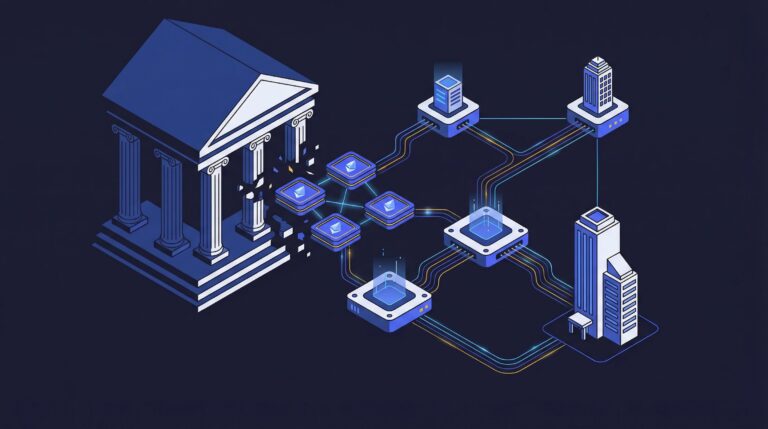
HM Treasury laid the legislative groundwork for the sandbox through the Financial Services and Markets Act 2023. This legislation granted regulators the authority to modify existing rules that previously prevented the use of distributed ledger technology in traditional financial market infrastructures. Before this intervention, UK law required strict separation between trading venues and central securities depositories. The sandbox allows approved participants to operate a Digital Securities Depository, a new regulatory classification that merges these traditionally separate functions. This structural change addresses one of the primary frictions in traditional finance by attempting to collapse the settlement cycle and reduce counterparty risk. Regulators designed the sandbox to operate for five years, providing a structured environment where authorities can observe live market activity before drafting permanent legislative changes.
The Bank of England and the Financial Conduct Authority established a phased approach to participation, requiring firms to pass through distinct gates of regulatory approval before handling live transactions. The initial design of the sandbox focused heavily on sterling-denominated assets, specifically targeting the tokenization of UK government bonds, corporate bonds, and equities. Regulators deliberately excluded derivative contracts and unbacked cryptoassets from the scope of the sandbox to maintain a clear focus on traditional financial instruments. This targeted approach contrasts with other jurisdictions where regulators have struggled to classify different types of digital assets. By restricting the sandbox to established securities, UK authorities isolated the technological variable, allowing them to measure the specific impact of distributed ledger technology on market efficiency and stability.
The UK approach emerged in direct response to international competition, particularly the European Union regulatory initiatives. Market participants frequently compare the UK framework with the EU DLT Pilot Regime, which launched earlier but faced criticism for restrictive volume limits and complex participation requirements. The UK regulators designed their sandbox to be more flexible, offering scalable limits that grow as participants demonstrate operational resilience. This flexibility aims to attract major institutional players who might otherwise seek out the best country to launch STO initiatives based on regulatory clarity. The Bank of England specifically focused on the settlement asset, requiring participants to use central bank money where possible or highly secure commercial bank money, avoiding the complications associated with stablecoins in wholesale settlement. Understanding tokenization regulations by country remains necessary for global financial institutions navigating these parallel regimes.
What happened during the initial testing phase
The initial testing phase of the UK Digital Securities Sandbox saw participation from both incumbent financial institutions and native digital asset firms. Participants successfully executed live trades and settlements of tokenized UK government bonds and corporate debt using distributed ledger technology under the joint supervision of the FCA and the Bank of England.
The first cohort of sandbox participants included a mix of established market infrastructure providers and specialized technology firms. These entities focused primarily on fixed-income instruments, utilizing the modified regulatory environment to issue and settle tokenized gilts and corporate bonds. The choice of fixed income as the initial testing ground aligns with broader institutional trends, as debt instruments offer clear, predictable cash flows that are relatively straightforward to program into smart contracts. Participants operated under the new Digital Securities Depository designation, which required them to maintain rigorous operational resilience standards while testing novel settlement mechanisms. The FCA digital securities sandbox framework mandated strict reporting requirements, forcing participants to share granular data on transaction speeds, failure rates, and capital efficiency with the regulators on a weekly basis.
A significant portion of the testing focused on atomic settlement, the simultaneous exchange of cash and securities. Traditional settlement cycles typically take one to two business days, exposing market participants to counterparty risk during the waiting period. Sandbox participants demonstrated that distributed ledger technology could reduce this cycle to minutes or even seconds. Achieving atomic settlement required complex coordination between the securities ledger and the payment rails. The Bank of England closely monitored these payment mechanisms, particularly the use of omnibus accounts to facilitate cash settlement. Regulators observed that while the technology successfully executed atomic swaps, the legal finality of these rapid transactions required careful documentation to ensure alignment with existing insolvency laws.
Interoperability emerged as a primary focus during the live testing phase. Participants utilized various blockchain protocols, raising questions about how different digital securities depositories would interact with each other and with legacy financial systems. The FCA and the Bank of England required participants to demonstrate clear pathways for transferring digital securities back into traditional formats if necessary. This focus on reversibility provided a safety net for investors and ensured that tokenized assets would not become trapped in isolated technological silos. Firms utilizing the best tokenization platforms had to prove their systems could communicate with standard financial messaging protocols like SWIFT and FIX. The testing phase revealed that while internal ledger transfers were highly efficient, moving assets across different distributed ledgers introduced new technical and legal complexities that require further standardization.
Results and technical observations from the FCA and Bank of England
The UK tokenization sandbox outcomes indicate that distributed ledger technology significantly reduces settlement times and counterparty risk for traditional securities. Regulators observed that while atomic settlement is technically feasible, legal finality and interoperability between different blockchain networks remain complex challenges requiring standardized industry protocols.
The empirical data collected from the initial sandbox operations provides a clear picture of the UK DLT sandbox results. The most prominent finding is the verified reduction in settlement friction. Transactions that typically require multiple intermediaries and reconciliations were executed directly between counterparties on a shared ledger. The Bank of England reported that this consolidation of functions reduced the capital that firms needed to hold against settlement failures. Regulators also noted that instantaneous settlement requires pre-funding of accounts, which can introduce new liquidity constraints for market participants. This observation highlights a major trade-off in market design. Reducing counterparty risk through atomic settlement increases the demand for intraday liquidity. Market participants must balance these competing factors when designing their trading strategies within a tokenized environment.
Legal certainty regarding the ownership of digital securities formed a major component of the regulatory findings. The suspension of the Uncertificated Securities Regulations 2001 allowed participants to record ownership directly on a distributed ledger rather than relying on a traditional central securities depository like CREST. The FCA found that this direct holding model functioned effectively but raised questions about the legal status of the ledger as the definitive record of title. Regulators observed that participants spent considerable time and resources drafting legal agreements to ensure that ledger entries would be recognized by UK courts in the event of a dispute. This focus on legal engineering shows that technological innovation in financial markets must be accompanied by robust legal frameworks. Anyone studying the tokenization glossary will note the evolving definitions of settlement finality in this context.
The regulators evaluated the operational resilience of the distributed systems under stress conditions. The Bank of England required participants to simulate network outages, node failures, and cyber attacks to test the recovery capabilities of their platforms. The findings indicated that while decentralized networks offer inherent redundancy, the governance structures managing these networks can become single points of failure. Regulators emphasized the need for clear incident response protocols and defined responsibilities among node operators. The UK tokenization sandbox outcomes demonstrate that technical decentralization does not automatically equate to operational resilience. Firms must implement comprehensive governance frameworks that address software updates, bug fixes, and emergency network halts.
Capacity limits played a major role in managing systemic risk during the testing phase. The Bank of England and the FCA implemented a tiered approach to volume restrictions, allowing firms to increase their activity only after demonstrating consistent operational stability. This conservative approach prevented any single participant from introducing outsized risk to the broader financial system. The regulators noted that these limits were effective in containing potential fallout from technical glitches. Some market participants argued that the initial limits restricted their ability to test the technology at true institutional scale. The ongoing dialogue between regulators and participants regarding these capacity limits will shape the final rules for digital securities depositories as they transition out of the sandbox environment.
Lessons learned and the future of UK tokenization regulation
The primary lesson from the UK Digital Securities Sandbox is that permanent legislative change is necessary to accommodate distributed ledger technology in capital markets. The FCA and Bank of England will use sandbox data to draft a permanent regulatory regime for digital securities depositories, prioritizing systemic stability and legal certainty.
The operational data gathered through the sandbox is currently informing the drafting of permanent legislation for UK capital markets. HM Treasury has indicated that the successful elements of the sandbox framework will be integrated into the standard regulatory rulebook. This transition requires Parliament to permanently amend the laws governing securities settlement and property rights. The legal distinction between traditional securities and digital securities is expected to diminish as the regulatory framework adapts to accommodate multiple technological approaches. This evolution positions the UK as a highly competitive jurisdiction for institutional digital assets, particularly when compared to the ongoing implementation challenges surrounding EU MiCA tokenization rules across the channel. The clear path from sandbox testing to permanent legislation provides the regulatory certainty that large financial institutions require before committing significant capital to new infrastructure.
An important lesson learned by market participants is the importance of cash settlement mechanisms. The sandbox demonstrated that tokenizing the asset leg of a transaction is relatively straightforward, but settling the cash leg efficiently remains a major hurdle. The strict requirements regarding settlement assets forced participants to innovate within the constraints of existing payment systems. The industry is pushing for broader access to central bank digital currencies or highly regulated wholesale stablecoins to facilitate true atomic settlement at scale. The interaction between digital securities depositories and the Bank of England real-time gross settlement system will be a defining feature of the permanent regulatory architecture. This focus on the payment leg is necessary for realizing the full efficiency gains promised by distributed ledger technology.
Looking forward, the UK Digital Securities Sandbox results provide a clear roadmap for the modernization of financial market infrastructure. The FCA and the Bank of England have demonstrated a willingness to adapt traditional regulatory concepts to accommodate new technology while maintaining strict standards for market integrity and systemic stability. The creation of the Digital Securities Depository classification represents a fundamental shift in market structure, collapsing the roles of trading venues and settlement systems. As participants graduate from the sandbox and begin operating under permanent rules, the focus will shift from technical feasibility to commercial viability. Financial institutions must evaluate how these new infrastructure models will impact their business models, capital requirements, and client offerings in a fully regulated digital asset ecosystem.
The UK Digital Securities Sandbox represents a pragmatic, data-driven approach to modernizing financial market infrastructure. By allowing firms to test distributed ledger technology in a controlled but live environment, the Financial Conduct Authority and the Bank of England have gathered the empirical evidence necessary to draft permanent, effective legislation. The initial results confirm that tokenization can significantly reduce settlement times and streamline market operations, provided that the underlying legal and payment frameworks are robust. The transition from the sandbox to a permanent regulatory regime will permanently alter the structure of UK capital markets, introducing new efficiencies while demanding higher standards of technical resilience. Financial institutions must actively engage with these regulatory developments and adapt their operational strategies to remain competitive in a market where digital securities are becoming standard practice. The success of this initiative establishes a clear blueprint for how major financial centers can integrate blockchain technology without compromising systemic stability.
Common Regulatory & Structuring Questions
What is the UK Digital Securities Sandbox?
The UK Digital Securities Sandbox is a regulatory initiative allowing firms to test distributed ledger technology for trading and settling digital securities. It temporarily modifies existing laws to permit the combination of trading and settlement functions within a single regulated entity.
Who regulates the UK Digital Securities Sandbox?
The sandbox is jointly regulated by the Financial Conduct Authority and the Bank of England. The FCA oversees market integrity and trading conduct, while the Bank of England monitors systemic stability and settlement mechanisms.
What assets are tested in the UK Digital Securities Sandbox?
Participants primarily test traditional financial instruments, specifically sterling-denominated assets like UK government bonds, corporate bonds, and equities. Unbacked cryptoassets and derivative contracts are strictly excluded from the sandbox framework.
What were the main findings of the sandbox?
Initial results showed that distributed ledger technology successfully reduces settlement times and counterparty risk through atomic settlement. Regulators noted that instantaneous settlement requires pre-funded accounts, which increases intraday liquidity demands for market participants.
References & Official Filings
- [1] HM Treasury. Response to the consultation on the Digital Securities Sandbox. December 2023.
- [2] Bank of England and Financial Conduct Authority. Consultation Paper: The Digital Securities Sandbox. April 2024.
- [3] Financial Conduct Authority. Digital Securities Sandbox: Guidance for Applicants and Operating Rules. January 2025.