Latin America Tokenization Landscape: Beyond Brazil
Latin America presents a distinct environment for digital asset adoption, driven by immediate financial necessity rather than mere technological curiosity. While Brazil dominates headlines with its Drex central bank digital currency and advanced regulatory sandbox, the broader Latin America tokenization Mexico Argentina Colombia corridor offers equally compelling infrastructure developments. Persistent inflation, strict capital controls, and massive cross-border remittance flows force consumers and businesses to seek alternative financial rails. Asset tokenization provides a functional mechanism to bypass legacy banking limitations, dollarize corporate balance sheets, and move capital across highly fragmented national borders. This analysis examines the regulatory frameworks, market participants, and structural economic drivers shaping tokenized markets across Mexico, Argentina, Colombia, and Chile.
Regulatory frameworks driving Latin America tokenization
Latin America tokenization in Mexico, Argentina, and Colombia relies heavily on evolving national regulations. Mexico’s March 2018 Ley Fintech established specific licenses for crowdfunding and electronic payments under the National Banking and Securities Commission. Chile introduced its Financial Innovation and Technology Law in January 2023 to regulate digital asset service providers and institutional markets.
Mexico established an early lead in regional financial technology regulation by enacting the Ley Fintech (Financial Technology Institutions Law) in March 2018. The framework created two distinct operational categories: Electronic Payment Fund Institutions (IFPEs) and Crowdfunding Institutions (ITFCs). Companies operating in these categories require formal authorization from the National Banking and Securities Commission (CNBV) to process transactions or offer investment products. For companies building tokenization platforms, the ITFC crowdfunding license provides a legal pathway to offer tokenized investment instruments to retail and institutional investors. Operators face a rigid boundary between digital assets governed by the Ley Fintech and traditional securities regulated under the broader Securities Market Law. This jurisdictional overlap forces tokenization startups to structure their products carefully to avoid triggering full securities compliance requirements, a challenge similar to navigating US SEC tokenization regulation.
The Central Bank of Mexico (Banxico) maintains a strictly conservative approach toward digital assets, explicitly prohibiting traditional commercial banks and fintech institutions from offering cryptocurrency exposure to clients directly. This prohibition restricts the immediate growth of bank-issued tokenized deposits and forces tokenization activity into specialized non-bank entities. Despite these restrictions, infrastructure providers have built massive parallel financial systems. Bitso, the largest digital asset exchange in Latin America, routinely processes over $1 billion in monthly transaction volume and handles a significant percentage of the US-Mexico remittance corridor. Traditional financial institutions like Bursanet and GBM are actively exploring blockchain infrastructure to modernize their settlement processes, while companies like Nvio provide the necessary digital asset custody and routing infrastructure. The Mexican market for tokenized corporate receivables continues to expand as medium-sized enterprises seek alternative financing outside the concentrated traditional banking sector.
Chile approaches digital asset regulation with a focus on integrating new technologies into its highly developed traditional capital markets. The government enacted the Ley Fintech (Financial Innovation and Technology Law) in January 2023, establishing a comprehensive regulatory perimeter for alternative transaction systems, digital asset custodians, and order routing platforms. The Financial Market Commission (CMF) serves as the primary supervisory authority, providing the legal certainty required for institutional participation. Because Chile possesses one of the region’s largest domestic exchanges, the Bolsa de Santiago, and a massive private pension fund system (AFPs) managing billions in assets, the country presents a prime target for institutional tokenization. While retail cryptocurrency adoption remains lower than in inflation-heavy neighboring countries, Chile’s stable macroeconomic environment makes it an ideal testing ground for sophisticated tokenized debt instruments and real estate products. Understanding what is asset tokenization in the Chilean context means looking at institutional efficiency rather than retail inflation hedging.
Inflation and stablecoins fueling Argentina tokenized assets
Argentina’s chronic inflation, which exceeded 200% in 2024, drives massive digital asset adoption as citizens seek dollar-denominated stability. This macro environment makes Argentina tokenized assets inflation hedges rather than speculative investments. Companies like Agrotoken successfully tokenize physical agricultural commodities to serve as both everyday payment methods and corporate collateral.
Argentina operates under severe macroeconomic distress, characterized by an inflation rate that surpassed 200% in 2024 and strict government capital controls known locally as the cepo cambiario. These conditions force businesses and retail consumers to adopt digital assets purely for capital preservation and cross-border payment utility. Argentines utilize stablecoins, particularly USDC and DAI, as synthetic dollar savings vehicles, making the country one of the highest per-capita stablecoin markets globally. This entrenched stablecoin infrastructure provides the exact digital rails required for broader asset tokenization. When a population already holds digital wallets funded with digitized dollars, distributing tokenized real estate shares, corporate debt, or agricultural assets becomes a matter of product design rather than infrastructure distribution. The national securities regulator, the Comisión Nacional de Valores (CNV), has issued preliminary guidance on digital assets, and while comprehensive legislation remains pending, the current government under Javier Milei has expressed explicit pro-crypto sentiment that encourages continued development.
Domestic digital asset platforms have scaled rapidly to meet this demand for alternative financial infrastructure. Ripio operates as a dominant crypto exchange and digital wallet provider, while platforms like Buenbit facilitate seamless conversions between the rapidly depreciating Argentine peso and yield-bearing stablecoin assets. These consumer-facing applications aggregate the user base necessary to support secondary markets for tokenized products. Without this existing wallet penetration, launching tokenized assets would require expensive customer acquisition and basic blockchain education. Argentine investors already understand private key management, blockchain settlement times, and smart contract risks. This baseline knowledge accelerates the adoption curve for any asset tokenization guide or product launched in the domestic market, allowing issuers to focus entirely on asset quality rather than technical onboarding.
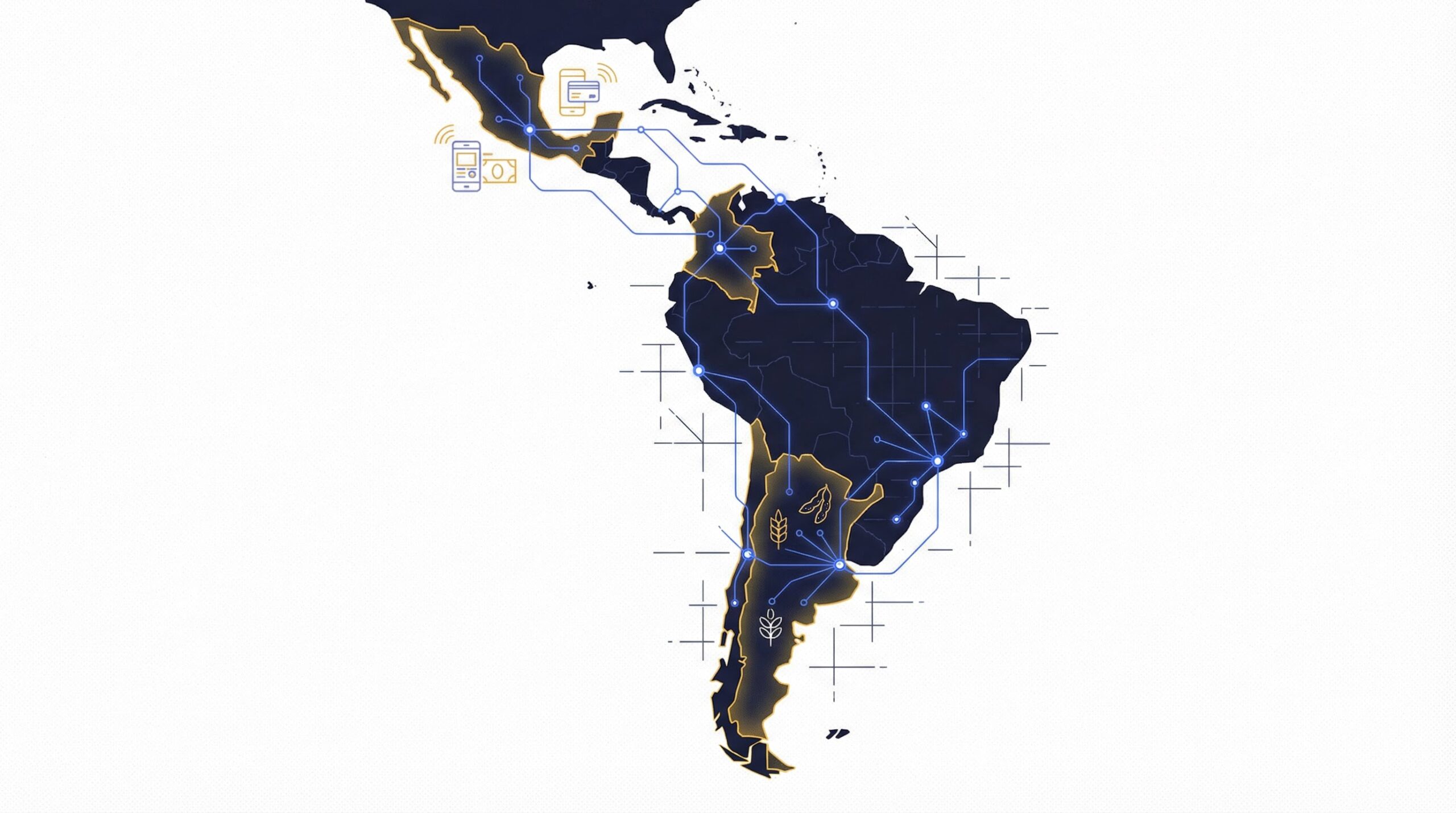
The most distinct innovation in the Argentine market is the tokenization of physical agricultural commodities. Argentina ranks as one of the world’s largest exporters of soybeans, corn, and wheat, making grain a foundational unit of economic value. A company called Agrotoken developed a system to digitize these physical harvests, issuing tokens backed by grain stored in certified silos. Farmers use these tokenized commodities as direct payment methods for seeds, machinery, and fertilizer, effectively bypassing the volatile fiat currency entirely. The tokens also serve as verifiable collateral for traditional bank loans, solving a massive liquidity problem in the agricultural supply chain. Agrotoken has tokenized hundreds of thousands of tons of grain, creating millions of dollars in digital collateral. This model represents a perfect execution of RWA tokenization guide principles, taking a globally traded physical asset, verifying its existence through trusted audits, and creating a liquid digital representation that moves instantly. The success of this model in Argentina has already prompted its expansion into neighboring agricultural powerhouse Brazil.
Innovation sandboxes and cross border remittance markets
Colombia approaches digital asset regulation through a structured supervisory framework, launching the SFC regulatory sandbox in 2020. This initiative allowed major financial institutions like Bancolombia and Davivienda to test crypto products alongside exchanges like Buda.com. Simultaneously, tokenization infrastructure is capturing significant transaction volume in the $60 billion US-Mexico remittance corridor.
Colombia actively manages the integration of digital assets into its traditional financial system through controlled experimentation. The Superintendencia Financiera de Colombia (SFC) launched an official regulatory sandbox for crypto-asset services in 2020. This pilot program authorized specific alliances between regulated financial entities and digital asset exchanges to test deposit, withdrawal, and custody mechanics under direct regulatory supervision. Major domestic banks, including Bancolombia and Davivienda, partnered with established exchanges like Buda.com and Bitso to execute these controlled tests. The sandbox successfully demonstrated that traditional banking infrastructure could interface with blockchain networks without introducing systemic risk or violating anti-money laundering protocols. As a result of these trials, Colombia is moving toward permanent regulatory frameworks that will provide the legal certainty necessary for domestic institutions to issue and manage tokenized financial products.
The economic drivers for tokenization in Colombia differ significantly from those in Argentina. The Colombian peso maintains relative stability, meaning the domestic market does not rely on digital assets primarily as an inflation hedge. Tokenization efforts focus instead on capital formation, real estate fractionalization, and cross-border payment efficiency. Startups like a]plataforma.la and various emerging tokenization providers target the modernization of private market investments. Colombia receives massive remittance inflows from expatriates living in the United States and Spain. Traditional remittance providers charge high fees and require days to settle transactions through the correspondent banking system. Blockchain networks and tokenized fiat representations allow these cross-border flows to settle instantly at a fraction of the cost, providing a massive total addressable market for companies building payment-focused tokenization infrastructure.
Across Latin America, cross-border capital flows represent the most immediate use case for tokenized assets and stablecoins. The US-Mexico remittance corridor alone processes approximately $60 billion annually, making it one of the largest bilateral transfer markets on earth. Crypto rails are steadily capturing an increasing share of these flows by outcompeting traditional wire services on both speed and cost. Regional platforms like Bitso, Mercado Bitcoin, and Ripio are constructing interoperable cross-border networks that bypass the legacy banking system entirely. As these platforms aggregate millions of users relying on them for basic cross-border payments, they build the exact distribution networks required to offer tokenized investment products regionally. A user receiving tokenized dollars from a relative in Texas can immediately deploy that capital into a tokenized Mexican real estate fund or an Argentine agricultural token, radically expanding the tokenization market size across the continent.
Structural challenges and regional outlook
The Latin America STO market faces structural hurdles including severe currency volatility, regulatory fragmentation across borders, and large informal cash economies. Despite these barriers, high mobile penetration and immediate financial needs position the region to become a major hub for tokenized assets over the next five years.
Tokenization operators in Latin America must navigate severe structural challenges that do not exist in North American or European markets. Extreme currency volatility in countries like Argentina makes local-currency-denominated tokenized products exceptionally risky for investors, forcing issuers to peg their assets to the US dollar or physical commodities. Regulatory fragmentation prevents companies from achieving regional scale. A tokenized real estate product compliant with Mexico’s Ley Fintech cannot be legally distributed to retail investors in Chile or Colombia without undergoing entirely separate, costly licensing processes in each jurisdiction. The region operates with a massive informal economy. Millions of citizens earn their income in physical cash and lack the formal identification or tax records required to pass standard Know Your Customer (KYC) protocols. This informal labor market restricts the potential user base for regulated tokenized securities to the upper-middle class and institutional sectors.
Historical banking crises across the region have severely damaged public trust in traditional financial institutions. In Argentina, the 2001 corralito, which froze bank accounts and forcibly converted dollar deposits to devalued pesos, remains a foundational financial memory. While this distrust drives adoption of self-custodied digital assets, it also creates skepticism toward any centralized entity issuing tokenized products. Issuers must prove their reserves and legal structures with far more transparency than is required in developed markets. While smartphone penetration is exceptionally high in major urban centers like Mexico City, Buenos Aires, and Bogotá, reliable internet access remains limited in vast rural areas. This digital divide means that agricultural and supply chain tokenization projects must build offline capabilities and low-bandwidth solutions to function effectively at the point of origin. Understanding these regional nuances is essential for anyone studying the tokenization glossary and attempting to apply theoretical concepts to emerging market realities.
Latin America possesses the structural fundamentals to become a major tokenization market within the next five years. The combination of high baseline cryptocurrency adoption, a young demographic profile, deep mobile penetration, and massive unmet financial needs creates a uniquely receptive environment for blockchain-based financial products. The primary catalysts for the next phase of growth will be regulatory clarity and institutional participation. If the CNV in Argentina and the CNBV in Mexico establish clear, permissive frameworks for tokenized securities, billions of dollars in dormant capital could flow into modernized digital assets. We are already observing the initial stages of this shift as regional pension funds and insurance companies begin evaluating blockchain infrastructure for settlement efficiency. As stablecoin usage normalizes the concept of digital value transfer, the transition to holding tokenized debt, equity, and real-world assets will become a standard component of the Latin American financial system.
Frequently Asked Questions
How does Mexico’s Ley Fintech regulate tokenization?
Mexico’s Ley Fintech regulates tokenization primarily through its Crowdfunding Institutions (ITFC) framework. Companies must obtain authorization from the National Banking and Securities Commission (CNBV) to offer tokenized investment instruments, though they must carefully navigate the boundary between digital assets and traditional securities.
Why is Argentina a major market for tokenized agricultural assets?
Argentina is a major market for tokenized agricultural assets because chronic inflation forces farmers to seek alternative stores of value. Companies like Agrotoken digitize physical commodities like soybeans and corn, allowing farmers to use their harvest directly as payment and collateral without relying on the volatile peso.
What was the purpose of Colombia’s SFC regulatory sandbox?
The Colombian SFC regulatory sandbox launched in 2020 to allow traditional financial institutions to test digital asset products safely. It permitted major banks like Bancolombia and Davivienda to partner with crypto exchanges to trial deposit and custody mechanics under direct government supervision.
Does Chile have a legal framework for asset tokenization?
Chile established a legal framework for digital assets through its Financial Innovation and Technology Law enacted in January 2023. The law empowers the Financial Market Commission (CMF) to supervise digital asset service providers, creating the legal certainty required for institutional tokenization platforms to operate.
Sources
- [1] Ley para Regular las Instituciones de Tecnología Financiera (Ley Fintech), Diario Oficial de la Federación, March 2018
- [2] Ley N° 21.521 Promueve la Competencia e Inclusión Financiera a través de la Innovación y Tecnología (Ley Fintech), Ministerio de Hacienda de Chile, January 2023
- [3] Indice de precios al consumidor (IPC) 2024, Instituto Nacional de Estadística y Censos (INDEC) Argentina
- [4] La Arenera (Sandbox) – Espacio controlado de prueba, Superintendencia Financiera de Colombia