Middle East Tokenization: Saudi Arabia, Bahrain, Qatar
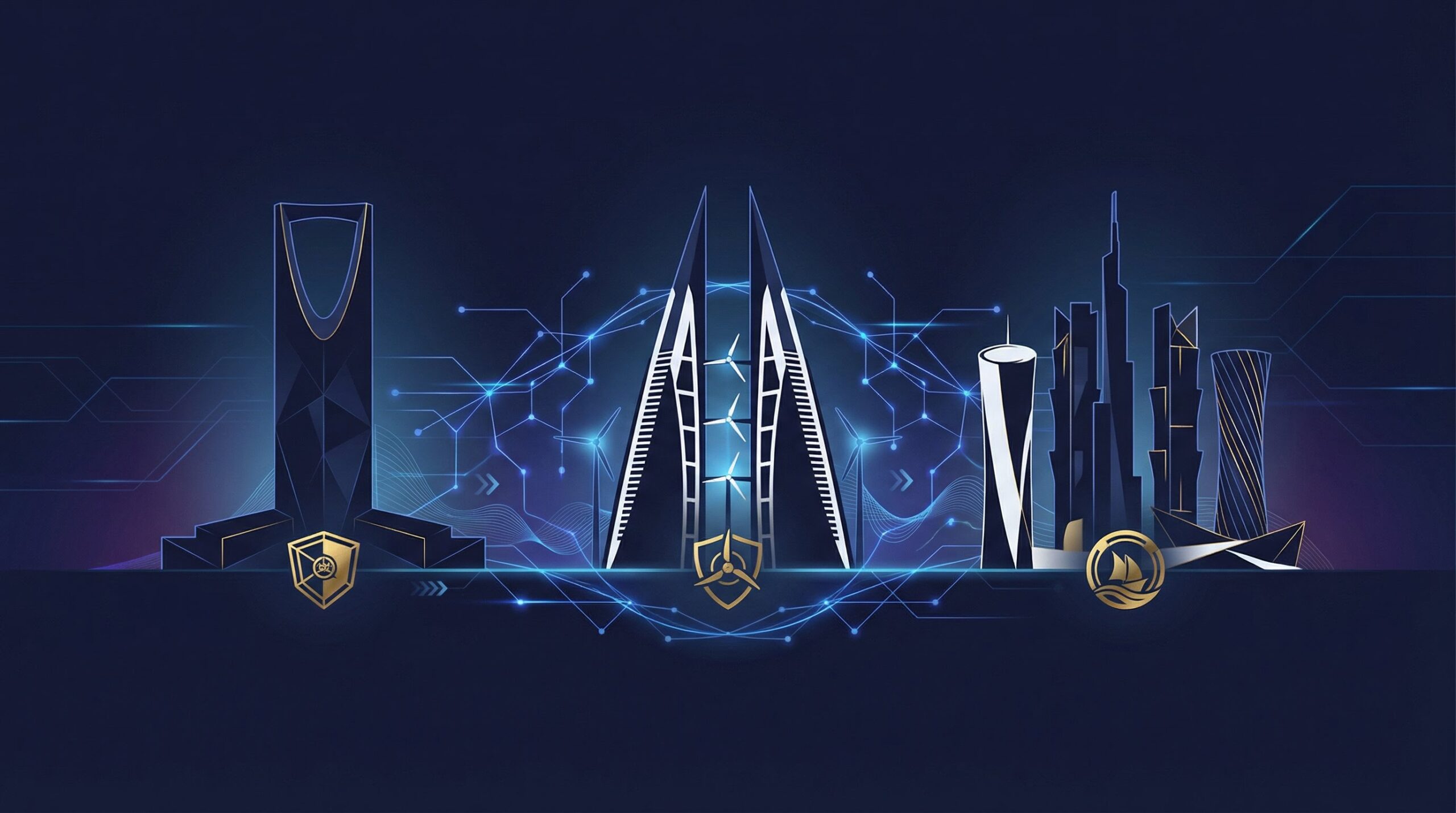
The narrative surrounding digital assets in the Gulf Cooperation Council often begins and ends with the regulatory developments in Dubai and Abu Dhabi. While the United Arab Emirates has aggressively pursued cryptocurrency companies and established dedicated authorities, the long-term trajectory of Middle East tokenization Saudi Arabia Bahrain Qatar and the broader region depends heavily on a much larger pool of institutional capital. The remaining GCC nations control trillions in sovereign wealth and operate massive traditional equity markets that are currently undergoing historic modernization. Understanding this emerging tokenized economy requires looking past immediate retail trading volumes to examine how these specific jurisdictions are building wholesale digital infrastructure to support their respective national economic diversification mandates. Government-led initiatives across the Gulf are systematically upgrading legacy financial systems to handle blockchain-based securities, digital currencies, and fractionalized real-world assets. As institutional investors and state-owned enterprises begin evaluating distributed ledger technology for capital formation, the regulatory competition among these nations is accelerating the deployment of institutional-grade tokenization platforms.
Saudi Arabia and the cautious path to digital asset integration
Saudi Arabia approaches digital assets with deliberate regulatory caution while quietly testing wholesale blockchain infrastructure. The Saudi Central Bank has not issued a comprehensive public cryptocurrency framework, but the nation’s $1 trillion economy and massive traditional equity markets present the region’s largest untapped tokenization opportunity.
As the largest economy in the Middle East, Saudi Arabia operates with a gross domestic product exceeding $1 trillion and manages the region’s most significant capital market. The Saudi Stock Exchange, known as Tadawul, holds a market capitalization of more than $2.5 trillion, dwarfing neighboring exchanges and providing a massive underlying base for potential securities tokenization. Under the Vision 2030 economic diversification plan, the kingdom has explicitly targeted financial sector modernization and fintech development as core pillars for reducing reliance on oil revenues. Despite this mandate for financial innovation, the Saudi Central Bank, known formally as the Saudi Arabian Monetary Authority (SAMA), has maintained a notably conservative posture regarding public cryptocurrencies compared to neighboring jurisdictions. Cryptocurrency trading is not formally regulated within the kingdom, nor is it explicitly banned, leaving digital asset operators in a state of regulatory ambiguity that prevents large-scale institutional adoption of public blockchain networks. The Capital Market Authority (CMA) has similarly prioritized investor protection and market stability, requiring any entity seeking to issue tokenized securities to navigate legacy securities laws or apply for specific exemptions through regulatory sandboxes rather than utilizing a dedicated digital asset framework.
Behind this public caution regarding retail cryptocurrency trading, Saudi financial authorities have actively experimented with the foundational technologies required for institutional tokenization. The most prominent example is Project Aber, a joint wholesale central bank digital currency (CBDC) experiment conducted by SAMA and the Central Bank of the UAE (CBUAE). This cross-border initiative successfully tested a dual-issued digital currency for interbank settlement between the two nations, proving that distributed ledger technology could reduce settlement times and eliminate friction in cross-border transactions. The technical architecture validated during Project Aber provides the exact blueprint required for settling tokenized asset transactions using central bank money, which is a prerequisite for wholesale institutional tokenization. While retail crypto remains in a gray area, the successful conclusion of Project Aber demonstrates that Saudi regulators understand the operational mechanics of blockchain-based settlement and are preparing the plumbing for a digitized financial system.
The massive scale of Saudi Arabia’s state-backed mega-projects creates unprecedented use cases for real-world asset tokenization. The Public Investment Fund (PIF), managing hundreds of billions in state wealth, is financing entirely new economic zones like NEOM, which require innovative capital formation and infrastructure financing models. Tokenizing real estate equity, infrastructure debt, or renewable energy output within these developments could attract a broader base of global investors while providing the fractional ownership structures necessary for highly liquid secondary markets. While operators currently look to the UAE VARA tokenization framework for immediate regulatory clarity, the sheer volume of capital formation occurring within Saudi borders means that any future CMA framework for security tokens will instantly create the largest digital asset market in the Middle East. Until that framework materializes, Saudi Arabia remains the sleeping giant of the global tokenization sector, possessing the capital and infrastructure demand to reshape the industry overnight once regulatory gates open.
Bahrain establishing the first comprehensive crypto framework
Bahrain established the Middle East’s first comprehensive crypto-asset regulatory framework in February 2019 through the Central Bank of Bahrain. This progressive Crypto-Asset Module created clear licensing categories for exchanges and custodians, positioning the island nation as an early regulatory pioneer for institutional digital assets.
Recognizing its smaller geographic and economic footprint compared to Saudi Arabia, Bahrain recognized early that regulatory agility could serve as a primary competitive advantage in attracting global financial technology firms. The Central Bank of Bahrain (CBB) acted decisively by issuing the Crypto-Asset Module under its Rulebook in February 2019, years before many major global economies drafted their initial digital asset legislation. This framework established rigorous but clear licensing requirements for crypto-asset exchanges, digital custodians, brokers, portfolio managers, and advisory services operating within or from the kingdom. The CBB mandated strict capital requirements, comprehensive cybersecurity standards, and institutional-grade anti-money laundering and know-your-customer (AML/KYC) obligations for all licensed entities. By providing this regulatory certainty, Bahrain successfully attracted significant regional and global players who required a compliant operational base in the Middle East to service institutional clients.
The practical results of this early regulatory clarity are visible in the specific companies that have chosen Bahrain as their regional headquarters. Rain became the first fully licensed crypto-asset exchange in the Middle East after graduating from the CBB’s regulatory sandbox and securing its full license, proving that the regulatory pathway was functional and navigable for startups. Global operators followed suit, with Binance receiving a full Category 1 Crypto-Asset Provider license from the CBB in 2024, allowing the exchange to offer a comprehensive suite of digital asset services under direct central bank supervision. The broader ecosystem is supported by Bahrain FinTech Bay, a dedicated incubation hub that facilitates collaboration between digital asset startups, traditional financial institutions, and regulatory bodies. This concentrated ecosystem allows companies building tokenization infrastructure to work directly with regulators to test novel financial products, such as tokenized real estate or fractionalized private equity, within a controlled environment before seeking full commercial deployment.
Bahrain’s strategic position in the GCC tokenization landscape relies heavily on its ability to serve as a compliant gateway to the broader region. While the kingdom competes directly with the UAE for fintech talent and capital, its longer history of digital asset regulation provides a track record of stability that appeals to conservative institutional investors. For entities seeking to understand the mechanics of RWA tokenization and deploy compliant products, the CBB offers a mature regulatory dialogue that does not exist in jurisdictions still drafting their primary legislation. As the market matures, Bahrain is well-positioned to host the issuance and secondary trading of tokenized securities that may ultimately be distributed to investors across the entire Gulf region, acting as the regulatory anchor for cross-border digital capital markets.
Qatar and emerging frameworks across the broader Gulf
Qatar is actively transitioning from a restrictive 2018 cryptocurrency ban toward a regulated digital asset ecosystem. The Qatar Financial Centre introduced foundational digital asset frameworks between 2023 and 2024, signaling a strategic shift to capture emerging financial technologies and tokenize real-world assets.
The regulatory posture in Qatar has undergone a significant evolution over the past six years, reflecting a broader regional recognition that blockchain infrastructure is necessary for modern financial centers. In 2018, the Qatar Financial Centre Regulatory Authority (QFCRA) took a highly restrictive stance, effectively banning cryptocurrency trading and related services to protect retail investors from extreme market volatility. However, as global institutions began adopting digital assets and neighboring GCC countries established clear regulatory frameworks, Qatari authorities recognized the need to differentiate between speculative retail trading and wholesale institutional tokenization. Between 2023 and 2024, the Qatar Financial Centre (QFC) and the Qatar Central Bank (QCB) began developing and consulting on a comprehensive digital asset framework designed specifically to support the tokenization of real-world assets and the establishment of regulated digital asset service providers. This pivot aligns directly with the Qatar National Vision 2030, which mandates the development of a highly competitive, knowledge-based economy supported by a modernized financial services sector.
The implications of a fully regulated Qatari digital asset market are substantial due to the massive concentrations of state wealth located within the country. The Qatar Investment Authority (QIA), one of the world’s largest sovereign wealth funds, manages assets exceeding $450 billion and holds strategic investments across global real estate, infrastructure, and technology sectors. If the QIA begins allocating even a fractional percentage of its portfolio toward tokenized assets or utilizing blockchain infrastructure for fund administration, it would instantly validate the technology for institutional investors globally. Furthermore, Qatar’s position as a dominant global exporter of liquefied natural gas (LNG) creates highly specific use cases for tokenization in the energy sector. Tokenizing energy commodities, carbon credits, or the underlying infrastructure debt of LNG facilities could streamline trade finance operations and open Qatari energy assets to new classes of institutional investors seeking yield in a regulated digital format.
Beyond Qatar, other GCC nations are also moving to establish their positions within the digital asset economy. Kuwait’s Capital Markets Authority has historically maintained a conservative approach with no comprehensive digital asset framework currently in place, yet the Kuwait Investment Authority manages over $900 billion as the world’s oldest sovereign wealth fund, representing another massive pool of eventual institutional capital. Oman has taken a notably more progressive route, with the Capital Market Authority of Oman officially approving a virtual asset regulatory framework in 2023 to govern digital assets and service providers. The Muscat Stock Exchange has concurrently explored blockchain-based settlement systems, indicating that Omani regulators view distributed ledger technology as a mechanism to modernize traditional capital markets. Anyone reading a comprehensive asset tokenization guide will recognize that these foundational regulatory steps in Oman and Qatar are the exact prerequisites necessary for launching compliant tokenized securities markets.
Sovereign wealth and Islamic finance driving tokenization
Gulf state sovereign wealth funds manage over $3.5 trillion in combined assets, providing massive institutional capital for tokenized markets. Furthermore, the inherent asset-backing requirement of real-world asset tokenization aligns perfectly with Islamic finance principles, creating unique opportunities for Shariah-compliant digital securities.
The collective financial power of the GCC states rests heavily in their sovereign wealth funds, which manage a combined total exceeding $3.5 trillion. Entities like the PIF in Saudi Arabia, the QIA in Qatar, the KIA in Kuwait, and the Abu Dhabi Investment Authority operate at a scale that dictates global market trends. The primary catalyst for widespread tokenization adoption in the Middle East will not be retail trading volume, but rather the strategic decision by these funds to utilize blockchain infrastructure for asset management, portfolio diversification, and capital deployment. As global tokenization market size projections continue to expand into the trillions, sovereign wealth funds are evaluating how distributed ledger technology can reduce administrative friction in private equity and real estate transactions. A coordinated move by these funds to demand tokenized fund structures from their global asset managers would force the entire traditional financial industry to accelerate its adoption of blockchain technology.
The intersection of blockchain technology and Islamic finance presents one of the most compelling structural advantages for tokenization in the Middle East. Islamic finance operates under strict Shariah principles, which explicitly prohibit the charging or paying of interest (riba) and forbid transactions involving excessive uncertainty or speculation (gharar). Most importantly, Shariah-compliant financial products must be backed by tangible, identifiable assets. This fundamental asset-backing requirement aligns perfectly with the core mechanics of real-world asset tokenization, where digital tokens represent direct fractional ownership of physical real estate, commodities, or infrastructure. Unlike algorithmic stablecoins or speculative utility tokens, a properly structured security token representing a tangible asset inherently satisfies the foundational requirements of Islamic finance. Financial engineers in Bahrain and Saudi Arabia are actively developing Shariah-compliant tokenized products, such as digital Sukuk (Islamic bonds), which utilize smart contracts to automate profit-sharing distributions while maintaining strict adherence to religious financial principles.
The dominant energy sector across the GCC provides another massive vertical for tokenization beyond traditional real estate and private equity. As Gulf nations balance their legacy oil and gas revenues with aggressive energy transition goals, tokenization offers a mechanism to finance this shift. Tokenized carbon credits can be minted, verified, and traded on immutable ledgers to ensure transparency in regional sustainability initiatives. Furthermore, the massive capital required to build solar infrastructure and green hydrogen facilities across Saudi Arabia and Oman can be sourced globally through tokenized infrastructure debt, lowering the barrier to entry for international investors. Regulators across the GCC are closely monitoring how jurisdictions like the Singapore MAS tokenization framework handle these complex asset classes, aiming to build interoperable systems that allow tokenized energy assets to flow seamlessly between Asian and Middle Eastern capital markets.
Strategic outlook for Gulf state tokenization
The GCC tokenization market stands at a critical inflection point as the regulatory infrastructure catches up to the region’s massive capital reserves. Over the next three to five years, the regulatory competition initiated by the UAE and Bahrain will compel Saudi Arabia and Qatar to finalize and deploy their own institutional digital asset frameworks. The risk of losing financial technology talent and capital formation opportunities to neighboring jurisdictions is too high for any GCC nation to remain on the sidelines. We expect Bahrain to continue serving as the agile testing ground for novel tokenized products, while Saudi Arabia will likely focus its immense resources on wholesale CBDC integration and the tokenization of state-backed infrastructure projects.
For institutional investors and technology providers, understanding the distinct regulatory personality of each GCC nation is essential for market entry. The region benefits from a young, highly digitized population and governments that possess both the financial capital and the centralized authority to execute sweeping economic modernizations rapidly. As regulatory clarity improves and sovereign wealth funds begin mandating digital infrastructure for their portfolios, the Middle East tokenization Saudi Arabia Bahrain Qatar landscape will transition from experimental pilot programs to becoming a primary driver of global digital asset adoption.
Frequently Asked Questions
Has Saudi Arabia banned cryptocurrency trading?
Saudi Arabia has not explicitly banned cryptocurrency trading, but the Saudi Central Bank has not issued a formal regulatory framework for public digital assets. Financial authorities maintain a cautious stance on retail crypto while actively exploring wholesale blockchain applications and central bank digital currencies for institutional settlement.
Why is Bahrain considered a leader in Middle East crypto regulation?
Bahrain issued the Middle East’s first comprehensive Crypto-Asset Module in February 2019. This progressive framework established clear licensing categories for exchanges and custodians, allowing companies like Rain and Binance to operate fully regulated digital asset services under direct central bank supervision.
How does real-world asset tokenization align with Islamic finance?
Real-world asset tokenization aligns closely with Islamic finance because Shariah principles require financial products to be backed by tangible assets and prohibit excessive speculation. Tokenizing physical real estate or commodities creates a transparent, asset-backed digital security that naturally satisfies these religious financial requirements.
What is Project Aber?
Project Aber was a joint central bank digital currency experiment conducted by the Saudi Central Bank and the Central Bank of the UAE. The initiative successfully tested a dual-issued wholesale digital currency to facilitate secure, blockchain-based cross-border settlement between the two nations.
Are sovereign wealth funds in the GCC investing in tokenization?
While direct public allocations to digital assets remain limited, GCC sovereign wealth funds managing over $3.5 trillion are actively evaluating blockchain infrastructure. Funds are exploring how tokenization can optimize the management of private equity and real estate portfolios by reducing administrative friction and improving liquidity.