Tokenized Asset Benchmark Indices: Tracking RWA Performance
Institutional capital requires standardized performance measurement to operate at scale. Traditional finance relies heavily on established benchmarks like the S&P 500 and the Bloomberg Aggregate Bond Index to anchor portfolio construction, evaluate manager performance, and create passive investment products. These indices provide a neutral representation of a specific market segment, allowing investors to determine whether their active trading strategies generate excess returns or if they would be better served by passive allocations. The tokenized asset market currently lacks this fundamental infrastructure, forcing early institutional allocators to operate without standardized performance metrics. This absence complicates mandate compliance for asset managers who are required by their investment policy statements to report performance against a recognized benchmark. The core challenge stems from the fragmented nature of the tokenized ecosystem, where heterogeneous assets trade across multiple blockchains with limited standardized price data. Understanding how to track performance and construct portfolios without mature indices is a necessary skill for anyone learning how to invest in tokenized assets in the current market environment.
The Role of Benchmarks in the Tokenized Asset Market
Tokenized asset benchmark indices provide investors with standardized metrics to measure portfolio performance, construct neutral allocations, and develop index funds. Currently, platforms like rwa.xyz serve as the primary data aggregators for on-chain real-world assets, tracking total value locked and yield across tokenized treasuries, private credit, and commodities.
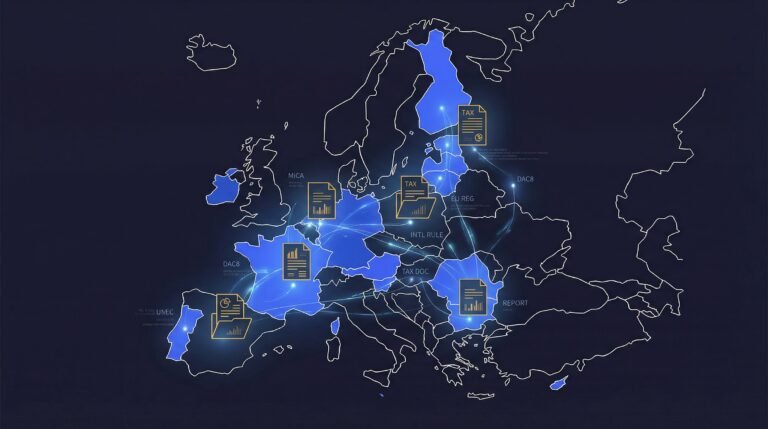
Creating a credible financial benchmark requires a transparent methodology, independent calculation, representative asset coverage, and investable weighting schemes. In traditional markets, index providers ingest millions of standardized data points from centralized exchanges to calculate real-time index values. Tokenized assets present unique data aggregation challenges because transaction data is distributed across public networks like Ethereum, Polygon, and Solana, as well as private permissioned blockchains. Furthermore, the underlying assets range from highly liquid tokenized US Treasuries to highly illiquid fractionalized commercial real estate. This heterogeneity makes it difficult to construct a single composite index that accurately reflects the investable universe. Without a unified benchmark, institutions struggle to conduct accurate tokenization market size analysis or measure the risk-adjusted returns of their digital asset portfolios.
To fill the immediate data void, rwa.xyz has emerged as the leading analytics platform for the tokenized real-world asset sector. Backed by prominent digital asset investors, the platform aggregates total value locked (TVL) and performance metrics across dozens of protocols and blockchain networks. According to rwa.xyz’s public data dashboard from early 2024, the platform tracks over $8 billion in active RWA value, excluding fiat-backed stablecoins. The platform provides institutional users with API access to historical yield data, protocol-level metrics, and asset category growth rates. Investors use these data feeds to monitor the expansion of tokenized treasuries, track default rates in on-chain private credit pools, and compare yield generation across competing protocols. The platform standardizes how yield is reported by calculating a weighted average across different tranches and maturity profiles within individual asset categories.
Despite its utility, rwa.xyz and similar on-chain analytics platforms have distinct limitations as benchmark providers. These platforms primarily track DeFi-native RWA protocols that broadcast their activity on public blockchains. They often undercount or entirely miss institutional tokenization platforms that operate on private networks or do not report comprehensive on-chain data. A bank issuing a tokenized bond on a private subnet will not appear in public TVL metrics, meaning the data represents only a subset of the total market. Additionally, TVL is a measure of asset accumulation rather than an index of price performance or total return. While TVL growth indicates sector momentum, it does not tell an investor whether a specific basket of tokenized assets outperformed a risk-free rate or a comparable traditional finance benchmark over a given quarter.
Institutional Index Providers and Sector-Specific Tracking
Traditional financial data providers have begun entering the digital asset space, though comprehensive tokenized asset benchmark indices remain in development. FTSE Russell and S&P Dow Jones Indices currently offer broad cryptocurrency benchmarks, while platforms like DeFi Llama track sector-specific metrics for tokenized real estate, treasuries, and private credit protocols.
Major institutional index providers recognize the commercial opportunity in digital assets but have proceeded cautiously regarding tokenized securities. FTSE Russell launched its Digital Asset Index series in partnership with Digital Asset Research, establishing a rigorous vetting process for digital asset inclusion based on custody standards, regulatory status, and exchange liquidity. Similarly, the S&P Cryptocurrency Broad Digital Market Index tracks the performance of a wide universe of digital assets traded on recognized exchanges. However, as of early 2026, these products focus almost exclusively on native cryptocurrencies, utility tokens, and layer-one network assets rather than tokenized real-world assets. Traditional index methodologies require consistent, verifiable pricing data from approved exchanges, a condition that most tokenized securities currently fail to meet due to fragmented secondary market liquidity and reliance on alternative trading systems (ATS).
In the absence of broad market indices, investors rely on category-specific tracking tools to evaluate individual sectors. The tokenized US Treasury market has become the most transparent segment of the RWA ecosystem, with clear yield parameters and daily net asset value (NAV) reporting. Investors can track the comparative performance of products like tokenized treasuries BlackRock BUIDL, Franklin Templeton’s BENJI, and Ondo Finance’s OUSG. By aggregating the daily yields and total return metrics of these products, investors can construct a pseudo-benchmark for on-chain risk-free rates. Reading an Ondo Finance review or analyzing BlackRock’s on-chain distribution mechanics reveals that while the underlying assets are identical, the tokenized wrappers exhibit slight performance variations due to differing management fees, redemption timelines, and smart contract architectures.
For higher-risk categories like private credit and real estate, tracking performance requires aggregating data across disparate protocol architectures. Tools like DeFi Llama categorize RWA protocols and track their capital inflows, but assessing actual investment returns requires deeper protocol-level analysis. A tokenized private credit index must account for the distinct risk profiles of platforms like Centrifuge, Maple Finance, and Goldfinch, which offer varying degrees of collateralization and underwriter protection. Similarly, a tokenized real estate benchmark must aggregate the rental yield and property appreciation data from platforms like RealT and Lofty. Because these assets are inherently illiquid, their performance metrics rely heavily on periodic appraisals and stated NAVs rather than real-time secondary market clearing prices, making them more analogous to private equity benchmarks than public equity indices.
Constructing Custom Portfolios and Performance Attribution
Institutional investors currently build custom tokenized asset benchmark indices by defining an eligible asset universe, selecting a weighting scheme, and establishing quarterly rebalancing schedules. Performance against these custom benchmarks is measured using the Brinson-Hood-Beebower attribution framework, adapted to account for on-chain variables like gas costs and yield harvesting effects.
Institutions that cannot wait for off-the-shelf index products must construct their own custom benchmarks to evaluate internal trading desks or external asset managers. The first step involves defining the eligible universe of tokenized assets. An asset manager might restrict the universe to tokens with a minimum of $50 million in AUM, verifiable smart contract audits, and full compliance with relevant securities regulations. Once the universe is defined, the administrator must choose a weighting scheme. Market-capitalization weighting is common but can lead to severe concentration risk in the current market, where a few large products dominate total TVL. Equal weighting or risk-parity weighting often provides a more balanced representation of the broader RWA ecosystem. The administrator must then establish reliable data sources, combining on-chain API feeds with off-chain NAV reports from fund administrators and pricing data from licensed ATS platforms.
Because liquidity in tokenized secondary markets remains thin, custom benchmarks typically employ a quarterly or semi-annual rebalancing frequency. More frequent rebalancing would incur prohibitive trading costs and excessive slippage, dragging down the performance of any fund attempting to track the index. Calculating the total return of the benchmark requires capturing both price appreciation and the reinvestment of distributions. In the tokenized space, distributions often take the form of daily rebasing or periodic airdrops of yield-bearing tokens. Accurately capturing these cash flows and calculating the excess return over a traditional risk-free rate is a complex administrative task that requires specialized portfolio management software capable of interpreting smart contract events.
Once a custom benchmark is established, investors apply performance attribution models to understand exactly what drove their portfolio’s returns. The traditional Brinson-Hood-Beebower (BHB) framework breaks down excess returns into three primary components: allocation effect, selection effect, and interaction effect. The allocation effect measures the value added by overweighting or underweighting specific asset categories, such as holding more private credit than the benchmark dictates. The selection effect measures the value added by choosing specific protocols or tokens within a category. The interaction effect captures the residual performance generated by the combination of allocation and selection decisions. Mastering these concepts requires a solid understanding of fundamental tokenization glossary terms and traditional portfolio mathematics.
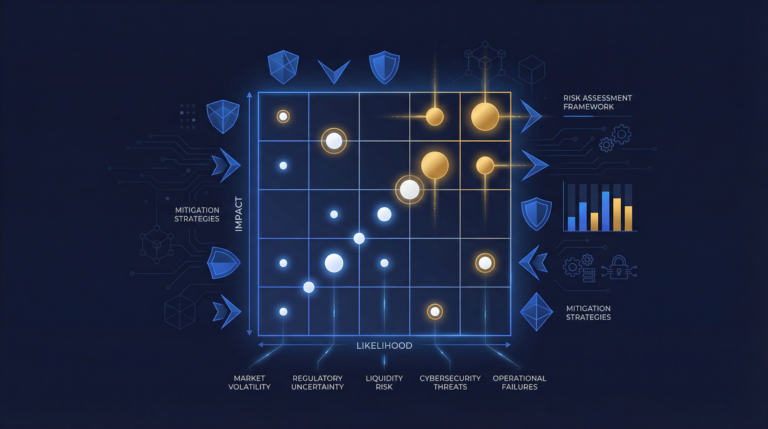
Applying the BHB framework to digital assets requires the addition of several crypto-native attribution factors. The yield harvesting effect measures the impact of timing the claiming and reinvestment of on-chain distributions. The platform selection effect accounts for situations where the exact same underlying asset yields different returns depending on which decentralized application or liquidity pool it is deployed into. Finally, the on-chain efficiency effect quantifies the drag caused by blockchain network mechanics, including gas fees, decentralized exchange slippage, and miner extractable value (MEV) losses. These operational variables represent significant tokenized asset risks that can cause a portfolio to severely underperform its theoretical benchmark if trading execution is poorly managed.
The Future of On-Chain Indices and Oracle Integration
The development of institutional-grade tokenized asset benchmark indices depends on data providers achieving IOSCO compliance and integrating robust oracle networks. Chainlink and Pyth provide the necessary on-chain price feeds to enable smart contract-based index calculations, paving the way for fully tokenized index funds and automated portfolio rebalancing.
The transition from informal data aggregators to institutional-grade benchmark providers requires strict adherence to international regulatory standards. The International Organization of Securities Commissions (IOSCO) publishes the Principles for Financial Benchmarks, which dictate strict requirements for governance, quality of benchmark design, and transparency of methodology. For rwa.xyz or any traditional index provider to offer a benchmark that institutional asset managers can legally use for performance fees or product creation, they must undergo independent audits to prove compliance with these IOSCO principles. This regulatory milestone will mark the moment when tokenized asset indices transition from informational dashboards to foundational financial infrastructure.
Technological advancements in decentralized oracle networks are simultaneously solving the data delivery challenge for on-chain index products. Oracles like Chainlink and Pyth Network aggregate price data from multiple off-chain and on-chain sources, apply statistical weighting to filter out anomalies, and deliver a unified price feed directly to smart contracts. As these oracle networks expand their coverage to include tokenized real estate, private credit NAVs, and tokenized commodity prices, they enable the creation of decentralized applications that can calculate index values natively on the blockchain. This infrastructure is a prerequisite for the development of fully automated, on-chain index funds that can programmatically rebalance their holdings based on real-time benchmark data without relying on a centralized fund manager.
The convergence of traditional index methodologies, IOSCO-compliant administration, and oracle-driven data feeds will eventually yield a robust ecosystem of tokenized asset indices. When this infrastructure matures, it will unlock the next phase of institutional adoption by enabling the creation of tokenized ETFs and passive index products. Until then, asset managers must rely on a combination of data aggregators like rwa.xyz, sector-specific tracking tools, and rigorous custom benchmark construction to navigate the performance measurement challenges of the tokenized economy.
Frequently Asked Questions
What is a tokenized asset benchmark index?
A tokenized asset benchmark index is a standardized metric that tracks the aggregate performance of a specific basket of tokenized real-world assets. Investors use these indices to measure portfolio returns, evaluate asset manager performance, and construct passive investment products in the digital asset market.
How does rwa.xyz track tokenized asset performance?
The rwa.xyz platform tracks performance by aggregating on-chain data from public blockchains, calculating total value locked (TVL), and standardizing yield metrics across different protocols. It primarily focuses on decentralized finance protocols and public tokenization platforms, providing API access for institutional investors.
Do traditional providers like FTSE or S&P track tokenized securities?
Currently, traditional index providers like FTSE Russell and S&P focus their digital asset indices on broad cryptocurrencies and layer-one networks rather than tokenized securities. The lack of standardized pricing data and fragmented liquidity across alternative trading systems has delayed the creation of traditional RWA benchmarks.
What is the Brinson-Hood-Beebower attribution framework?
The Brinson-Hood-Beebower framework is a mathematical model used to explain a portfolio’s performance relative to a benchmark. It breaks down excess returns into allocation effects (sector weighting), selection effects (specific asset choices), and interaction effects, which can be adapted for tokenized assets to include on-chain execution costs.
Why are oracles important for tokenized indices?
Oracles like Chainlink and Pyth are essential because they deliver reliable, aggregated off-chain pricing data directly to blockchain smart contracts. This technology enables the real-time, on-chain calculation of index values, which is required to build automated tokenized index funds and decentralized portfolio rebalancing tools.