Fractional Ownership Tokenization: The Complete Guide
Traditional capital markets have long relied on high barriers to entry to manage administrative costs and regulatory compliance. Commercial real estate syndications typically demand minimum investments between $25,000 and $100,000, effectively locking retail participants out of premium asset classes. Fractional ownership tokenization fundamentally alters this equation by replacing paper-based administrative overhead with automated blockchain infrastructure. By representing partial ownership of a physical or financial asset as a digital token on a distributed ledger, issuers can drastically lower investment minimums while maintaining precise cap table management. This transition from analog to digital fractionalization allows a $5 million apartment building to be legally and technically divided into 100,000 individual shares priced at $50 each. Investors gain access to institutional-grade assets, while asset owners unlock a broader pool of global capital. This comprehensive asset tokenization guide examines how blockchain technology functions in practice, compares it to legacy models like Real Estate Investment Trusts, and outlines the persistent regulatory and liquidity challenges that investors must navigate.
The mechanics of fractional ownership tokenization
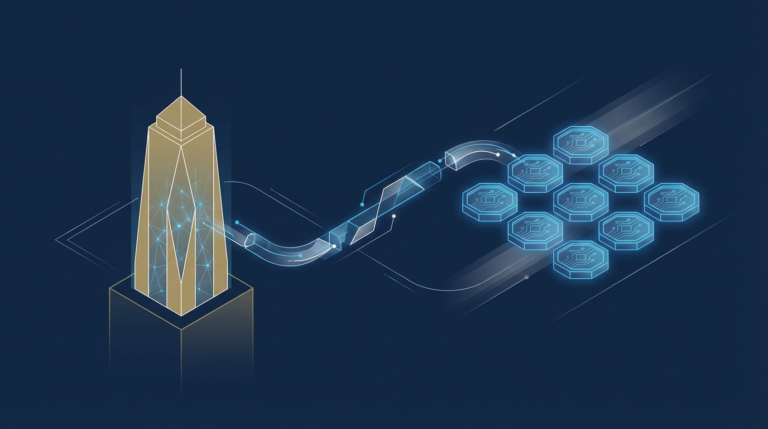
Fractional ownership tokenization is the process of dividing legal rights to an asset into digital tokens on a blockchain. Each token represents a proportional share of the underlying asset’s equity, debt, or cash flow. Smart contracts automate compliance, dividend distribution, and peer-to-peer trading without requiring traditional intermediaries like transfer agents.
The concept of dividing assets into smaller shares is not a recent invention. Real Estate Investment Trusts, mutual funds, and traditional private equity syndications have offered fractional exposure to large asset pools for decades. What tokenized fractional shares introduce is a fundamentally different mechanical infrastructure for managing that ownership. Traditional fractionalization relies on a complex web of brokers, clearinghouses, and record-keepers to track who owns what and to distribute yields. Tokenization collapses this back-office hierarchy into a single, shared ledger where ownership records are transparent and immutable. When an investor purchases a token, the transaction settles almost instantly on the blockchain, updating the capitalization table in real time without manual reconciliation. You can explore these technical definitions further in our tokenization glossary.
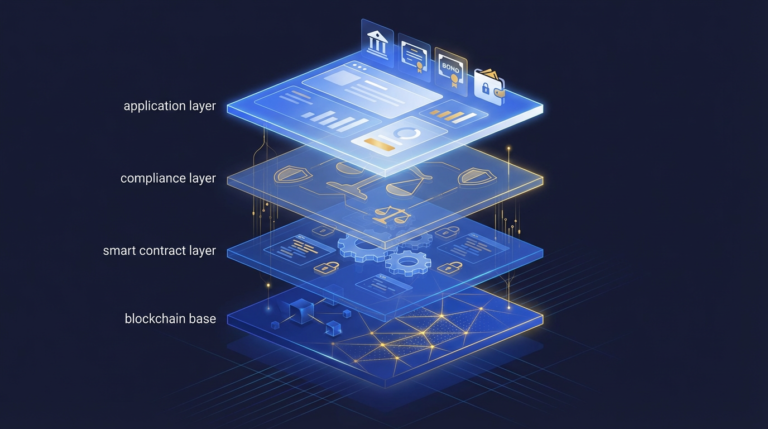
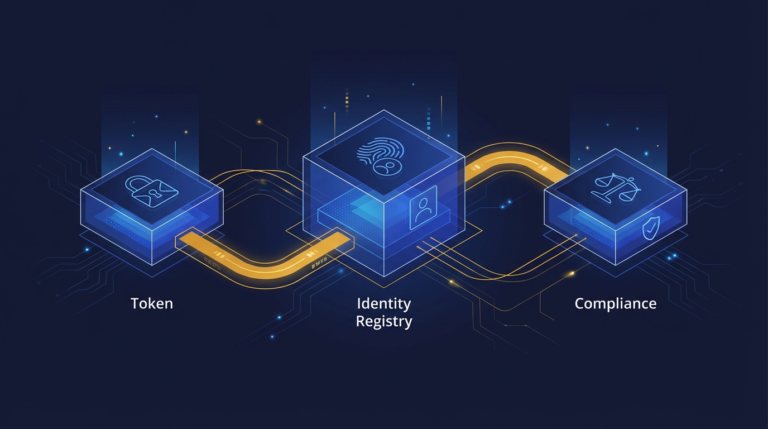
This digital architecture enables programmable ownership rights directly at the token level. Issuers embed compliance rules into the smart contracts that govern the tokens, ensuring that they can only be held by verified wallets or traded within specific jurisdictions. This automation drastically reduces the marginal cost of servicing each investor. In a traditional real estate syndication, managing 10,000 investors putting in $50 each would cost more in administrative overhead and wire fees than the actual capital raised. Through fractional investing tokenization, a smart contract can distribute monthly rental income to 10,000 distinct wallets in seconds for pennies in transaction fees. This efficiency allows platforms to reduce investment minimums from the standard $50,000 required by private equity funds down to $50, opening private markets to a significantly larger demographic.
In the United States, tokenizing a physical property directly remains legally complex due to county-level deed recording requirements. To bypass this analog bottleneck, issuers establish a specific Limited Liability Company or similar corporate entity to hold the physical deed. They then tokenize the equity shares of that corporate entity rather than the real estate itself. This legal wrapper ensures that the digital tokens correspond directly to recognized property rights under existing corporate law. When an investor buys a token, they are technically buying a membership interest in the LLC that owns the building. This structure bridges the gap between decentralized blockchain networks and legacy legal systems, allowing the transfer of ownership to occur entirely on-chain without requiring constant updates to the municipal land registry.
Asset classes and current market examples
Real estate and government treasuries currently dominate the tokenized fractional ownership market. Platforms like RealT and Lofty offer residential real estate tokens for around $50, while institutional issuers like BlackRock require $100,000 minimums for tokenized Treasury funds. Fine art and private equity are also seeing increased fractionalization through blockchain infrastructure.
Fractional real estate tokens represent the most active segment of the retail tokenization market. Companies like RealT have tokenized hundreds of residential and commercial properties, primarily in the United States, allowing investors to purchase fractional shares for approximately $50. According to RealT’s platform documentation, investors receive daily rental income payments distributed directly to their digital wallets in stablecoins. Similarly, Lofty operates on the Algorand blockchain and allows users to buy fractions of rental properties with a $50 minimum investment. These platforms focus heavily on single-family rentals and small multi-family units, giving retail investors direct exposure to specific cash-flowing assets rather than a blind pool of properties. This direct selection process is a core appeal of tokenized real estate investing.
Institutional adoption focuses heavily on yield-bearing financial instruments rather than physical property. BlackRock launched the BlackRock USD Institutional Digital Liquidity Fund, known by its ticker BUIDL, on the Ethereum blockchain to offer tokenized exposure to U.S. Treasury bills and repurchase agreements. While retail real estate platforms target micro-investments, BlackRock requires a $100,000 minimum investment for BUIDL, according to the fund’s SEC filings. However, secondary protocols and intermediaries are already building structures to fractionalize these institutional tokens further for retail access. This creates a tiered system where large institutions interact directly with the primary issuer, while smaller investors access fractionalized versions of the same asset through regulated intermediaries.
Beyond real estate and treasuries, alternative assets like fine art are entering the tokenized space. Platforms such as Freeport digitize ownership of Andy Warhol prints and other high-value artworks, allowing users to buy fractional shares of pieces that traditionally sell for millions at auction. This broad application across asset classes demonstrates the versatility of the underlying blockchain infrastructure. The mechanics remain identical whether the underlying asset is a painting, a Treasury bill, or an apartment complex. The issuer secures the asset in a legal trust or LLC, mints tokens representing shares of that entity, and distributes them to investors globally.
Comparing tokenized assets to traditional models
Tokenized fractional ownership differs from traditional models primarily in administrative efficiency, investment minimums, and asset control. While REITs offer high liquidity for blind pools of properties, tokenization allows investors to select specific assets with much lower minimums than traditional syndications or equity crowdfunding campaigns.
Understanding the value proposition of tokenization requires a direct comparison with established fractional investment vehicles. Real Estate Investment Trusts provide excellent liquidity through public stock exchanges, but investors must buy into a massive, pre-selected portfolio of properties managed by a corporate board. Traditional real estate syndications allow investors to target specific properties, but they typically demand $25,000 to $100,000 upfront and lock that capital up for five to ten years. Equity crowdfunding platforms like Republic and StartEngine bridged this gap by lowering minimums to a few hundred dollars, but investors still face significant liquidity constraints and rely on the platform’s centralized database for ownership records. Tokenization attempts to combine the low minimums of equity crowdfunding with the specific asset selection of syndications, while introducing the potential for peer-to-peer secondary trading.
The table below illustrates how tokenized fractional ownership compares to legacy models across key structural dimensions. The most significant divergence lies in the underlying technology managing the capitalization table and the distribution of yields. While mutual funds and syndications rely on transfer agents and manual bank ACH transfers, tokenized assets execute these functions autonomously through smart contracts. This shift transfers the administrative burden from human operators to software code, which fundamentally changes the economics of managing a large base of small-dollar investors.
| Feature | Tokenized Fractional Assets | Public REITs | Traditional Syndications | Equity Crowdfunding |
|---|---|---|---|---|
| Typical Minimum | $50 – $100 | Price of one share | $25,000 – $100,000 | $100 – $500 |
| Asset Selection | Specific individual assets | Blind pool portfolio | Specific individual assets | Specific companies/assets |
| Cap Table Ledger | Public blockchain | Centralized transfer agent | Private spreadsheet/portal | Platform database |
| Income Distribution | Automated via smart contracts | Quarterly manual dividends | Quarterly manual distributions | Varies by platform |
| Secondary Liquidity | Peer-to-peer or decentralized exchanges | High (public stock exchanges) | Very low (multi-year lockups) | Low (platform bulletin boards) |
Tax reporting also diverges significantly between these models. Public REITs issue standard 1099-DIV forms to investors, simplifying the tax filing process. Traditional real estate syndications typically issue Schedule K-1 forms, which are notoriously complex and often delay personal tax filings. Tokenized fractional assets that utilize an LLC wrapper generally operate as pass-through entities, meaning they also issue K-1s to token holders. Generating and distributing thousands of K-1s to micro-investors presents a major logistical challenge for tokenization platforms, though many are developing automated tax reporting integrations to solve this issue.
Structural limitations of fractional ownership tokenization
Fractional ownership tokenization faces significant limitations regarding secondary market liquidity and regulatory compliance. Dividing an illiquid asset into thousands of digital tokens does not automatically create buyer demand. Furthermore, fractionalized assets are heavily regulated as securities, requiring strict adherence to global financial laws.
The most persistent misconception in the tokenization industry is the assumption that fractionalization automatically generates liquidity. You can legally and technically divide a commercial office building into 10,000 digital tokens, but that division does not guarantee that anyone wants to purchase those tokens on a secondary market. Liquidity requires active buyers and sellers, market makers, and robust price discovery mechanisms. Currently, the secondary market for tokenized fractional shares remains thin compared to public equities. Investors holding tokenized real estate or private equity often find that they must hold the asset to maturity or accept a significant discount to sell their tokens quickly. The blockchain facilitates the mechanical transfer of the asset perfectly, but it cannot manufacture market demand out of thin air.
Regulatory classification presents another major hurdle for widespread adoption, as detailed in our real estate tokenization guide. In the United States, dividing an asset and selling fractional shares to passive investors almost always creates an investment contract under the Howey Test. This means fractional real estate tokens and tokenized fund interests are regulated as securities by the Securities and Exchange Commission. Issuers must either register these securities, which is prohibitively expensive for single assets, or rely on exemptions like Regulation D or Regulation A+. Under Rule 506(c) of Regulation D, issuers can only sell to verified accredited investors, which defeats the purpose of democratizing access. Regulation A+ allows retail participation but requires significant legal disclosures, SEC qualification, and ongoing reporting that most single-property issuers cannot afford.
Distributing ownership among thousands of micro-investors creates complex governance challenges. If a tokenized property needs a new roof, coordinating a capital call or a governance vote among 5,000 token holders holding $50 each is practically impossible without centralized management structures. Most platforms solve this by requiring investors to sign away their voting rights to a designated property manager or sponsor. While this solves the operational bottleneck, it contradicts the decentralized ethos of blockchain technology and leaves investors entirely dependent on the competence of the central manager. Investors hold the financial upside, but they retain zero operational control over the underlying asset.
The future of fractional investing
The future of fractional investing involves the seamless integration of blockchain rails into traditional financial infrastructure. As regulatory frameworks mature, stocks, bonds, and alternative investment funds will likely become fractionalized by default, allowing investors to build highly customized portfolios across previously inaccessible asset classes.
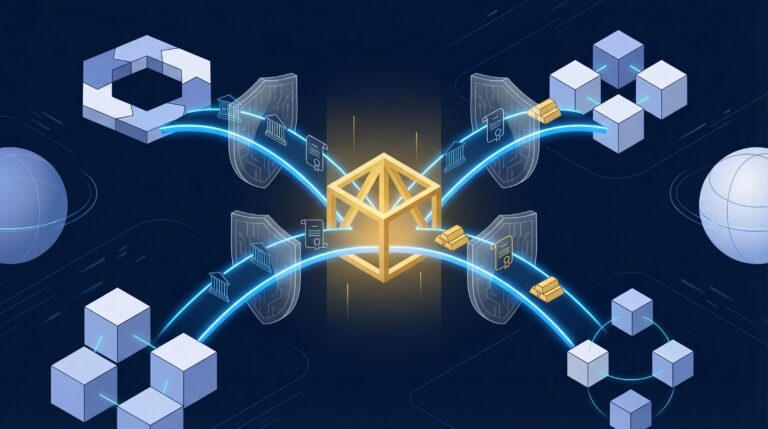
The transition toward a fully tokenized financial system will likely occur gradually as legacy institutions upgrade their core infrastructure. We are moving toward an environment where fractional ownership is the default state for all financial instruments, rather than a specialized feature of niche blockchain platforms. When stocks, corporate bonds, and private equity funds are issued natively on distributed ledgers, the artificial distinctions between different types of fractional assets will dissolve. An investor learning how to invest in tokenized assets today is preparing for a future where they can allocate capital across a fraction of a Treasury bill, a slice of a commercial skyscraper, and a piece of a private credit fund within the same digital wallet.
This interoperability will unlock new forms of automated portfolio management and collateralization. In a mature tokenized ecosystem, fractional real estate tokens could be instantly pledged as collateral for a decentralized loan, or automatically rebalanced by an AI-driven smart contract based on market conditions. The composability of decentralized finance, when applied to real-world assets, creates financial products that are impossible to build on legacy rails.
Realizing this future requires overcoming substantial technical and regulatory friction. Jurisdictions globally are currently drafting distinct rules for digital assets, creating a fragmented landscape that complicates cross-border fractional ownership. European regulators have implemented the Markets in Crypto-Assets regulation, providing some clarity, while the United States continues to rely on enforcement actions to define boundaries. Despite these hurdles, the economic advantages of automated cap table management and instant settlement are too significant for the financial sector to ignore. The fundamental mechanics of capital formation are shifting. By reducing the cost of trust and administration, fractional ownership tokenization ensures that the private markets of the next decade will operate with unprecedented efficiency.
Frequently Asked Questions
What is fractional ownership tokenization?
Fractional ownership tokenization is the process of dividing an asset into digital tokens on a blockchain, where each token represents a proportional share of the asset. This technology automates compliance and dividend distribution through smart contracts, eliminating the need for traditional intermediaries.
How much do I need to invest in tokenized real estate?
Platforms like RealT and Lofty allow investors to purchase fractional real estate tokens starting at approximately $50. This is a significant reduction from traditional real estate syndications, which typically require minimum investments between $25,000 and $100,000.
Are fractional tokens considered securities?
Yes, in the United States, selling fractional shares of an asset to passive investors generally creates an investment contract under the Howey Test. This means fractionalized assets are heavily regulated as securities and must comply with SEC registration requirements or specific exemptions.
Does tokenization guarantee liquidity for fractional assets?
No, tokenization does not guarantee secondary market liquidity. While the blockchain enables instant technical transfer of a token, you still need an active buyer willing to purchase your specific fractional share at a mutually agreed price.