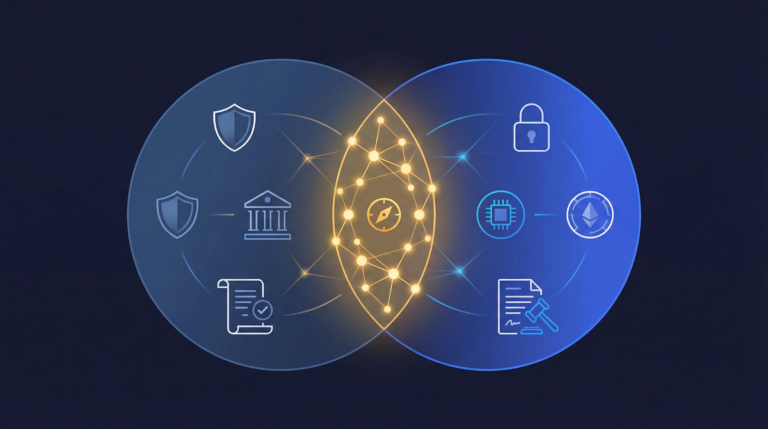
Secondary trading for security tokens: how it works
Founders tokenizing their companies often cite one primary motivation: liquidity. For decades, early-stage equity has remained locked behind a severe illiquidity discount, typically reducing private company valuations by 20% to 35% compared to their publicly traded peers. The promise of secondary trading security tokens offers a structural solution to this trapped value. By combining fractional ownership with blockchain-based settlement, tokenization theoretically allows early employees and investors to realize partial returns without waiting for an initial public offering or an acquisition. This liquidity premium can increase investor willingness to participate in early funding rounds and fundamentally alter a startup’s capitalization strategy. However, the gap between the technological capability to trade and the actual market depth remains significant. This guide examines how the STO secondary trading infrastructure actually functions, the regulatory holding periods that govern these assets, and the practical steps founders must take to build genuine tokenized equity liquidity in today’s market.
The mechanics of secondary trading security tokens
Secondary trading for security tokens executes through Alternative Trading Systems (ATS) registered with the Securities and Exchange Commission. These platforms use smart contracts to enforce compliance rules automatically, allowing buyers and sellers to settle trades on blockchain networks in near real-time, significantly faster than traditional equity markets.
Any platform facilitating secondary trades in digital securities within the United States must register as an Alternative Trading System under SEC Regulation ATS. This regulatory framework requires operators to file Form ATS, maintain broker-dealer status, and implement rigorous surveillance and compliance mechanisms. The digital securities space currently relies on a small group of specialized operators. Securitize Markets, operated by Securitize, handles the largest volume of tokenized assets and maintains dual registration as a broker-dealer and ATS. Competitors include tZERO, which operates a prominent retail-facing platform backed by Pelion Venture Partners, and international players like the Seychelles-based MERJ Exchange and the dual-listed INX. Choosing the right venue is a critical component of the security token offering guide for any founder, as tokens minted on one platform cannot easily trade on another without complex cross-chain integration and regulatory bridging.
When an investor places a sell order on an ATS platform, the underlying smart contract acts as the primary enforcement mechanism. The system instantly verifies both the buyer and seller against embedded compliance rules. These checks confirm Know Your Customer (KYC) status, verify accreditation levels if required, and ensure the specific token has cleared any mandatory regulatory holding periods. If both parties pass these programmatic hurdles, the trade executes and settles directly on the blockchain. Traditional equity markets moved to a T+1 settlement cycle in May 2024, meaning trades settle one business day after execution. Blockchain infrastructure enables T+0 settlement, transferring the asset and the funds simultaneously or within minutes. The designated transfer agent then records the ownership change on the capitalization table, maintaining a perfectly synchronized ledger between the blockchain state and the official corporate record.
The mechanical efficiency of this process does not automatically generate trading activity. Liquid markets require market makers-institutional entities that continuously quote both buy and sell prices to ensure investors can always execute a trade. Most security token markets currently operate without dedicated market makers because the asset class remains too small to justify the capital allocation required by high-frequency trading firms. Without these liquidity providers, platforms rely entirely on organic matching between retail or institutional buyers and sellers. This dynamic creates a challenging environment for price discovery and execution speed. Founders researching where to buy security tokens often discover that while the technology works flawlessly, the order books remain exceptionally thin compared to traditional public equities or major cryptocurrencies.
Navigating the regulatory framework for token liquidity
The regulatory framework dictates when and how security tokens can trade on secondary markets. The SEC enforces strict holding periods based on the initial exemption used to raise capital, ranging from immediate tradability for Regulation A+ offerings to a mandatory one-year lockup for Regulation Crowdfunding and non-reporting Regulation D issuers.
Founders utilizing Regulation D to raise capital must navigate Rule 144, the primary SEC regulation governing the resale of restricted securities. Under Rule 144, tokens issued by non-reporting private companies carry a mandatory 12-month holding period before they can enter the secondary market. If the issuing company voluntarily files public reports with the SEC, this holding period drops to six months. During this lockup phase, the smart contract governing the token simply rejects any transfer attempts to secondary buyers. This hard-coded restriction prevents accidental compliance violations but completely eliminates early liquidity. Founders must communicate these timelines clearly to investors, as the expectation of immediate trading is a common misconception in the digital asset space. When evaluating a Reg D vs Reg CF vs Reg A+ comparison, the holding period often becomes the deciding factor for startups prioritizing early investor liquidity.
Alternative capital formation strategies offer different liquidity profiles. Tokens issued under Regulation A+ represent the most liquid option available to private companies. Once the SEC qualifies a Tier 2 Reg A+ offering, the resulting tokens are technically freely tradable immediately, subject only to the ATS platform’s onboarding requirements and state Blue Sky laws. This immediate tradability makes Reg A+ highly attractive for consumer-facing brands seeking to turn customers into active shareholders. Conversely, Regulation Crowdfunding (Reg CF) imposes a strict one-year holding period on all secondary transfers, with very narrow exceptions for transfers to family members or back to the issuing company. Even after these holding periods expire, the company must maintain ongoing financial reporting requirements to keep the tokens eligible for public quotation. Failure to file annual reports can force an ATS to halt trading in the asset entirely.
The burden of enforcing these disparate rules falls entirely on the tokenization platform and its integrated transfer agent. Modern platforms encode the specific regulatory exemption directly into the token’s metadata at the time of issuance. When evaluating the best tokenization platforms, founders must verify that the provider can automatically track these holding periods across thousands of individual wallets and dynamically unlock the tokens on the exact expiration date. This programmable compliance represents one of the most significant upgrades over traditional paper-based private equity, where legal counsel must manually review and approve every secondary transfer. The automated system reduces administrative friction and lowers the legal costs associated with maintaining a large, active cap table of retail investors.
The current reality of the security token secondary market
The current reality of the security token secondary market involves low trading volumes, thin order books, and wide bid-ask spreads. While the technology enables instant settlement, the limited number of active investors and fragmented ATS infrastructure prevent most private tokenized assets from achieving deep, continuous liquidity.
Despite the technological advancements, founders must set realistic expectations regarding actual market activity. Current trading volumes for digital securities represent a tiny fraction of both traditional equity markets and the broader cryptocurrency ecosystem. A detailed Securitize platform review reveals that while they operate the largest SEC-registered ATS for digital asset securities, daily trading volume for individual private company tokens rarely exceeds a few thousand dollars. This lack of volume manifests directly in the bid-ask spread-the difference between the highest price a buyer is willing to pay and the lowest price a seller is willing to accept. According to market data from rwa.xyz and platform order books, security tokens routinely trade with wide bid-ask spreads ranging from 5% to 15%. A spread of this magnitude severely punishes short-term trading and forces investors to hold the asset longer to realize a profitable exit, ironically reinforcing the illiquidity the technology was meant to solve.
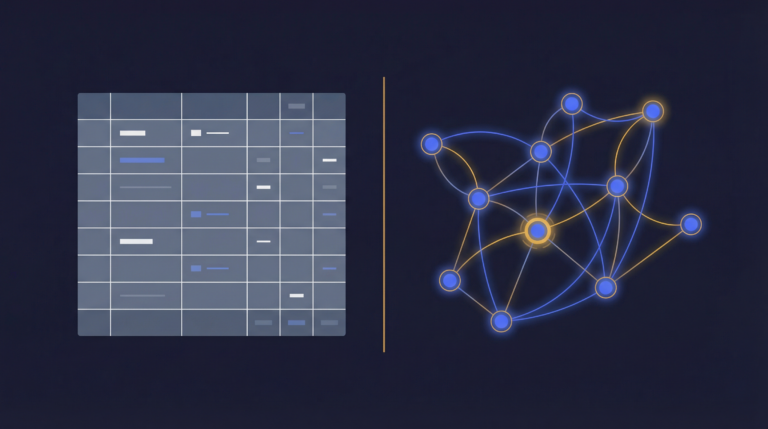
Market fragmentation further dilutes the available liquidity pool. The digital securities ecosystem currently operates in silos. A token minted and listed on Securitize cannot seamlessly trade on tZERO or INX. Each ATS maintains its own proprietary onboarding process, compliance checks, and user base. If a founder lists their tokenized equity on a single platform, they restrict their secondary market exclusively to investors who have completed KYC and funded accounts on that specific venue. While reading a tZERO platform review might highlight their strong retail user base, those users cannot access assets listed on competing platforms. This lack of interoperability prevents the aggregation of buy and sell orders that creates deep markets. Until the industry develops standardized cross-platform routing protocols similar to the National Market System (NMS) in traditional equities, liquidity will remain constrained by the specific venue a founder chooses.
The absence of institutional capital on the secondary side remains the final major hurdle. Large asset managers, pension funds, and proprietary trading firms provide the bulk of the liquidity in public markets. These entities currently avoid secondary trading security tokens due to regulatory uncertainty, custody challenges, and the microscopic market capitalization of the available assets. A tokenized startup valued at $50 million simply does not offer enough float to absorb a $2 million institutional block trade without crashing the token price. Consequently, the market relies almost entirely on retail investors and high-net-worth individuals to provide liquidity. This demographic reality means that consumer-facing companies with highly engaged user bases tend to see more secondary market action than B2B enterprise software companies, regardless of the underlying financial metrics.
How founders can optimize tokenized equity liquidity
Founders can optimize tokenized equity liquidity by choosing platforms with integrated ATS networks, structuring offerings under Regulation A+ for immediate tradability, and building a sufficiently large initial investor base. Meaningful secondary market activity typically requires at least 200 to 500 active token holders and consistent financial disclosures.
Generating liquidity requires deliberate structural decisions before the first token is ever minted. Founders must select a primary issuance platform that either operates its own active ATS or maintains formal routing agreements with registered secondary venues. Issuing a token on a standalone platform that only handles primary capital formation leaves the founder responsible for negotiating an ATS listing later, a process that can take months and cost tens of thousands of dollars in legal fees. Furthermore, the choice of regulatory exemption dictates the market’s potential size. While Regulation D 506(c) allows companies to raise unlimited capital from accredited investors, it severely restricts the secondary market pool. Structuring the raise as a Regulation A+ offering opens the secondary market to non-accredited retail investors, drastically expanding the number of potential buyers and eliminating the 12-month Rule 144 holding period.
A secondary market cannot function without a critical mass of participants. Financial market structure experts generally agree that a private asset needs a minimum of 200 to 500 active holders to generate consistent organic trading activity. If a startup raises $5 million from just ten venture capital funds, a secondary market will never materialize because none of the holders intend to trade small blocks of equity. Founders must actively market their primary offering to a broad audience of smaller check writers to distribute the token float effectively. Calculating the tokenization ROI for startups must include the ongoing cost of maintaining investor relations with this larger group. Continuous disclosure drives secondary market interest. Companies that publish quarterly financial updates, host regular earnings calls, and maintain transparent communication channels see significantly tighter bid-ask spreads than companies that go silent after the initial capital raise.
The infrastructure supporting ATS security tokens continues to mature, and founders should view tokenization as a long-term capitalization strategy rather than a quick fix for illiquidity. As traditional financial institutions increasingly deploy capital into blockchain-based assets, the divide between primary issuance and secondary liquidity will narrow. Regulatory clarity is improving, and the technology proving T+0 settlement works at scale has already caught the attention of major Wall Street clearinghouses. Liquid secondary markets for most private security tokens are likely one to three years away from achieving the depth required to eliminate the illiquidity discount entirely. Until then, founders should tokenize their equity to automate compliance, streamline cap table management, and prepare for the future, viewing early secondary liquidity as an incremental benefit rather than a guaranteed outcome.
Secondary trading for security tokens represents a fundamental shift in how private capital markets operate, moving the industry away from analog, paper-based restrictions toward programmable, near-instant settlement. The technology functions exactly as promised, utilizing SEC-registered Alternative Trading Systems to enforce compliance and execute T+0 transactions on the blockchain. However, founders must approach this ecosystem with clear eyes regarding the current market depth. Wide bid-ask spreads, fragmented platforms, and strict regulatory holding periods mean that true, deep liquidity remains a work in progress for most tokenized private companies. By choosing the right regulatory framework, partnering with established ATS operators, and actively building a broad base of retail and institutional investors, startups can position themselves to capture the liquidity premium as the market matures. The foundation is built, and the transition toward fully liquid private markets is underway.
Frequently Asked Questions
How long do I have to wait to trade a security token?
The waiting period depends on the SEC exemption used. Regulation D tokens typically require a 12-month holding period under Rule 144 for non-reporting companies. Regulation Crowdfunding requires a one-year hold. Regulation A+ tokens are generally freely tradable immediately upon issuance.
What is an ATS and why is it required?
An Alternative Trading System (ATS) is an SEC-registered trading venue that matches buyers and sellers of securities. Any platform facilitating secondary trading of digital asset securities in the United States must hold this registration to ensure compliance with federal market regulations.
Why are bid-ask spreads so wide for tokenized equity?
Security tokens frequently see bid-ask spreads of 5% to 15% due to low trading volumes and the absence of institutional market makers. The market currently relies on organic matching between individual buyers and sellers, which limits price discovery and execution efficiency.
Do security tokens settle faster than traditional stocks?
Yes, security tokens settle significantly faster. While traditional US equities moved to a T+1 settlement cycle in May 2024, blockchain-based security tokens achieve T+0 settlement, transferring the asset and funds simultaneously or within minutes of trade execution.