Token2049 2026 Analysis: Key Announcements & Market Impact
The April 2026 edition of Token2049 in Dubai finalized the transition of blockchain technology from speculative trading infrastructure to institutional capital markets plumbing. This Token2049 2026 analysis examines how asset managers and banking institutions dominated the agenda, sidelining retail crypto narratives in favor of regulatory compliance and yield-bearing instruments. The conference floor and keynote stages featured executives from traditional finance firms discussing concrete deployment strategies rather than theoretical use cases. Attendees witnessed a clear maturation in how the industry approaches digital assets, focusing heavily on interoperability standards and cross-border settlement efficiencies. The event demonstrated that the experimental phase of on-chain finance has concluded. Major financial institutions are now building permanent infrastructure to issue, trade, and settle traditional financial instruments on distributed ledgers. We will explore the specific infrastructure launches, the regulatory frameworks discussed on the main stage, and the immediate capital flows that followed the conference. This event provided a definitive look at how the next decade of capital markets will operate.
Context leading into the Dubai conference
The macroeconomic environment leading into Token2049 2026 created specific conditions that accelerated institutional interest in on-chain assets. Sustained interest rates and the demand for highly liquid, yield-bearing instruments pushed traditional asset managers to seek distribution efficiencies. The tokenization sector had already absorbed billions in capital through tokenized treasury products and money market funds over the preceding twenty-four months. Institutional participants arrived in Dubai looking for the next phase of growth beyond simple government debt. They wanted solutions for private credit, real estate, and complex structured products. Understanding exactly what is asset tokenization became a prerequisite for traditional portfolio managers attending the event. The conversation shifted from basic education to technical implementation and legal structuring. Asset managers needed to know how to integrate distributed ledger technology with their existing portfolio management systems without disrupting daily operations or violating compliance mandates.
Regulatory clarity in specific jurisdictions provided the foundation for this institutional confidence. The United Arab Emirates Virtual Assets Regulatory Authority and the Monetary Authority of Singapore had spent the previous years establishing clear guidelines for digital asset service providers. These frameworks gave compliance departments the legal certainty required to approve large-scale tokenization pilot programs. According to a joint report by Boston Consulting Group and ADDX, the total tokenization market size is projected to reach $16 trillion by 2030, a figure that was frequently cited during the opening day panels. This projection drove the aggressive posturing by major banks competing for market share in the custody and settlement layers. The infrastructure built during the 2023-2025 period had finally reached enterprise-grade reliability. Public blockchains demonstrated the capacity to handle institutional transaction volumes while maintaining necessary privacy controls through zero-knowledge proofs and permissioned subnets.
The demand for secondary market liquidity also shaped the context of the conference. Early tokenization efforts successfully brought assets on-chain but struggled to create active trading environments. Investors holding tokenized private equity or real estate found themselves locked into illiquid positions, much like traditional markets. The industry recognized that issuing a token was only the first step in a complex lifecycle. Market makers and liquidity providers needed standardized data feeds and secure cross-chain messaging protocols to facilitate trading across different networks. The anticipation of solutions to these liquidity fragmentation issues drove record attendance at the institutional track of the conference. Traditional financial institutions understood that whoever controlled the liquidity venues for these new digital instruments would capture significant fee revenue for decades. This realization set the stage for the aggressive partnership announcements and product launches that defined the event.
What happened during the institutional panels
The most significant Token2049 announcements 2026 centered on the standardization of cross-chain communication and identity verification. Panelists universally agreed that a fragmented ecosystem of isolated blockchains could not support global capital markets. Representatives from Swift and major oracle networks detailed their collaborative efforts to connect private bank ledgers with public blockchain infrastructure. These integration layers allow financial institutions to send secure messages that trigger the settlement of tokenized assets across different networks simultaneously. The technical discussions moved past the merits of individual blockchains and focused entirely on the abstraction layers that hide the underlying complexity from the end user. Asset managers stated clearly that portfolio managers should not need to know which blockchain an asset lives on, just as they do not need to know the specific routing protocols used by the Depository Trust & Clearing Corporation.
Several major financial institutions used the event to reveal strategic partnerships with the best tokenization platforms in the industry. These partnerships focused on automating the compliance and lifecycle management of digital securities. Smart contracts are now routinely used to enforce transfer restrictions, calculate dividend payouts, and manage cap tables in real-time without human intervention. The panels on RWA tokenization explained how these automated processes reduce middle-office overhead by up to forty percent for complex alternative assets. We saw demonstrations of unified dashboards where compliance officers could instantly verify the accreditation status of every wallet holding their firm’s tokenized funds. These platforms integrate directly with traditional identity verification providers, bridging the gap between on-chain anonymity and strict Know Your Customer requirements. The technology has evolved to allow privacy-preserving compliance, where wallet owners prove their eligibility to hold an asset without revealing their underlying identity to the public ledger.
The conference also featured deep technical discussions regarding the legal structures supporting tokenized assets. Lawyers and structuring experts debated the merits of native digital securities versus tokenized representations of traditional assets held in special purpose vehicles. A consensus emerged that while native digital securities offer the most operational efficiency, the transitional period requires the use of bankruptcy-remote trusts to hold the underlying physical or financial assets. According to research by 21.co, the market value of tokenized assets is expected to reach up to $10 trillion by the end of the decade, making the legal enforceability of these structures paramount. Panelists discussed recent legal precedents in the UK and Singapore that recognized digital tokens as distinct forms of personal property. This legal recognition provides the necessary foundation for using tokenized assets as collateral in decentralized lending protocols and traditional repo markets. The ability to pledge tokenized money market funds as collateral for margin trading was highlighted as a critical unlock for institutional capital efficiency.
Results and market reaction to infrastructure launches
The market reaction to the Token2049 tokenization highlights was immediate and measurable across both traditional and digital asset markets. In the weeks following the conference, on-chain data showed a significant spike in the minting of institutional-grade stablecoins and tokenized treasury products. Capital flowed out of centralized crypto exchanges and into regulated, yield-bearing on-chain instruments. This movement indicated a clear preference among large capital allocators for assets backed by traditional financial collateral rather than volatile crypto-native tokens. The trading volume of governance tokens associated with major tokenization protocols also saw sustained increases, reflecting investor confidence in the business models of infrastructure providers. Retail and institutional investors alike began actively researching how to invest in tokenized assets to capture the yield premium offered by these newly accessible markets.
The announcements regarding cross-chain interoperability standards triggered a wave of integrations across the decentralized finance ecosystem. Decentralized exchanges and lending protocols rapidly updated their smart contracts to accept tokenized real-world assets as approved collateral types. This integration created a feedback loop where the increased utility of tokenized assets drove further issuance. Traditional market makers began quoting two-way prices for tokenized corporate debt and private credit funds, significantly tightening the bid-ask spreads. The cost of capital for issuers utilizing blockchain infrastructure dropped noticeably compared to traditional issuance methods. This cost reduction was primarily driven by the elimination of multiple intermediaries in the settlement process and the broader investor base accessible through global, 24/7 trading venues. The market demonstrated a clear willingness to pay a premium for the liquidity and transparency provided by on-chain settlement.
We also observed a shift in the venture capital landscape following the event. Funding rounds for consumer-focused crypto applications slowed, while capital aggressively chased startups building enterprise-grade tokenization infrastructure. Investors targeted companies developing zero-knowledge identity solutions, institutional wallet infrastructure, and automated compliance engines. The focus shifted entirely to businesses that could generate predictable, fee-based revenue from traditional financial institutions. Bank of New York Mellon’s 2023 survey indicated that 97% of institutional investors agreed that tokenization would revolutionize asset management, and the capital deployment following Token2049 2026 proved they were finally ready to fund that revolution. The market rewarded companies that solved specific, boring problems in the financial plumbing rather than those proposing radical redesigns of the global economic system. This pragmatic approach to capital allocation marked a definitive end to the speculative funding cycles that previously characterized the blockchain industry.
Lessons learned for the broader financial sector
The primary lesson from this Token2049 conference recap is that blockchain technology is no longer a parallel financial system; it is becoming the foundational layer for the existing global economy. Traditional institutions are not adopting digital assets to bypass regulations or create alternative economic models. They are adopting this technology entirely to reduce operational costs, increase settlement speed, and access global liquidity pools. The successful projects are those that map directly to existing financial regulations and integrate seamlessly with legacy banking software. The concept of “DeFi” is being rapidly replaced by “On-Chain Finance,” a heavily regulated, permissioned environment where every participant is known and every transaction is monitored. Industry professionals must update their vocabulary and understanding of these concepts, making resources like a comprehensive tokenization glossary essential for navigating the current landscape.
Another critical takeaway is the absolute necessity of interoperability. The financial sector has rejected the idea of a single winner-takes-all blockchain network. The future will consist of multiple interconnected ledgers, both public and private, tailored for specific asset classes and regulatory jurisdictions. Infrastructure providers that attempt to lock institutions into proprietary, isolated ecosystems will fail to gain traction. The winning protocols are those that act as neutral routing layers, moving assets and data securely across different networks. This reality requires a fundamental shift in how blockchain companies design their products and go to market. They must prioritize open standards and collaborative development over defensive moats and aggressive ecosystem isolation. The institutions hold the capital, and they dictate the terms of engagement.
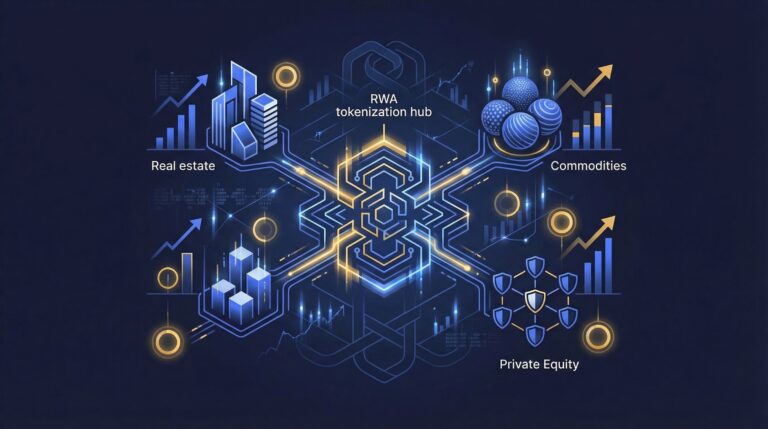
Finally, the event clarified the timeline for mass adoption. We are currently in the infrastructure deployment phase, which will likely last another two to three years. During this time, the focus will remain on tokenizing highly liquid, standardized assets like government debt and money market funds. Once the settlement rails are proven robust at scale, the industry will move to complex, illiquid assets like private equity, commercial real estate, and carbon credits. This phased approach mitigates systemic risk while allowing compliance departments to become comfortable with the technology. The transition will not be a sudden revolution but a gradual migration of asset classes onto distributed ledgers. Financial professionals who understand this trajectory and position themselves to bridge the gap between traditional finance and on-chain infrastructure will capture immense value over the coming decade.
The Token2049 2026 analysis reveals an industry that has finally found product-market fit. The speculation has been replaced by implementation. As regulatory frameworks continue to solidify globally and technical infrastructure reaches enterprise scale, the tokenization of real-world assets will simply become the standard method for issuing and managing financial instruments. The institutions have arrived, the standards are set, and the migration of global capital markets onto the blockchain is now an irreversible process.
Frequently Asked Questions
What were the major themes at Token2049 2026?
The major themes centered entirely on institutional asset tokenization, regulatory compliance, and cross-chain interoperability. Traditional financial institutions dominated the panels, focusing on how to deploy real-world assets on-chain securely while integrating with legacy banking systems and adhering to global KYC/AML requirements.
How did the market react to the conference announcements?
The market reacted with significant capital inflows into institutional-grade stablecoins and tokenized treasury products. We observed a measurable tightening of bid-ask spreads for on-chain assets and a clear shift in venture capital funding toward enterprise blockchain infrastructure rather than speculative retail applications.
Which asset classes are seeing the most tokenization adoption?
Government debt and money market funds are currently seeing the most adoption due to their standardized nature and high liquidity. However, the conference highlighted that infrastructure is now being deployed to support complex alternative assets like private credit, commercial real estate, and structured financial products.
Why is interoperability important for tokenized assets?
Interoperability is crucial because institutions refuse to be locked into a single, isolated blockchain network. Standardized cross-chain communication allows asset managers to route transactions and settle trades across multiple public and private ledgers, preventing liquidity fragmentation and ensuring global market access.