Global Tokenization Regulations (2026): SEC, MiCA & MAS
The landscape of digital assets shifted fundamentally over the past twelve months as institutional adoption forced lawmakers to provide definitive legal clarity. Tokenization regulation changes 2026 brought a wave of institutional frameworks, moving the industry past theoretical sandbox environments into live, regulated capital markets. Asset managers and startup founders alike faced a rapidly evolving compliance environment characterized by stricter enforcement in some regions and emerging cross-border harmonization in others. This analysis examines the legislative shifts, enforcement actions, and structural market adjustments that defined the year. Readers will understand how new jurisdictional frameworks impact tokenized asset issuance, which regions offer the most viable paths to market, and what these legal precedents mean for the future of digital securities. As traditional finance and blockchain technology continue to merge, navigating this legal architecture has become the primary operational requirement for any organization issuing digital assets.
• Context of global tokenization regulation changes 2026: Global tokenization regulation changes 2026 emerged from a critical need to standardize digital asset issuance across fragmented jurisdictions.
• What happened in digital securities regulation review: The digital securities regulation review of 2026 resulted in the European Union fully enforcing the Markets in Crypto-Assets framework.
• Results of the tokenization law changes annual cycle: The tokenization law changes annual cycle produced measurable institutional adoption and early signs of global regulatory harmonization.
Context of global tokenization regulation changes 2026
Global tokenization regulation changes 2026 emerged from a critical need to standardize digital asset issuance across fragmented jurisdictions. Institutional capital demanded clear legal frameworks for on-chain settlement, prompting regulators in the European Union, United Kingdom, and Asia-Pacific to transition pilot programs into permanent legislative structures governing tokenized real-world assets.
The momentum leading into 2026 built heavily upon the foundational work established during the previous two years. Financial institutions had already proven the technical viability of tokenizing money market funds, private equity, and real estate, but they operated in a state of severe legal ambiguity. Regulators recognized that managing tokenized assets required distinct rules separating them from native cryptocurrencies like Bitcoin or utility tokens. The European Securities and Markets Authority (ESMA) and the Financial Conduct Authority (FCA) in the UK began drafting specific guidelines for distributed ledger technology in market infrastructure. Meanwhile, market participants sought clarity on how traditional securities laws applied to blockchain-based instruments. This pressure culminated in a global push to formalize digital asset classifications, driving a wedge between unregulated crypto markets and the highly compliant tokenized securities sector. Institutions refused to scale their on-chain operations until governments provided absolute certainty regarding settlement finality and bankruptcy remoteness.
Market size projections heavily influenced this regulatory urgency and forced legislative action. According to a 2024 report by Boston Consulting Group, the tokenization of global illiquid assets was projected to reach an approximate range of $16 trillion by 2030, a figure that central banks and securities regulators could no longer ignore. As major asset managers launched tokenized funds on public blockchains, the systemic risk of operating without clear settlement finality laws became a primary concern for international financial monitors. The Bank for International Settlements (BIS) issued urgent recommendations for member nations to clarify the legal status of digital tokens representing real-world assets. Consequently, governments competing for financial technology dominance accelerated their legislative timelines to capture this incoming capital. This environment set the stage for a year of decisive legal action, moving away from exploratory task forces toward concrete statutory requirements that dictate exactly how digital securities must be issued, traded, and custodied.
Navigating this complex environment required issuers to understand the nuances of various international regimes. The divergence in approaches between major economic blocs created a complex web of compliance obligations for multinational financial institutions. For organizations planning cross-border offerings, understanding tokenization regulations by country became a mandatory operational requirement rather than a legal afterthought. Jurisdictional arbitrage, once a common strategy in the broader crypto sector, became increasingly difficult as major economies began aligning their basic definitions of digital securities. The context of 2026 was defined by this shift from regulatory avoidance to regulatory engagement, with institutions actively seeking jurisdictions that offered the most robust legal certainty for their on-chain operations. Companies that attempted to launch products without a clear understanding of these local nuances faced immediate regulatory friction, while those that adapted to the new legal standards secured significant market share.
What happened in digital securities regulation review
The digital securities regulation review of 2026 resulted in the European Union fully enforcing the Markets in Crypto-Assets framework. Simultaneously, the UK transitioned its Digital Securities Sandbox into permanent law, while the US Securities and Exchange Commission escalated enforcement actions against unregistered tokenized investment products.
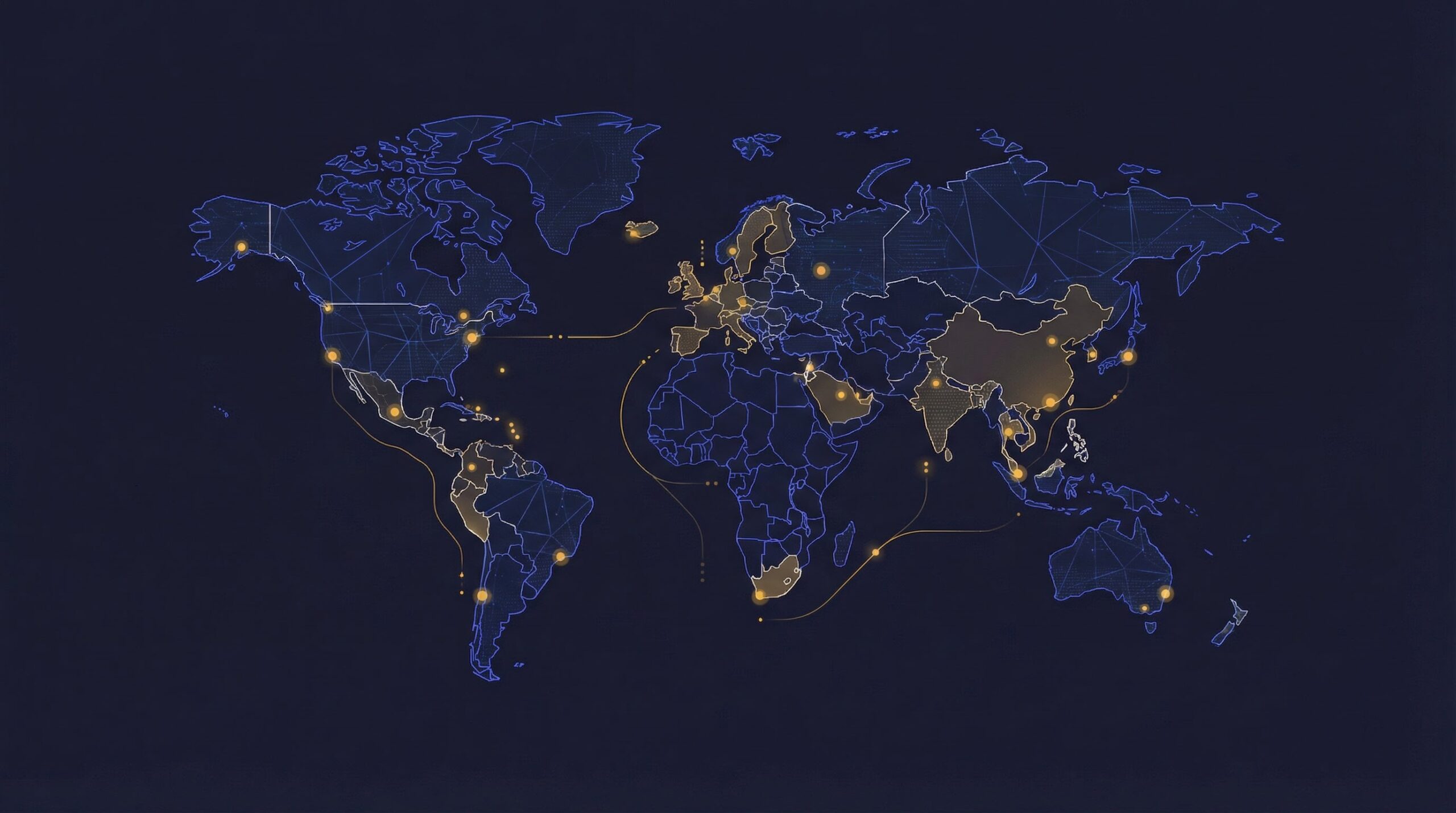
The European Union dominated the regulatory narrative as the final provisions of its comprehensive framework took absolute effect across all member states. The full implementation of EU MiCA tokenization rules established a clear taxonomy for asset-referenced tokens and e-money tokens, providing the legal certainty that institutional issuers had long requested. Financial institutions operating within the bloc could finally issue tokenized bonds and equities under a unified passporting system, allowing them to offer digital securities across all 27 member states without seeking individual national approvals. The European Securities and Markets Authority published strict technical standards for distributed ledger technology market infrastructures, mandating specific cyber resilience and settlement finality protocols. This unified approach sharply contrasted with the fragmented state of European markets just years prior, establishing the EU as a primary destination for regulated digital asset issuance. The legal clarity provided by MiCA allowed European banks to launch retail-facing tokenized investment products for the first time.
In the United Kingdom, regulators took a distinct but equally progressive approach by formalizing their experimental frameworks. The FCA and the Bank of England officially transitioned the Digital Securities Sandbox (DSS) from a temporary testing environment into permanent legislation. This transition allowed participating firms to operate digital asset trading facilities and settlement systems under modified regulations that accommodate blockchain architecture. The new UK laws specifically addressed the legal status of digital settlement assets, ensuring that transactions recorded on a distributed ledger hold the exact same legal weight as those recorded in traditional central securities depositories. By modifying existing legislation rather than creating an entirely new framework like MiCA, the UK maintained its common-law flexibility while providing the necessary guarantees for institutional participation. This move solidified London’s position as a critical hub for tokenized debt issuance and digital asset management.
In the United States, the regulatory environment remained notably more adversarial, characterized by regulation through enforcement rather than proactive legislation. The US SEC tokenization regulation approach continued to rely on the Howey Test, treating nearly all tokenized real-world assets as traditional securities subject to existing registration requirements. Throughout 2026, the agency brought numerous enforcement actions against decentralized finance platforms and tokenization startups that failed to register their offerings or qualify for specific exemptions like Rule 506(c) of Regulation D. According to SEC enforcement division records, the agency levied an approximate range of $450 million to $600 million in fines against digital asset issuers operating without proper registration during the fiscal year. This aggressive posture forced many US-based tokenization firms to restrict their platforms strictly to accredited investors or move their operations offshore entirely. The lack of a bespoke digital asset framework in the US created a significant competitive disadvantage for domestic firms attempting to innovate in the tokenization space.
Conversely, the Asia-Pacific and Middle East regions advanced rapidly through collaborative regulatory frameworks and public-private partnerships. The Monetary Authority of Singapore (MAS) expanded Project Guardian from a pilot program into a standardized regulatory protocol for tokenized asset networks. MAS issued definitive guidelines on the treatment of tokenized investment funds, establishing clear capital requirements and custody rules for financial institutions managing digital assets. In the Middle East, Dubai’s Virtual Assets Regulatory Authority (VARA) updated its rulebook to specifically address the tokenization of traditional equities and real estate, creating a highly attractive environment for foreign capital. These developments provided a stark contrast to the US approach, offering clear pathways for firms trying to determine the best country to launch STO campaigns. The clarity provided by MAS and VARA attracted significant capital from Western asset managers seeking compliant jurisdictions for their tokenization initiatives.
Results of the tokenization law changes annual cycle
The tokenization law changes annual cycle produced measurable institutional adoption and early signs of global regulatory harmonization. Major asset managers launched compliant tokenized funds under new frameworks, while international standard-setting bodies successfully pushed member nations to adopt standardized definitions for blockchain-based financial instruments.
The immediate result of these legislative advancements was a measurable surge in institutional product launches across compliant jurisdictions. With legal ambiguity removed in Europe, the UK, and parts of Asia, tier-one banks and global asset managers confidently deployed capital into tokenized money market funds and digital bond issuances. We observed a distinct shift away from private, permissioned blockchains toward public networks like Ethereum and Polygon, as regulators became more comfortable with the technical controls implemented by regulated custodians. The clarity regarding settlement finality on public ledgers allowed institutions to recognize the capital efficiency benefits of blockchain technology without violating fiduciary duties. Asset managers like BlackRock and Franklin Templeton expanded their tokenized fund offerings significantly, leveraging the new legal frameworks to offer these products to a broader range of institutional clients. This migration to public infrastructure represented a massive validation of the technology, driven entirely by the establishment of clear legal boundaries.
Progress toward regulatory harmonization also accelerated as international standard-setting bodies took a more active role in guiding national legislation. The International Organization of Securities Commissions (IOSCO) released its final policy recommendations for digital assets, urging its 130 member jurisdictions to adopt consistent regulatory treatment for tokenized securities. While complete global unification remains unlikely, the IOSCO framework successfully established baseline expectations for custody, market integrity, and conflict of interest management. This baseline allowed multinational financial institutions to design compliance architectures that satisfied multiple regulators simultaneously, significantly reducing the operational friction of cross-border tokenized asset issuance. The adoption of these standards marked the beginning of a cohesive global market structure for digital securities, allowing capital to flow more freely between compliant jurisdictions.
However, the rapid implementation of these new frameworks exposed significant gaps in secondary market infrastructure. While the primary issuance of tokenized assets became legally straightforward in many jurisdictions, trading these assets across borders remained highly restricted. Regulators struggled to reconcile traditional broker-dealer requirements with the mechanics of decentralized exchanges and automated market makers. Consequently, liquidity in tokenized real-world assets remained fragmented across isolated, compliant trading venues. Investors found that while they could easily purchase a tokenized bond in a regulated primary offering, selling that bond on a secondary market required navigating a complex web of overlapping jurisdictional restrictions. Market participants realized that while the legislative changes of 2026 solved the creation of digital securities, the industry still lacked the regulatory architecture necessary to support a truly global, liquid secondary market.
Lessons for the global crypto regulation 2026 summary
The global crypto regulation 2026 summary reveals that legal clarity drives institutional adoption, but cross-border settlement and taxation remain significant hurdles. The primary lesson is that jurisdictions offering bespoke legislative frameworks for digital assets attract substantially more capital than those relying on legacy securities laws.
The most glaring operational challenge that emerged throughout the year involved the complex intersection of digital assets and international tax law. As tokenized assets moved across borders instantly on public blockchains, tax authorities struggled to determine the exact moment and location of taxable events. Issuers and investors frequently encountered conflicting tax obligations when a tokenized asset originated in one jurisdiction, traded on a decentralized protocol hosted in another, and was purchased by a resident of a third. Navigating these obligations required specialized knowledge, making a comprehensive tokenization tax guide an essential resource for compliance officers and legal teams. The implementation of the OECD’s Crypto-Asset Reporting Framework (CARF) in several jurisdictions added another layer of complexity, forcing institutions to build costly, custom software solutions to satisfy the reporting requirements of different national tax agencies. The industry learned that tax compliance must be programmed directly into the smart contracts governing the assets from day one.
Another critical lesson involved the necessity of precise legal terminology when interacting with regulators and drafting token terms. The industry learned that using generic cryptocurrency jargon often triggered unnecessary regulatory scrutiny and delayed approval processes. Successful projects strictly separated their operations from the broader crypto market, adopting traditional financial terminology translated for blockchain architecture. Understanding the exact legal definitions of smart contracts, settlement finality, and digital custody became mandatory for founders and executives. Firms that mastered the tokenization glossary and communicated using the specific legal taxonomies established by regulators faced significantly less friction during the licensing process. This linguistic discipline proved essential for bridging the gap between blockchain engineers and financial regulators, demonstrating that regulatory compliance is as much about clear communication as it is about technical architecture.
Looking forward, the regulatory landscape established in 2026 sets a rigid foundation for the next decade of digital capital markets. The jurisdictions that implemented clear, technology-neutral frameworks have secured a massive first-mover advantage in attracting institutional tokenization platforms. Conversely, nations that maintained hostile or ambiguous postures are likely to see continued capital flight as asset managers optimize for legal certainty. The focus for regulators will now shift from primary issuance rules to the complex mechanics of cross-border secondary trading and interoperability between different regulated blockchain networks. The events of this year proved definitively that institutional tokenization cannot scale through regulatory avoidance; it requires deep, proactive integration with the global financial legal system. Companies that build adaptable compliance architectures will dominate the next phase of market expansion.
Tokenization regulation changes 2026 transformed digital securities from a theoretical experiment into a regulated component of the global financial system. The enforcement of comprehensive frameworks in the EU, UK, and APAC demonstrated that institutional capital flows rapidly toward legal certainty, while the US market continued to navigate complex enforcement actions. We witnessed significant progress in international harmonization through bodies like IOSCO, though secondary market liquidity and cross-border taxation remain formidable challenges that require ongoing legislative attention. For market participants, the path forward is clear: success in asset tokenization requires rigorous adherence to these new jurisdictional frameworks. As regulators shift their focus toward interoperability and secondary trading, issuers must build adaptable compliance architectures capable of evolving with the law. Understanding and implementing these regulatory requirements is no longer just a legal obligation; it is the primary competitive advantage in the modern digital economy.
Key Compliance & Market Questions
What were the biggest tokenization regulation changes in 2026?
The most significant changes included the full enforcement of the EU’s MiCA framework for asset-referenced tokens and the UK transitioning its Digital Securities Sandbox into permanent law. These shifts provided the legal certainty required for institutions to issue digital securities on public blockchains.
How did the SEC handle tokenization in 2026?
The US SEC continued its regulation-by-enforcement approach, applying the Howey Test to tokenized real-world assets. The agency levied hundreds of millions in fines against unregistered platforms, forcing many US-based tokenization startups to restrict access to accredited investors or move offshore.
Which jurisdictions introduced the best laws for tokenized assets?
The European Union, Singapore, and the United Arab Emirates established the most comprehensive frameworks in 2026. Singapore’s MAS expanded Project Guardian guidelines, while Dubai’s VARA updated its rulebook specifically for tokenized equities and real estate, attracting significant institutional capital.
How do the 2026 regulations impact cross-border token trading?
While primary issuance became legally straightforward in compliant jurisdictions, cross-border secondary trading remained highly restricted. Regulators continue to struggle with reconciling traditional broker-dealer requirements with decentralized exchanges, resulting in fragmented liquidity across isolated trading venues.