Tokenized Asset Investing (2027): RWA Yields & Strategy
• Market projections and sector opportunities for 2027: The tokenized investing 2027 outlook points to a market valuation between $4 trillion and $5 trillion, driven largely by private credit, real estate, and government treasuries.
• Investment mechanics and platform access: Investors access tokenized assets through specialized digital asset securities platforms like Securitize, Oasis Pro, and Prometheum.
• Risk management and return expectations: Managing a tokenized investing strategy requires evaluating smart contract vulnerabilities, platform counterparty risk, and underlying asset performance.
The tokenized investing 2027 outlook requires a clear understanding of how institutional adoption has matured over the past few years. We are moving past the experimental phases of blockchain-based financial instruments into a period of standardized infrastructure and measurable yield. Investors evaluating their portfolios for the next three years need a concrete strategy that balances traditional asset allocation with the liquidity and fractionalization benefits of on-chain assets. Financial institutions have spent the last market cycle building the regulatory and technical plumbing necessary to bring real-world assets on-chain at scale. This groundwork means retail and institutional investors now face a fundamentally different landscape than they did during the initial wave of digital asset hype.
This guide examines current market data, projects sector growth through 2027, and provides a framework for building a resilient tokenized asset portfolio. You will learn how to evaluate risk-return profiles across different tokenized asset classes, navigate platform access requirements, and structure your investments for optimal tax treatment. The market has shifted from speculative tokens to tokenized representations of traditional financial instruments, demanding a more sophisticated approach to due diligence and asset selection. Developing a tokenized asset strategy 2027 involves understanding both the macroeconomic environment driving yields and the micro-structural changes in how these assets settle and trade on distributed ledgers.
Market projections and sector opportunities for 2027
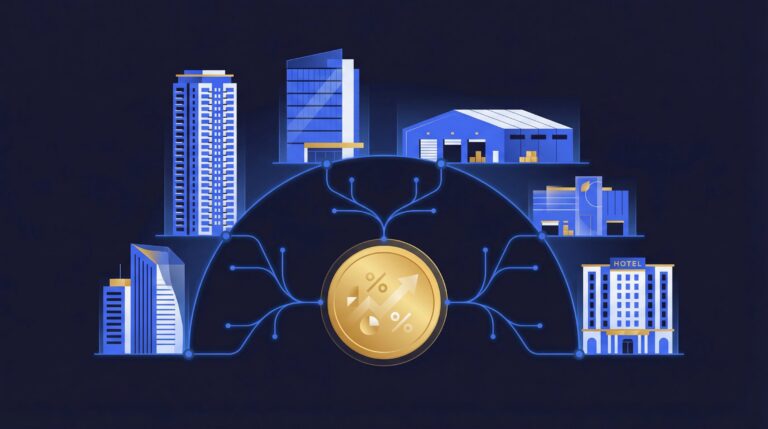
The tokenized investing 2027 outlook points to a market valuation between $4 trillion and $5 trillion, driven largely by private credit, real estate, and government treasuries. Institutional participation is expanding beyond pilot programs into active portfolio allocation, requiring investors to focus on regulatory-compliant platforms and yield-generating real-world assets rather than speculative digital tokens.
Major financial institutions have published extensive research on the trajectory of real-world asset tokenization over the coming years. According to a March 2023 report by Citi Global Perspectives and Solutions, the tokenization of financial and real-world assets could approach $4 trillion to $5 trillion by 2030. A separate analysis by Boston Consulting Group projects the market could reach $16 trillion by the end of the decade. Regardless of the specific terminal value, the consensus indicates that 2027 will serve as a critical inflection point where early institutional infrastructure translates into widespread market access. This growth is not uniform across all asset classes. Government securities, specifically US Treasuries, have led the initial wave of adoption because they offer a recognized risk-free rate within the digital asset ecosystem. Investors seeking to park stablecoin capital have driven billions of dollars into these products.
As we look toward 2027, the focus is shifting toward higher-yielding, less liquid asset classes. Private credit represents a massive opportunity for tokenization because it historically suffers from opaque pricing and high minimum investment thresholds. By bringing private credit funds on-chain, asset managers can offer fractionalized exposure to a broader base of qualified purchasers. We are seeing major alternative asset managers partner with digital asset securities platforms to tokenize portions of their flagship funds. This allows investors to access institutional-grade private credit with lower capital commitments while benefiting from automated distributions via smart contracts. You can read our comprehensive real estate tokenization guide to understand how physical property is undergoing a similar transformation, moving from monolithic illiquid assets to tradable digital shares.
The success of early institutional products provides a blueprint for the next three years of market development. Products like tokenized treasuries BlackRock BUIDL have demonstrated that large asset managers can successfully deploy capital on public blockchains while maintaining strict compliance controls. These funds utilize Ethereum to issue shares and distribute yield, proving that public ledger infrastructure can support institutional compliance requirements when paired with appropriate permissioning layers. For investors, this means the opportunities available in 2027 will likely span a barbell strategy. On one end, highly liquid tokenized cash equivalents will serve as portfolio stabilizers. On the other end, tokenized private equity, venture capital, and commercial real estate will offer illiquidity premiums previously reserved for massive institutional allocators.
Investment mechanics and platform access
Investors access tokenized assets through specialized digital asset securities platforms like Securitize, Oasis Pro, and Prometheum. These platforms operate under specific regulatory frameworks, usually requiring investors to complete stringent know-your-customer and anti-money laundering checks before they can fund accounts and purchase fractionalized real-world assets.
Understanding the mechanics of how these assets are issued and traded is essential for executing a tokenized asset strategy 2027. Unlike cryptocurrency exchanges where users can trade pseudonymously, platforms dealing in tokenized securities are heavily regulated entities. In the United States, these platforms typically operate as registered broker-dealers and operate Alternative Trading Systems authorized by the Financial Industry Regulatory Authority. Before you can execute a trade, you must undergo a comprehensive onboarding process. This includes verifying your identity, proving your residency, and in many cases, verifying your status as an accredited investor. The Securities and Exchange Commission Regulation D, specifically Rule 506(c), governs many of these offerings, mandating that issuers take reasonable steps to verify that all purchasers are accredited investors.
Once onboarded, the actual mechanics of investing blend traditional finance with blockchain technology. Investors typically fund their accounts using fiat currency via wire transfer or by depositing approved stablecoins like USDC. The platform then issues digital tokens representing shares in the underlying asset or special purpose vehicle. These tokens are deposited into a digital wallet. Depending on the platform, this may be a custodial wallet managed by the broker-dealer or a non-custodial wallet controlled directly by the investor. If you are unfamiliar with the specific terminology used in these transactions, reviewing a comprehensive tokenization glossary can help clarify the technical distinctions between different wallet types and settlement processes. The choice between custodial and non-custodial holding has significant implications for asset security and how you interact with secondary markets.
Secondary liquidity remains one of the primary selling points for tokenization, but investors must approach this claim with realistic expectations. While the technology allows for instant peer-to-peer settlement on a 24/7 basis, regulatory restrictions often limit how and when these assets can be traded. Many tokenized securities are subject to a one-year lockup period under SEC Rule 144 before they can be traded on secondary markets. Even after this lockup expires, liquidity depends entirely on the presence of willing buyers on the platform’s Alternative Trading System. Learning exactly how to invest in tokenized assets requires acknowledging that tokenizing an illiquid asset like commercial real estate does not magically create a liquid market. It simply removes the technological friction of transferring ownership when a buyer is found.
Risk management and return expectations
Managing a tokenized investing strategy requires evaluating smart contract vulnerabilities, platform counterparty risk, and underlying asset performance. Return expectations range from 4 to 5 percent for tokenized treasuries to low double digits for private credit, though investors must demand a premium for the current illiquidity in secondary markets.
Every investment carries risk, but tokenized assets introduce novel technical and structural risks that traditional investors may not be accustomed to evaluating. The most prominent new variable is smart contract risk. The rules governing the issuance, transfer, and dividend distribution of tokenized assets are written in computer code deployed on a blockchain. If this code contains vulnerabilities, malicious actors could potentially exploit it to drain funds or manipulate token balances. While institutional platforms employ rigorous auditing processes, the risk of technical failure cannot be entirely eliminated. Investors must also consider platform counterparty risk. If the broker-dealer or custodian facilitating your investment faces insolvency or regulatory action, accessing your assets could become a protracted legal process, even if the underlying real-world asset remains secure. Understanding these specific tokenized asset risks is a mandatory step before committing capital.
To manage these risks effectively, investors must conduct thorough due diligence on both the asset and the technology stack. This means evaluating the track record of the asset manager, the legal structure of the special purpose vehicle holding the asset, and the specific blockchain network being used for settlement. Assets issued on public permissionless networks like Ethereum benefit from transparency and network security but may face higher transaction costs. Assets on private or permissioned networks may offer lower costs and higher privacy but rely heavily on the integrity of the network operators. Performing adequate tokenized securities due diligence requires reading the private placement memorandum with the same scrutiny you would apply to a traditional syndication, while also reviewing the platform’s technology audits and custodial arrangements.
Return expectations for tokenized assets are generally aligned with their traditional counterparts, minus the fees charged by the tokenization platform. The primary advantage is not necessarily higher absolute returns, but rather access to return streams that were previously out of reach.
| Asset Class | Expected Return Range | Liquidity Profile | Primary Risks |
|---|---|---|---|
| Tokenized US Treasuries | 4.0% – 5.5% | High | Platform risk, interest rate risk |
| Tokenized Corporate Debt | 6.0% – 8.5% | Medium | Credit risk, default risk |
| Tokenized Real Estate | 7.0% – 12.0% | Low | Market risk, illiquidity, tenant risk |
| Tokenized Private Credit | 9.0% – 14.0% | Low | Default risk, economic downturn |
| Tokenized Private Equity | 15.0%+ | Very Low | Business failure, extreme illiquidity |
Investors should use this baseline to construct their expectations, adjusting for the macroeconomic environment. If central banks cut interest rates heading into 2027, the yields on tokenized treasuries will compress, likely pushing capital further out on the risk curve into tokenized real estate and private credit.
Portfolio construction and tax planning
Constructing a tokenized portfolio involves allocating 5 to 10 percent of total investable assets into on-chain instruments, balancing stable yield from treasuries with growth from tokenized private equity. Tax planning requires tracking on-chain transactions meticulously, as the IRS treats most digital asset securities as property subject to standard capital gains reporting.
Building a resilient RWA investing 2027 portfolio requires integrating tokenized assets seamlessly with your broader financial strategy. For most accredited investors, a prudent allocation to tokenized assets sits between 5 and 10 percent of their total portfolio. This allocation provides meaningful exposure to the efficiency and access benefits of tokenization without overexposing the investor to platform and smart contract risks. Within that tokenized allocation, a barbell approach is currently the most logical structure. Dedicating 40 to 50 percent of the tokenized sleeve to highly liquid, low-risk assets like tokenized government bond funds provides a stable base of yield. The remaining portion can be allocated to higher-yielding, illiquid assets such as tokenized private credit or commercial real estate equity. This structure ensures that you have access to liquidity if needed, while still capturing the illiquidity premium offered by alternative assets.
Tax planning is a critical component of any investment strategy, and tokenized assets present unique administrative challenges. The Internal Revenue Service issued Notice 2014-21 establishing that digital assets are treated as property for US federal tax purposes, and subsequent guidance has reinforced that general principle. When you purchase a tokenized security, you establish a cost basis just as you would with a traditional stock. If you later sell that token on a secondary market, you will incur a capital gain or loss depending on the price difference. The complication arises from the use of stablecoins or other digital assets to fund these purchases. If you buy USDC with fiat, and then use that USDC to purchase a tokenized real estate share, the disposal of the USDC is technically a taxable event, even if the price of USDC remained stable at one dollar.
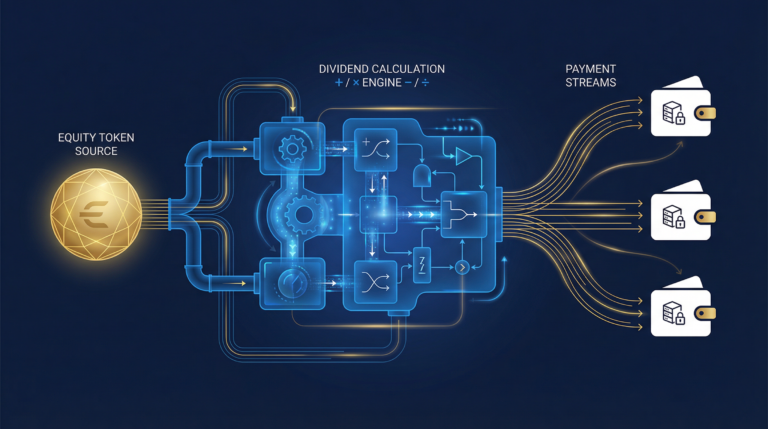
Furthermore, the yield generated by tokenized assets is generally taxable as ordinary income. When a tokenized treasury fund distributes a monthly dividend via a smart contract directly to your wallet, that distribution must be tracked and reported. Because the infrastructure for tokenized securities is still maturing, you cannot always rely on platforms to provide seamless, traditional tax reporting forms like a 1099-B, though regulated broker-dealers are working to standardize this process. Investors must maintain meticulous records of their on-chain transactions, noting the date, cost basis, and fair market value of every transfer. Engaging a tax professional who understands the specific reporting requirements for digital asset securities is highly recommended to avoid compliance issues with the IRS.
As the market matures toward 2027, the investment outlook tokenization presents is fundamentally optimistic but requires disciplined execution. The infrastructure is ready, the regulatory frameworks are becoming clearer, and institutional asset managers are actively deploying products. The investors who will benefit most are those who look past the novelty of the technology and focus rigorously on asset quality, platform security, and proper portfolio construction. By understanding the mechanics, managing the specific technical risks, and planning for the tax implications, you can effectively incorporate tokenized real-world assets into a modern, diversified investment portfolio.
Common Regulatory & Structuring Questions
What is the tokenized asset market projection for 2027?
The tokenized asset market is projected to reach between $4 trillion and $5 trillion by the end of the decade, with 2027 serving as a critical growth period. This expansion is driven primarily by the tokenization of private credit, government treasuries, and real estate.
Do I need to be an accredited investor to buy tokenized assets?
Yes, most platforms currently require investors to meet accredited investor status under SEC regulations. This is because many tokenized real-world assets are issued under Regulation D exemptions, which restrict sales to individuals meeting specific income or net worth thresholds.
How do I pay taxes on tokenized asset yields?
Yield generated by tokenized assets is generally treated as ordinary income and must be reported to the IRS. You must track the fair market value of the digital assets or stablecoins you receive as dividends at the time they are deposited into your wallet.
Are tokenized assets liquid?
Tokenized assets are only as liquid as the secondary markets that support them. While the blockchain technology allows for instant transfer, regulatory lockup periods and a lack of active buyers on Alternative Trading Systems can make these assets difficult to sell quickly.