Ondo Finance Review 2026: Tokenized Treasuries & DeFi Yield
Traditional fixed-income markets and decentralized finance operated in complete isolation for years, forcing investors to choose between regulatory safety and on-chain utility. This divide created a significant capital inefficiency where stablecoin holders earned zero yield while traditional treasury rates climbed above five percent. Ondo Finance emerged to bridge this exact gap by bringing institutional-grade fixed-income products directly onto public blockchains. In this comprehensive Ondo Finance review 2026, we examine how the platform structures its tokenized US treasuries, evaluates its integration with BlackRock’s infrastructure, and assesses the real-world utility of its yield-bearing tokens across the decentralized finance ecosystem. Investors evaluating the current landscape of tokenized real-world assets will learn exactly how Ondo operates, who can access its products, and whether the layered counterparty risks are appropriately compensated by the yields offered. The platform has positioned itself aggressively at the intersection of traditional capital markets and decentralized finance, making it a critical infrastructure provider for institutional capital moving on-chain.
Platform overview: Ondo Finance and the institutional DeFi bridge
Ondo Finance operates as a decentralized finance protocol that tokenizes traditional fixed-income assets, allowing on-chain investors to access yields from US Treasuries and corporate bonds. Founded by former Goldman Sachs digital asset team member Nathan Allman, the platform bridges traditional financial infrastructure with public blockchain composability.
The company recognized early that stablecoin holders were suffering massive opportunity costs by holding zero-yield assets during a high-interest-rate macroeconomic cycle. By building a compliant bridge between legacy banking systems and smart contract networks, Ondo enables capital to flow freely between fiat banking and decentralized lending markets. The platform specifically targets the structural friction that prevents institutional capital from fully deploying into Web3 environments. Nathan Allman launched Ondo Finance to solve a specific structural problem in cryptocurrency markets regarding the lack of risk-free yield for on-chain capital. Before platforms like Ondo existed, decentralized finance participants had to rely entirely on algorithmic lending protocols or volatile liquidity mining programs to generate returns on their stablecoins. Ondo changed this dynamic by creating legal and technical wrappers around traditional exchange-traded funds and direct government securities.
The platform operates essentially as an asset management firm built entirely on public blockchain rails. Rather than building a walled-garden private ledger, Ondo deploys its smart contracts on Ethereum, Polygon, and Solana to ensure maximum compatibility with existing decentralized applications. The company secured substantial early backing from prominent venture capital firms including Founders Fund and Pantera Capital, which provided the necessary runway to navigate the complex legal structuring required to offer securities on public ledgers. By positioning itself directly between traditional asset managers and decentralized finance protocols, Ondo has established a distinct market position compared to direct issuance platforms. Investors looking for the best tokenization platforms often evaluate Ondo specifically for its aggressive integration with the broader decentralized finance ecosystem rather than just its primary issuance capabilities.
Hands-on testing results: the Ondo Finance product suite
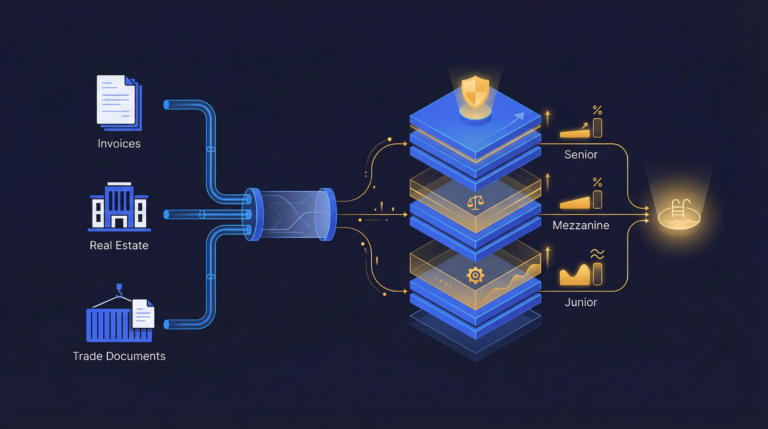
Ondo Finance offers three primary tokenized products: OUSG for short-term US government bonds, OSTB for corporate bonds, and USDY as a yield-bearing alternative to conventional stablecoins. Each product utilizes different underlying asset structures, eligibility requirements, and yield generation mechanisms designed for specific investor profiles.
The platform architecture deliberately separates these offerings to comply with different regulatory exemptions while maximizing the potential user base across global jurisdictions. By segmenting the product line, Ondo can serve highly regulated US institutions through one vehicle while capturing international stablecoin market share through another. This multi-product approach requires significant legal overhead but provides a comprehensive fixed-income suite for the entire decentralized finance ecosystem. Investors reading an OUSG OSTB review will notice that the platform treats government debt and corporate debt as distinct risk categories requiring separate smart contract architectures.
The flagship product driving the majority of Ondo Finance OUSG adoption is the Ondo US Government Bond Fund. This tokenized vehicle provides liquid exposure to short-term US Treasuries and currently requires a minimum investment of $100,000 for qualified purchasers. The underlying asset structure of OUSG has evolved significantly since its inception. Originally backed entirely by BlackRock’s iShares Short Treasury Bond ETF (SHV), the fund transitioned a massive portion of its assets into BlackRock’s BUIDL (BlackRock USD Institutional Digital Liquidity Fund) to enable instant, 24/7 subscriptions and redemptions. According to rwa.xyz dashboard data from early 2026, OUSG maintains a total value locked exceeding $200 million and delivers a net yield closely tracking the Federal Reserve’s target rate minus Ondo’s management fees. This structure means investors are not holding direct Treasuries but rather a tokenized fund share that holds another tokenized fund share, creating a specific chain of custody that institutional risk managers must evaluate carefully.
Beyond government debt, the Ondo Short-Term Bond Fund (OSTB) targets slightly higher yields by investing in investment-grade corporate debt. OSTB operates with similar qualified purchaser restrictions as OUSG but carries the additional credit risk inherent in corporate obligations. The total value locked in OSTB remains substantially lower than the treasury products, reflecting the market’s clear preference for risk-free baseline yields in the current macroeconomic environment. For investors who cannot meet the strict accreditation requirements of OUSG and OSTB, Ondo introduced USDY (US Dollar Yield). USDY functions as a tokenized bearer note secured by a bankruptcy-remote portfolio of short-term US Treasuries and bank demand deposits. Unlike OUSG, USDY is accessible to non-US individual investors without the $100,000 minimum threshold, making it a direct competitor to yield-bearing stablecoins. The yield on USDY accumulates automatically through the token’s price appreciation rather than daily rebasing, which simplifies tax reporting for many international holders. Anyone reading an asset tokenization guide will recognize USDY as a classic structured note adapted for decentralized finance rails.
The BlackRock connection and DeFi composability
Ondo Finance relies heavily on BlackRock’s BUIDL fund for its OUSG product liquidity, creating a layered architecture where Ondo acts as the decentralized finance distribution channel for BlackRock’s institutional tokenized assets. This integration allows Ondo tokens to function as yield-bearing collateral across major decentralized lending protocols.
The technical bridge between these entities represents a massive leap forward for institutional blockchain adoption, as it proves that traditional asset managers can interface with decentralized finance without compromising their compliance standards. Rather than building competing infrastructure, Ondo smartly positioned itself as the application layer sitting on top of BlackRock’s foundational liquidity. This strategic alignment provides Ondo with unmatched credibility while giving BlackRock an indirect distribution channel into the permissionless cryptocurrency ecosystem. The relationship between Ondo Finance and BlackRock is a critical structural element of the platform’s value proposition. When an investor purchases OUSG, their capital ultimately flows into BlackRock’s BUIDL fund, which is issued and managed in partnership with Securitize.
This arrangement means Ondo is essentially acting as a decentralized finance wrapper around institutional-grade traditional finance infrastructure. Investors must understand the counterparty risk chain: they face smart contract risk from Ondo, platform risk from Securitize, and asset management risk from BlackRock. However, this exact layering is what enables the high degree of utility for Ondo tokenized treasuries. If an investor were to hold BUIDL directly, their ability to use that token in permissionless decentralized finance protocols would be severely restricted by the token’s hardcoded compliance whitelist. Ondo absorbs the institutional compliance burden at the fund level and issues a token that, while still subject to transfer restrictions, is specifically engineered to interact with decentralized liquidity pools and lending markets. Readers comparing platforms in a Securitize review will note that Securitize focuses on the primary issuance and compliance lifecycle, whereas Ondo focuses on secondary market utility and protocol integration.
DeFi composability remains the primary reason institutional investors choose Ondo over traditional brokerage accounts holding standard Treasury ETFs. OUSG and USDY are actively integrated into major decentralized lending protocols, allowing funds to post tokenized treasuries as collateral to borrow stablecoins. This creates a highly capital-efficient loop where an institution earns a baseline treasury yield while maintaining liquid capital for other on-chain operations. To support this ecosystem, Ondo deploys its smart contracts across multiple blockchain networks including Ethereum, Polygon, and Solana. According to DefiLlama data from early 2026, Ethereum continues to hold the majority of Ondo’s total value locked, but Solana has seen rapid adoption due to its low transaction fees and high throughput. The multi-chain strategy does fragment liquidity to some degree, but Ondo utilizes cross-chain messaging protocols to allow users to bridge assets between supported networks. The compliance layer operates continuously in the background, ensuring that while the tokens exist on public ledgers, they can only be held in wallets that have passed the necessary know-your-customer checks.
Pricing, minimums, and investor eligibility
Ondo Finance enforces strict investor eligibility requirements that vary by product, with OUSG requiring $100,000 minimums and qualified purchaser status. The platform charges transparent management fees ranging from 0.15% to 0.20%, which are deducted directly from the generated yield before distribution to token holders.
These fees remain highly competitive when compared to traditional wealth management structures, especially considering the added technical utility the tokens provide. The platform maintains this pricing transparency entirely on-chain, allowing anyone to verify the exact fee extraction mechanisms by auditing the public smart contracts. By keeping fees low and transparent, Ondo successfully competes with both traditional treasury exchange-traded funds and native decentralized finance yield aggregators. The onboarding process for Ondo Finance reflects the stringent regulatory environment surrounding tokenized securities. Prospective investors must complete a comprehensive know-your-customer and anti-money laundering verification process before their digital wallets are whitelisted to interact with the platform’s smart contracts.
For OUSG and OSTB, US-based investors must prove they meet the SEC’s definition of a qualified purchaser under Regulation D, which generally requires $5 million in investments for individuals or $25 million for entities. This high barrier to entry explicitly targets family offices, cryptocurrency venture funds, and decentralized autonomous organizations treasury managers rather than retail participants. USDY offers a more accessible entry point, but it strictly excludes US persons entirely to comply with Regulation S exemptions. The geographic restrictions are enforced at the smart contract level, preventing non-whitelisted addresses from receiving the tokens even in secondary market transfers. Investors researching where to buy security tokens quickly discover that the regulatory friction remains high across the entire industry, though Ondo has streamlined the digital documentation process significantly compared to legacy financial institutions.
To understand Ondo’s market position, it is helpful to compare it directly to Franklin Templeton’s BENJI token, which represents shares in the Franklin OnChain U.S. Government Money Fund. BENJI operates as a fully registered mutual fund under the Investment Company Act of 1940, providing the highest level of traditional regulatory clarity. In contrast, Ondo’s products operate under standard private placement exemptions. BENJI requires a mere $20 minimum investment and is accessible to standard retail investors in the United States, making it vastly more accessible than OUSG. However, BENJI exists primarily on a proprietary application interface and lacks the broad decentralized finance composability that defines Ondo’s value proposition. While Franklin Templeton uses the Polygon and Stellar blockchains primarily for record-keeping and transaction processing, Ondo builds its products specifically to be used as collateral inside existing decentralized lending protocols. The yield profiles are nearly identical, as both ultimately track short-term treasury rates, but the utility of the tokens diverges completely based on their target audiences.
| Feature | Ondo Finance OUSG | Franklin Templeton BENJI |
|---|---|---|
| Underlying Asset | BlackRock BUIDL / SHV ETF | US Government Securities, Cash |
| Regulatory Structure | Private Placement (Reg D) | SEC-Registered Mutual Fund |
| US Retail Access | No (Qualified Purchasers Only) | Yes |
| Minimum Investment | $100,000 | $20 |
| DeFi Composability | High (Lending, DEX integrations) | Low (Siloed ecosystem) |
| Primary Chains | Ethereum, Solana, Polygon | Stellar, Polygon |
Pros and cons of Ondo Finance
Ondo Finance provides exceptional on-chain utility for institutional capital through its DeFi integrations and multi-chain architecture. However, the platform introduces layered counterparty risks and enforces strict geographic and wealth-based eligibility requirements that exclude standard retail investors from its flagship treasury products.
The fundamental tradeoff investors must accept is the exchange of direct asset ownership for programmable utility. While a traditional brokerage account offers a more direct claim on a US Treasury bond, it traps that value in a closed ledger. Ondo frees the capital to move across blockchains but inserts multiple intermediaries between the investor and the underlying government debt. The primary advantage of utilizing Ondo Finance lies in its direct integration with the broader decentralized finance ecosystem. By bridging BlackRock’s institutional-grade liquidity into permissionless protocols, Ondo allows treasury managers to generate baseline yields without sacrificing the ability to deploy that capital quickly across different blockchain networks.
The transparent on-chain reporting ensures that all collateral backing the tokens can be verified in real-time, completely eliminating the opacity that typically plagues traditional offshore banking structures. Furthermore, the platform’s aggressive multi-chain deployment strategy ensures that users are not locked into the high gas fees of the Ethereum mainnet, allowing for cost-effective transactions on networks like Solana and Polygon. The user interface is remarkably clean and functions exactly as a modern financial application should, abstracting away the complex smart contract interactions while clearly displaying accrued yields and historical performance metrics.
Conversely, the layered counterparty risk inherent in Ondo’s structure requires careful consideration. When an investor buys OUSG, they are trusting Ondo’s smart contracts, Securitize’s compliance oracle, and BlackRock’s fund management simultaneously. If any single link in this chain fails or faces regulatory action, the liquidity of the tokenized asset could be severely impacted. The regulatory structure itself relies on private placement exemptions rather than full SEC registration, which provides less direct oversight than a fully registered product like the Franklin Templeton fund. Additionally, the strict eligibility requirements mean that the average cryptocurrency user cannot access the primary treasury products, limiting the total addressable market. Finally, the yield generated by these products is entirely dependent on the macroeconomic environment; if the Federal Reserve cuts interest rates aggressively, the primary appeal of holding tokenized treasuries over native digital assets will diminish rapidly.
Scoring: Ondo Finance review 2026
Ondo Finance earns a 7.7 out of 10 overall score based on our independent evaluation of its regulatory compliance, ease of use, pricing transparency, secondary market liquidity, token standards, and historical track record. The platform excels in token architecture but loses points on structural complexity.
We heavily weighted the platform’s ability to maintain deep secondary market liquidity, as this remains the primary failure point for most asset tokenization projects. The score reflects Ondo’s position as a highly specialized institutional tool rather than a mass-market retail application. While the technology functions flawlessly, the legal and financial friction required to access the ecosystem prevents the platform from achieving a perfect score.
Regulatory compliance
Ondo operates within established private placement frameworks and enforces strict know-your-customer procedures for all participants. The institutional backing and reliance on regulated entities like BlackRock and Securitize provide a strong compliance foundation. However, the products are structured as decentralized finance instruments rather than fully registered securities, which places the burden of regulatory interpretation heavily on the investor. The geographic fencing mechanisms function accurately at the smart contract level, preventing restricted entities from accessing the tokens. Overall, the legal structure is solid for its specific regulatory lane, but it lacks the universal clarity of a fully registered public fund.
Ease of use
The platform features a highly refined user interface that clearly presents product offerings, yields, and historical data. The primary investment process is straightforward once the initial verification hurdles are cleared. The slightly lower score reflects the inherent complexity of interacting with Web3 wallets and navigating the decentralized finance integrations, which remains a significant barrier for traditional financial professionals attempting to move capital on-chain. Managing private keys, understanding gas fees, and executing cross-chain bridges require a level of technical competence that many institutional investors still lack. The platform does an excellent job abstracting what it can, but it cannot entirely hide the underlying blockchain mechanics.
Pricing transparency
Ondo provides excellent visibility into its fee structures, underlying asset allocations, and real-time yield calculations. The smart contracts allow anyone to verify the total supply of tokens against the stated assets under management. Management fees are clearly deducted from the gross yield, ensuring investors know exactly what net return they are receiving without hidden transaction costs or unexpected performance hurdles. Furthermore, the platform publishes regular attestation reports verifying the off-chain assets held in traditional bank accounts or brokerage facilities. This dual layer of on-chain and off-chain verification represents the gold standard for pricing transparency in the asset tokenization sector.
Secondary market
The platform achieves superior secondary market utility compared to almost all other tokenized real-world asset providers. By actively integrating with decentralized exchanges and lending protocols across multiple blockchains, Ondo ensures that its tokens maintain deep liquidity outside of the primary issuance portal. The multi-chain availability specifically enhances the velocity at which these assets can be traded and utilized. Investors are not trapped waiting for matching buyers on a proprietary bulletin board; they can exit positions or borrow against them instantly using permissionless liquidity pools. This constant secondary market access justifies the complex legal structuring required to bring the assets on-chain.
Token standards
Ondo utilizes highly optimized, audited smart contracts deployed across Ethereum, Polygon, and Solana. The token architecture successfully balances the strict compliance requirements of securities laws with the technical flexibility needed for decentralized finance composability. The integration of cross-chain messaging allows for secure asset bridging without compromising the underlying whitelist restrictions. Upgradability parameters are managed through strict governance protocols, minimizing the risk of arbitrary contract alterations. The engineering team has clearly prioritized security and standardization, ensuring the tokens integrate directly with existing decentralized applications without requiring custom development work from third-party protocols.
Track record
Since its founding by Nathan Allman, Ondo has demonstrated rapid growth in total value locked and secured partnerships with the most significant players in traditional finance. The successful transition of OUSG backing to BlackRock’s BUIDL fund executed flawlessly, proving the technical competence of the engineering team. The platform has maintained a clean security history with no smart contract exploits to date. Institutional adoption continues to accelerate, validating the market demand for the specific product structures Ondo pioneered. Surviving multiple market cycles while continuously expanding the product suite demonstrates a level of operational maturity rare in the decentralized finance sector.
| Evaluation Criteria | Score | Justification |
|---|---|---|
| Regulatory compliance | 7/10 | Institutional backing and KYC requirements provide compliance framework, but structured as DeFi products rather than registered securities. |
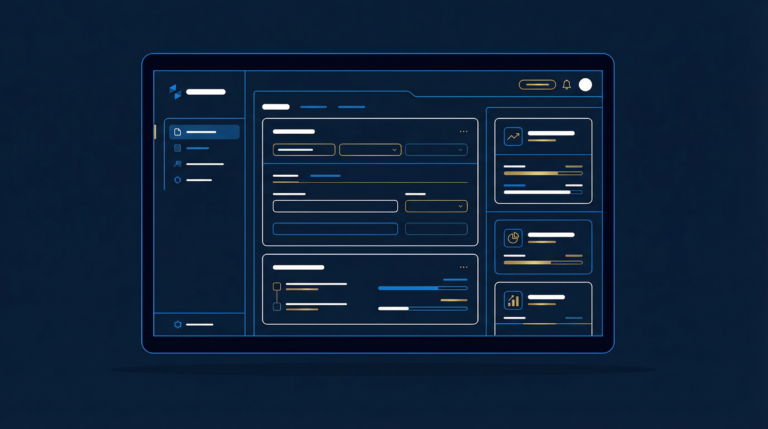
| Ease of use | 7/10 | Clear product offerings with straightforward investment process, though DeFi integration adds complexity for TradFi investors. |
| Pricing transparency | 8/10 | Yields, fees, and underlying assets are transparently reported on-chain. |
| Secondary market | 8/10 | DeFi-native liquidity through DEXs and lending protocols, plus multi-chain availability. |
| Token standards | 8/10 | Multi-chain deployment with DeFi composability, well-designed token architecture. |
| Track record | 8/10 | Rapid TVL growth, BlackRock backing, strong institutional adoption, Nathan Allman’s Goldman Sachs pedigree. |
| Overall Score | 7.7/10 | Strong institutional DeFi bridge with complex counterparty layering. |
How we evaluated Ondo Finance
Our evaluation of Ondo Finance relies on direct platform testing, smart contract analysis, and comparative assessment against competing tokenized treasury products. We analyze the exact flow of funds, verify the underlying asset structures through public disclosures, and test the decentralized finance integrations across supported blockchain networks.
The testing process involves tracing transactions from the initial fiat deposit through the smart contract minting process to ensure the technical reality matches the marketing claims. We specifically stress-test the secondary market liquidity by examining order books on decentralized exchanges and utilization rates on lending protocols. This comprehensive technical and financial audit forms the baseline for all our institutional platform reviews. The research team at TokenizeStartup.com approaches platform reviews with strict editorial independence, ensuring that our assessments are not influenced by the marketing claims of the protocols themselves.
For this review, we examined the legal documentation supporting OUSG and USDY, traced the integration pathways between Ondo and BlackRock’s BUIDL fund, and monitored the on-chain liquidity pools to verify secondary market depth. We also evaluated the specific user experience of the onboarding process, noting the friction points involved in qualified purchaser verification. Our scoring system applies a standardized methodology to ensure that all asset tokenization platforms are judged against the exact same criteria regardless of their specific technological approach or target market. Readers interested in the precise weighting of our scoring categories can review our comprehensive review methodology documentation. By isolating the technical performance from the regulatory structure, we provide a balanced view of where Ondo succeeds as a software product and where it carries inherent financial risk. This approach is identical to the framework we apply when analyzing platforms in our real estate tokenization guide or broader industry reports.
Conclusion
The tokenization of risk-free yield is the most significant bridge built between traditional capital markets and public blockchains to date. Ondo Finance has successfully positioned itself as the primary conduit for this capital, offering a sophisticated suite of products that satisfy both institutional compliance requirements and decentralized finance utility. By wrapping traditional assets in programmable smart contracts, the platform solves the critical capital inefficiency that previously plagued on-chain treasuries. For institutional investors, cryptocurrency funds, and decentralized autonomous organizations, Ondo provides an indispensable tool for treasury management. The integration with BlackRock’s infrastructure lends immense credibility to the operation, while the multi-chain deployment ensures the assets can be utilized wherever on-chain liquidity aggregates. However, individual investors must weigh the high minimums and complex counterparty risks against the relatively straightforward process of buying standard treasury exchange-traded funds through a legacy brokerage. As the regulatory environment matures and interest rate cycles shift, the long-term viability of these products will depend entirely on their sustained utility within decentralized lending markets. Ultimately, this Ondo Finance review 2026 demonstrates that the platform delivers exactly what it promises: institutional-grade yield wrapped in highly composable, programmable tokens.
Frequently Asked Questions
What is the minimum investment for Ondo Finance OUSG?
The minimum investment for Ondo Finance OUSG is $100,000. Investors must also pass strict KYC/AML verification and qualify as accredited investors or qualified purchasers under US securities laws to access the primary issuance platform.
Is Ondo Finance owned by BlackRock?
Ondo Finance is an independent company and is not owned by BlackRock. However, Ondo utilizes BlackRock’s BUIDL fund and the iShares Short Treasury Bond ETF (SHV) as the underlying assets backing its tokenized OUSG product.
Can US retail investors buy Ondo USDY?
US retail investors cannot purchase USDY directly from Ondo Finance. The USDY token is issued under Regulation S exemptions, meaning it is specifically designed for non-US persons and strictly excludes US residents from participation to comply with securities regulations.
What blockchains support Ondo Finance tokens?
Ondo Finance deploys its tokenized products across multiple major blockchains, primarily Ethereum, Solana, and Polygon. This multi-chain strategy allows users to choose their preferred network for lower transaction fees and integration with specific decentralized finance protocols.