Transfer Agents in Tokenization: A Technical Guide
Tokenization promises a world where smart contracts handle compliance and the blockchain acts as an immutable ledger of ownership. This technical reality collides directly with traditional US securities law, which requires a regulated entity to maintain the definitive master securityholder file. For CTOs, developers, and technical founders building in the digital asset space, understanding transfer agent tokenization is a core architectural requirement rather than a simple regulatory checkbox. The integration between on-chain token movements and off-chain legal records dictates how your entire platform functions. This guide examines what a digital transfer agent does, how the technical architecture works, and why the blockchain cannot simply replace this regulated intermediary under current SEC rules.
The traditional transfer agent role versus blockchain realities
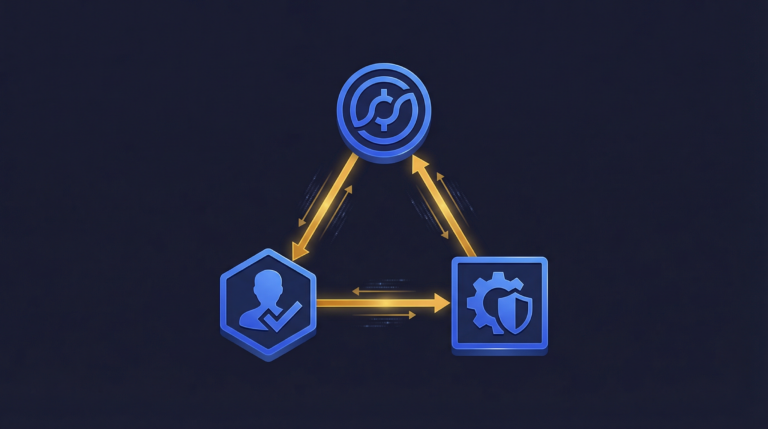
A transfer agent is an SEC-registered entity responsible for maintaining an issuer’s official master securityholder file, recording ownership changes, and handling corporate actions. In tokenization, the transfer agent reconciles the real-time blockchain ledger with its off-chain legal database to ensure regulatory compliance and authoritative ownership records.
Before writing a single line of code for a security token, technical teams must understand the legacy infrastructure they are attempting to upgrade. Under Section 17A of the Securities Exchange Act of 1934, the US Securities and Exchange Commission mandates that registered securities use a registered transfer agent to track who owns what. There are approximately 300 registered transfer agents operating in the United States today, according to SEC EDGAR filing data. These entities serve as the ultimate source of truth for corporate issuers, resolving any discrepancies between broker-dealer records and the issuer’s own capitalization table. They handle the mechanics of issuing new shares, canceling old certificates, distributing dividends, and executing corporate actions like stock splits.
Introducing distributed ledger technology fundamentally changes the mechanics of this system while leaving the legal requirements intact. When developers build a platform to issue digital securities, they often assume the smart contract and the underlying blockchain will serve as the sole record of ownership. If a token moves from one wallet to another, the blockchain records the transfer immutably and instantly. The SEC has not issued definitive guidance allowing a public blockchain to serve as the sole legal master securityholder file without a registered transfer agent overseeing it. The current industry standard requires the transfer agent’s proprietary database to remain the legally binding record of ownership. The blockchain functions as a highly efficient, cryptographically secure operational sub-ledger that must constantly synchronize with the transfer agent’s books.
This dual-record system creates friction between blockchain advocates and regulatory pragmatists. Proponents of pure decentralized finance argue that maintaining an off-chain database defeats the purpose of distributed ledger technology. Regulators counter that a centralized, regulated intermediary is necessary for investor protection, error correction, and lost key recovery. If an investor loses their private keys or a court orders the seizure of assets, a regulated transfer agent security tokens provider can burn the inaccessible tokens and reissue new ones to the rightful owner. The blockchain cannot execute these legal mandates independently without administrative control functions built into the token contract and managed by the transfer agent.
Technical architecture of a digital transfer agent
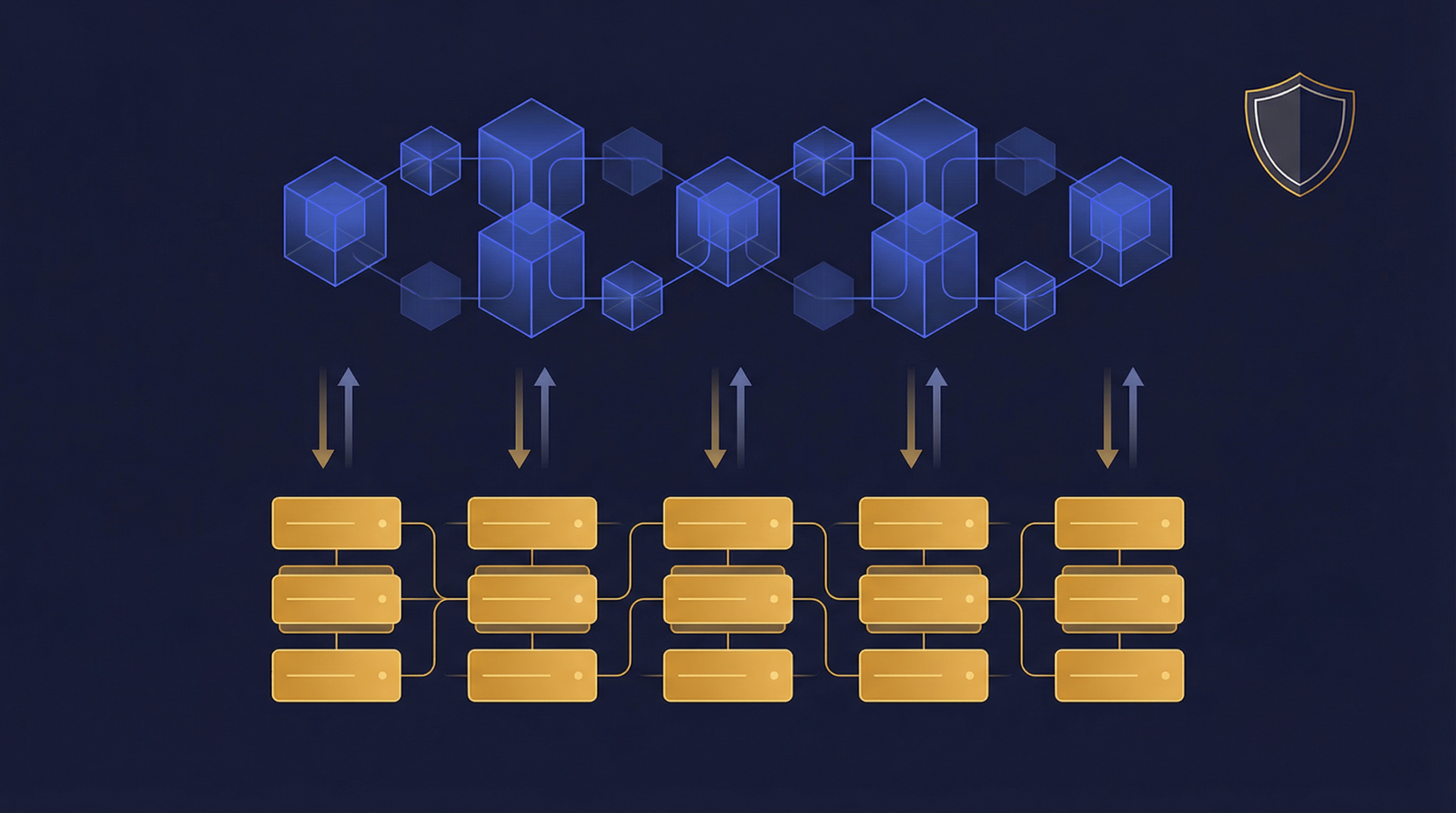
The technical architecture of a digital transfer agent relies on continuous bidirectional API synchronization between an off-chain database and on-chain smart contracts. The transfer agent’s system listens for blockchain events, validates compliance parameters, updates the legal master file, and triggers administrative functions to resolve discrepancies.
Building the infrastructure for a tokenized securities transfer agent requires bridging traditional relational databases with modern state machines. The transfer agent maintains a secure, SEC-compliant off-chain database that mirrors the state of the token smart contract. When an investor initiates a transfer on a secondary market, the transaction hits the smart contract first. Modern security token architectures utilize permissioned standards to enforce compliance directly at the token level. Understanding the ERC-3643 security token standard is critical for developers, as it uses decentralized identities and verifiable credentials to ensure only authorized wallets can receive tokens. If the transfer passes these on-chain checks, the smart contract executes the token movement and emits an event log.
The transfer agent’s backend infrastructure constantly indexes the blockchain, listening for these specific event logs. Once the system detects a valid on-chain transfer, it updates the off-chain master securityholder file to reflect the new ownership state. This reconciliation process must happen in near real-time to prevent discrepancies between the blockchain and the legal record. Edge cases present the most significant technical challenges for this architecture. If a public blockchain experiences a deep chain reorganization, the transfer agent’s software must detect the reverted state and roll back the corresponding off-chain database entries. If a transaction fails on-chain due to gas limits but an off-chain payment has already settled, the system requires manual intervention protocols to correct the discrepancy.
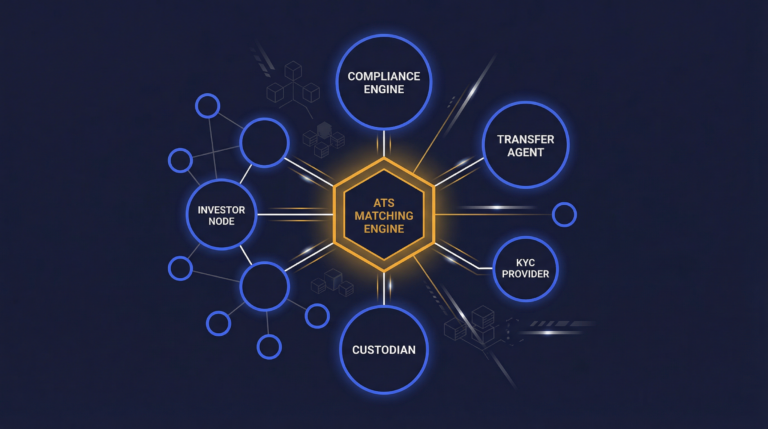
To manage these complexities, digital transfer agents provide robust REST or GraphQL APIs that connect directly to the issuer’s portal and secondary trading venues. These APIs handle investor onboarding, identity verification, and wallet whitelisting before any tokens are minted. When a platform developer maps out how tokenization works technically, they must account for the latency and failure states of these API calls. The transfer agent acts as the central routing hub between the tokenization platform that mints the asset, the broker-dealer that facilitates the sale, and the Alternative Trading System that handles secondary liquidity. If the API connection between the trading system and the transfer agent fails, trading must halt, because the transfer agent cannot guarantee the legal record accurately reflects the rapid on-chain settlement.
SEC requirements and regulatory compliance for tokenized securities
Digital transfer agents must comply with the SEC Rule 17Ad series, which dictates strict turnaround times, record-keeping standards, and asset safeguarding protocols. These agents must also file annual Form TA-2 reports detailing their operational volume, applying legacy regulatory frameworks to modern blockchain-based security token transfers.
The operational reality of a digital transfer agent is governed heavily by the SEC Rule 17Ad series, spanning from 17Ad-1 through 17Ad-17. These regulations were written for physical paper certificates and traditional electronic book-entry systems, forcing modern blockchain companies to map new processes to legacy compliance definitions. Rule 17Ad-2 requires transfer agents to turnaround 90 percent of all routine items received during a month within three business days. For a blockchain system settling transactions in twelve seconds, this turnaround time is trivial. The rule also mandates strict logging of when a transfer request is received and when it is executed. Digital transfer agents must maintain immutable audit trails of their API requests and smart contract interactions to prove compliance with these timing requirements to SEC examiners.
Reporting requirements add another layer of administrative overhead to the technical stack. Every registered transfer agent must file an annual Form TA-2 with the SEC, detailing the volume of transfers processed, the number of individual securityholder accounts maintained, and any operational failures. Developers building transfer agent systems must design their databases to generate these specific regulatory reports automatically. Rule 17Ad-12 requires transfer agents to ensure the safeguarding of funds and securities. In the context of tokenization, this translates to enterprise-grade private key management. If the transfer agent holds the administrative keys capable of minting or burning tokens across the entire asset class, those keys must be secured using multi-party computation or hardware security modules to prevent catastrophic unauthorized access.
The application of these rules to digital assets remains an evolving area of securities law. The SEC staff has issued various statements regarding digital asset securities, but comprehensive updated rulemaking specifically for blockchain-native transfer agents does not yet exist. Technical founders frequently consult a tokenization compliance checklist to navigate this ambiguity. The core regulatory friction point remains the definition of control over a digital security. If a transfer agent can unilaterally burn a token from a user’s self-custodied wallet using a smart contract administrative function, regulators generally view the transfer agent as maintaining the necessary control to satisfy legacy safeguarding requirements. This technical reality forces tokenized assets to remain somewhat centralized, despite running on decentralized infrastructure.
Leading transfer agents operating in the digital securities space
The digital securities market relies on specialized transfer agents like Securitize LLC, KoreConX, and Vertalo, alongside traditional providers like Computershare. These firms offer varied approaches to blockchain integration, ranging from proprietary smart contract ecosystems to platform-agnostic API routing for tokenized asset issuers.
A distinct group of infrastructure providers has emerged to service the specific needs of tokenized issuers. Securitize LLC operates as a fully SEC-registered transfer agent that uses public blockchains as its primary operational record system. According to the company’s regulatory filings, it tightly integrates its transfer agent functions with its broader issuance platform and trading systems. A technical Securitize platform review reveals that their system uses a proprietary smart contract protocol to link on-chain token balances directly to their off-chain master securityholder file, automating dividend distributions and corporate actions via stablecoins. KoreConX takes a slightly different approach, focusing heavily on the private capital markets. Their transfer agent infrastructure integrates blockchain technology to manage the capitalization tables of private companies, providing a unified dashboard that handles everything from initial issuance to secondary transfers under exemptions like Regulation A+ and Regulation D.
Vertalo positions itself as a digital transfer agent and data management platform that partners extensively with external broker-dealers and trading venues rather than operating a closed ecosystem. Their technical architecture allows issuers to tokenize existing traditional capitalization tables and connect them to various blockchains, acting as a flexible middleware layer. Traditional transfer agency giants are not ignoring the technology. Firms like Computershare and EQ have launched internal working groups and pilot programs to explore blockchain integration. While these legacy providers handle trillions of dollars in traditional equities, their digital asset capabilities generally lag behind the crypto-native startups. They often require custom enterprise integrations rather than offering the turnkey APIs that modern tokenization developers expect.
This landscape forces technical founders to make significant architectural commitments early in the development lifecycle. Choosing a transfer agent often dictates which token standards you can use, which blockchains are supported, and which secondary markets can list your asset. When evaluating the best tokenization platforms compared against one another, the underlying transfer agent integration is usually the primary differentiator in technical capability. Some providers restrict issuers to specific EVM-compatible chains, while others offer broader multi-chain support. The fragmentation of these systems means there is currently no universal standard for transferring a tokenized security from one digital transfer agent to another, making vendor lock-in a serious risk for growing tokenization projects.
Selecting a transfer agent and practical considerations for founders
Selecting a digital transfer agent requires evaluating their API capabilities, blockchain compatibility, and fee structures. Founders should expect to pay between $10,000 and $30,000 annually in maintenance fees, plus per-transaction costs, while ensuring the agent integrates seamlessly with their chosen trading venues.
For CTOs and technical founders preparing for a tokenized issuance, the procurement process for a transfer agent involves strict technical due diligence alongside financial modeling. The cost structure for a digital transfer agent typically includes a setup fee, a flat monthly or annual maintenance fee, and variable costs based on the number of shareholders and transaction volume. Industry data indicates that issuers should budget between $10,000 and $30,000 annually for baseline transfer agent services in the tokenized space, excluding the costs of the initial legal setup and broker-dealer fees. When budgeting for an offering, founders must also account for the gas fees associated with on-chain administrative functions. If the transfer agent requires the issuer to fund the wallet that executes on-chain compliance checks, volatile network fees on public blockchains can significantly impact the project’s operating margins.
The technical evaluation of a transfer agent should focus heavily on their API documentation and webhook reliability. Developers need to know exactly how the transfer agent handles state synchronization. You must ask vendors specific questions regarding their architecture. Find out how their system handles a failed on-chain transaction that was approved off-chain. Determine their precise mechanism for executing a court-ordered token clawback. Clarify whether they support direct integration with your custom frontend, or if you are required to use their proprietary investor portal. The transfer agent must integrate flawlessly with your chosen identity verification providers. Handling KYC and AML for tokenized assets requires the transfer agent to map verified identity data to specific blockchain addresses securely, ensuring no personally identifiable information is ever broadcast to the public ledger.
Founders must verify the downstream compatibility of their chosen transfer agent. If your long-term roadmap includes listing the tokenized asset on a specific Alternative Trading System, you must confirm that the trading venue has an existing integration with your transfer agent. Building a custom integration between a new trading system and a legacy transfer agent can delay a project by months and cost tens of thousands of dollars in development time. The transfer agent tokenization ecosystem relies on these pre-built integrations to function smoothly. By selecting a transfer agent with a documented history of successful secondary market integrations, technical teams can focus on building their core product rather than debugging complex off-chain reconciliation errors.
The integration of blockchain technology into the capital markets does not eliminate the need for regulatory intermediaries; it simply changes their technical requirements. A transfer agent in the tokenized economy serves as the critical bridge between immutable on-chain data and the flexible, legally binding off-chain reality required by US securities law. For technical founders and developers, treating the transfer agent as a mere regulatory afterthought is a critical architectural mistake. The systems that maintain the master securityholder file dictate the compliance, liquidity, and operational viability of the entire platform. By understanding the specific SEC requirements, the nuances of off-chain reconciliation, and the capabilities of modern digital transfer agents, technical teams can build robust tokenization infrastructure that satisfies both innovators and traditional securities regulators. For further clarification on specific terms used in this technical guide, consult our comprehensive tokenization glossary.
Frequently Asked Questions
What is a digital transfer agent?
A digital transfer agent is an SEC-registered entity that maintains the official master securityholder file for tokenized assets. They reconcile real-time blockchain transaction data with off-chain legal databases to ensure compliance with securities regulations while supporting digital asset issuance.
Do security tokens legally require a transfer agent?
Yes, registered security tokens legally require a transfer agent under US securities law. The SEC mandates that registered securities use a registered transfer agent to track ownership, handle corporate actions, and resolve disputes, regardless of the underlying blockchain technology.
How much does a transfer agent cost for tokenized assets?
Issuers typically pay between $10,000 and $30,000 annually for baseline transfer agent services in the tokenization sector. This cost structure usually includes a flat maintenance fee plus variable per-transaction costs and initial setup fees.
What happens if a blockchain transaction fails but the transfer agent approves it?
The transfer agent’s system requires manual intervention protocols to correct the discrepancy. Because the transfer agent’s off-chain database serves as the legally binding master file, their technical architecture must detect the on-chain failure and roll back the corresponding off-chain approval.