DAO Governance for Tokenized Investment Funds Explained
The traditional investment fund relies entirely on a general partner to make capital allocation decisions, charge management fees, and distribute returns. This centralized model creates an inherent friction between the people supplying the capital and the individuals managing it. DAO governance tokenized investment funds offer a structural alternative by replacing the traditional fund manager with a decentralized voting mechanism where token holders collectively dictate strategy. By distributing governance rights across a blockchain network, these entities align incentives directly between the fund and its investors. Participants vote on asset selection, adjust fee parameters, and monitor treasury movements through transparent on-chain records. This approach eliminates standard general partner carry fees and reduces operational overhead to basic execution costs. The transition from closed-door boardroom decisions to open-source governance represents a fundamental shift in how capital pools operate and scale in the digital economy.
The mechanics of DAO governance in tokenized funds
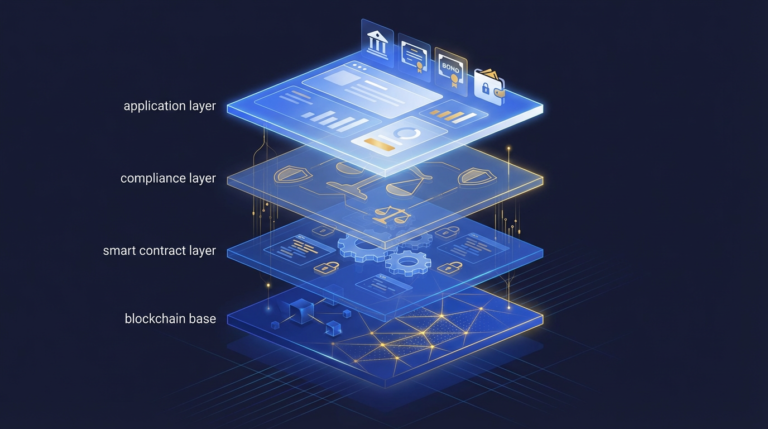
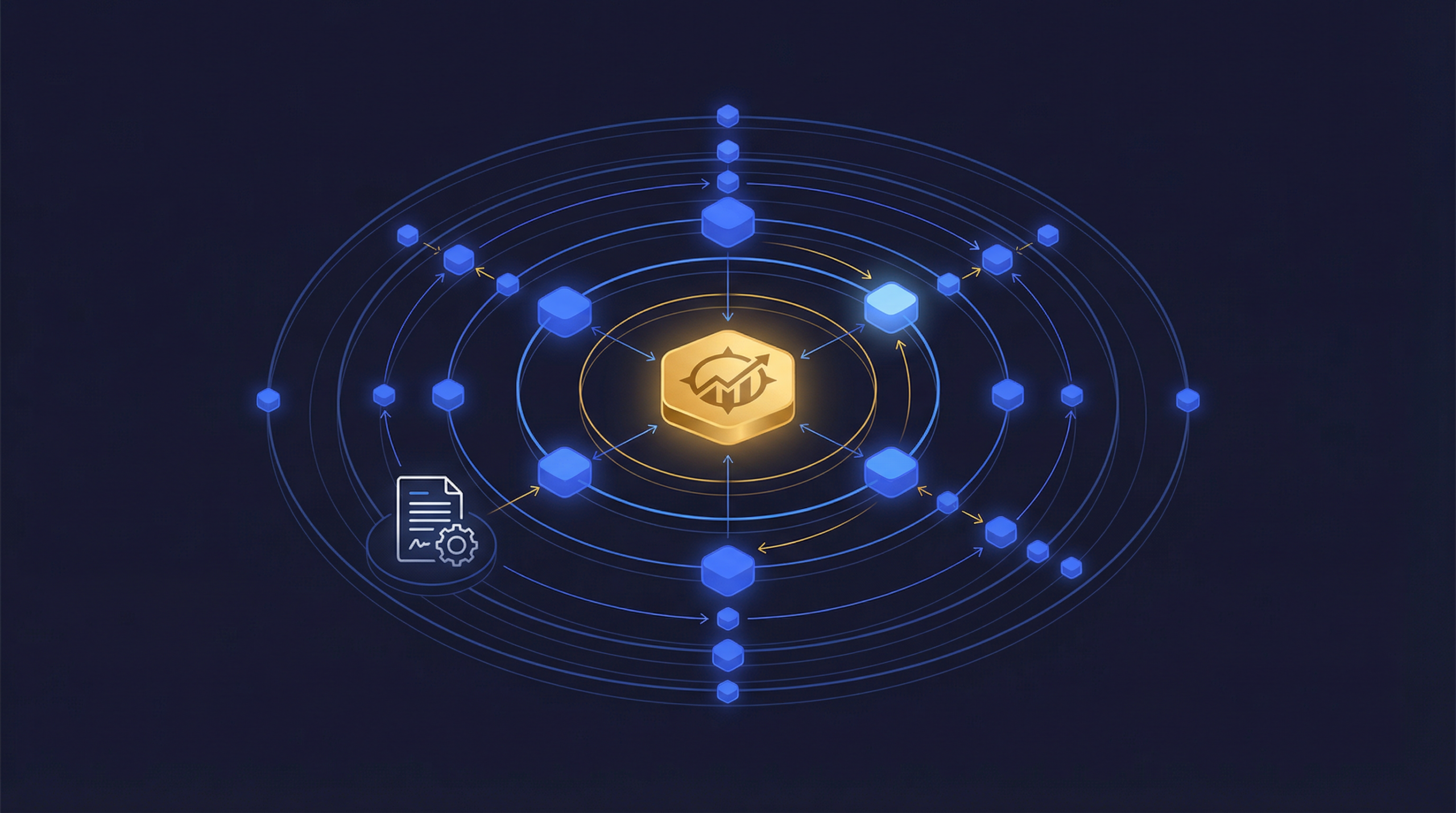
DAO governance in tokenized investment funds replaces the traditional general partner with a decentralized voting mechanism where token holders collectively dictate capital allocation. Members vote on asset selection, fee structures, and risk limits using on-chain systems ranging from simple token-weighted voting to complex delegated models.
The operational spectrum of these funds ranges from fully decentralized networks to hybrid systems with professional oversight. In a fully decentralized model, token holders vote on every individual transaction, requiring broad consensus before any capital leaves the treasury. This structure maximizes transparency because every proposal, vote, and execution is permanently recorded on a public blockchain ledger. Investors maintain direct control over their capital, effectively removing the traditional management fees associated with legacy financial institutions. Understanding the basic mechanics of how tokenization works helps clarify why this on-chain execution is technically possible without intermediaries. The primary advantage remains incentive alignment, as the people risking the capital are the exact same individuals making the investment decisions.
Governance mechanisms determine exactly how voting power is distributed and exercised among fund participants. The most basic system is token-weighted voting, where one token equals one vote, though this often leads to whale dominance where large holders control the fund. To counter this, some funds implement quadratic voting, which calculates voting power as the square root of tokens held, mathematically reducing the influence of large capital allocators. Conviction voting offers another alternative by increasing a user’s voting power the longer they stake their tokens on a specific proposal, rewarding long-term commitment over short-term capital deployment. For investors who prefer a passive role, delegated voting allows token holders to assign their voting rights to representatives who specialize in financial analysis. The Moloch DAO framework introduced a vital protection known as the rage quit mechanism, which allows dissenting members to exit the fund with their proportional share of assets rather than being forced to participate in investments approved by a majority they disagree with.
Several prominent organizations have successfully deployed these mechanisms to manage substantial capital pools. The LAO (Limited Liability Autonomous Organization) launched as one of the first investment DAOs, structuring itself as a Delaware LLC limited to 99 accredited members to comply with securities exemptions while investing in early-stage blockchain projects. MetaCartel Ventures operates as a for-profit investment DAO specifically focused on funding decentralized applications, utilizing a similar member-directed voting structure. BitDAO, which later transitioned into Mantle, emerged as one of the largest treasury DAOs globally, managing billions in assets and making strategic ecosystem investments through community governance proposals. Platforms like Syndicate have further lowered the barrier to entry by providing infrastructure for communities to create their own investment clubs as distinct legal entities. Flamingo DAO took this model into alternative asset classes by focusing entirely on non-fungible token investments, demonstrating that the core definition of what is asset tokenization extends far beyond traditional equities.
Legal structures and regulatory compliance for investment DAOs
Legal structures for investment DAOs typically utilize specific corporate wrappers like Delaware LLCs, Cayman Foundation Companies, or Marshall Islands DAO LLCs to limit member liability. These entities must navigate complex securities regulations, including the Howey test and SEC registration exemptions, to operate compliantly within traditional financial systems.
Operating an investment fund without a formal legal wrapper exposes participants to severe financial risk. Unincorporated DAOs are generally treated as general partnerships under common law, meaning every individual token holder carries unlimited personal liability for the actions and debts of the entire organization. To mitigate this, US-based investment DAOs frequently utilize the Delaware LLC structure, though this requires strict membership limits to satisfy regulatory exemptions. Recognizing the need for modernized corporate frameworks, states like Wyoming and Tennessee have enacted specific legislation recognizing DAOs as distinct limited liability companies. On an international scale, the Republic of the Marshall Islands passed the Decentralized Autonomous Organizations Act of 2022, providing a comprehensive legal framework that allows DAOs to register globally as LLCs. Other popular offshore alternatives include the Cayman Foundation Company and the Swiss Association, both of which provide a legal entity capable of owning assets and entering contracts while shielding individual members from personal liability.
Navigating securities law remains the most complex barrier for decentralized fund managers. Under the Howey test, tokens in a DAO-governed fund are almost certainly classified as securities because they represent an investment of money in a common enterprise with a reasonable expectation of profits derived from the efforts of others. This classification requires the fund to either register formally with the Securities and Exchange Commission or operate under strict exemptions. Most US-focused investment DAOs rely on the Investment Company Act Section 3(c)(1) exemption, which caps the fund at 100 beneficial owners, or the Section 3(c)(7) exemption, which allows up to 2,000 members provided they are all qualified purchasers. These strict membership limits inherently conflict with the open, permissionless ethos of blockchain technology, forcing founders to choose between legal compliance and true decentralization.
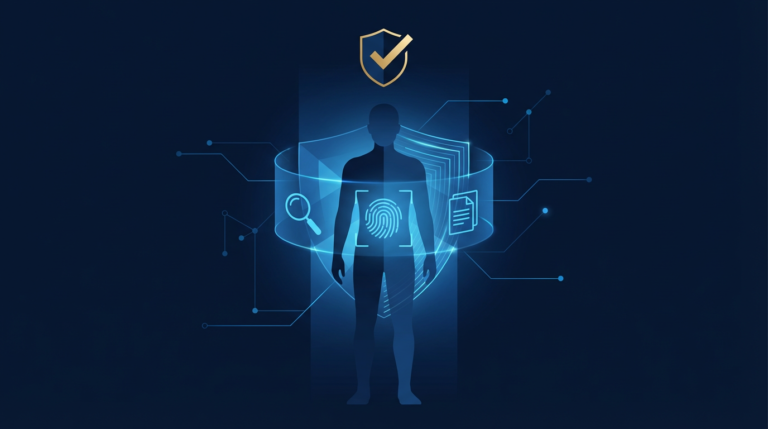
Regulatory scrutiny extends beyond simple securities registration into ongoing operational compliance. If a DAO provides advice about securities investments, it may trigger requirements under the Investment Advisers Act, creating a legal gray area regarding whether a decentralized voting mechanism constitutes formal financial advice. Furthermore, anti-money laundering and Bank Secrecy Act regulations require rigorous identity verification for financial institutions. DAOs must implement Know Your Customer protocols for all members to ensure they are not facilitating illicit financial flows or violating international sanctions. This requirement necessitates centralized identity verification checkpoints, which fundamentally alters the user experience. You can reference any standard tokenization glossary to understand how these compliance checkpoints integrate technically with smart contract execution.
Practical challenges in decentralized fund management
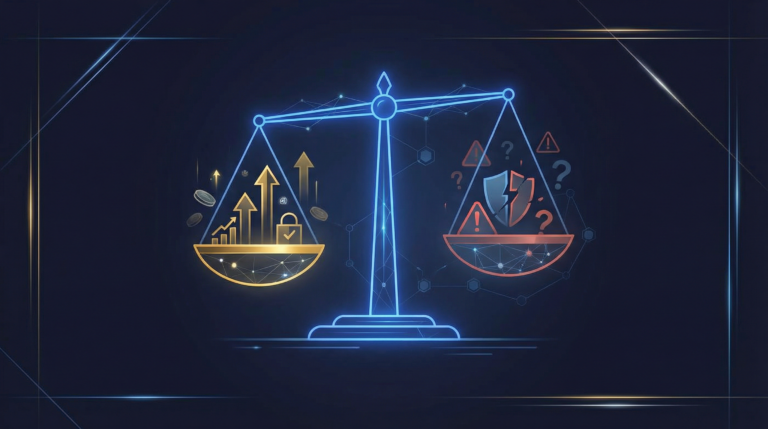
Decentralized fund management faces significant operational hurdles, including chronic voter apathy with participation rates typically hovering between 5 and 15 percent. Investment DAOs also struggle with slow decision-making processes, information asymmetry among retail participants, high transaction costs for voting, and vulnerability to sophisticated governance attacks.
Voter apathy severely undermines the democratic promise of decentralized fund governance. In most established DAOs, voter participation rates consistently remain between 5 and 15 percent, meaning a tiny minority of token holders effectively dictates the capital allocation for the entire treasury. This low engagement stems from the sheer volume of proposals and the technical complexity required to evaluate investment opportunities accurately. Furthermore, the speed of decision-making in a decentralized environment is notoriously slow, as proposals typically require a mandatory three to seven day voting period to ensure all members have an opportunity to participate. In fast-moving financial markets, this delay often causes the fund to miss lucrative entry points or fail to exit rapidly depreciating assets. Evaluating tokenized asset risks requires acknowledging that decentralized consensus is inherently slower than centralized execution.
Information asymmetry and economic barriers further complicate the governance process. Most retail token holders lack the specialized financial modeling expertise required to evaluate complex investment proposals, leading to uninformed voting patterns or excessive reliance on a few vocal community leaders. This dynamic often recreates the exact centralized power structures the DAO was designed to dismantle. Additionally, participating in governance carries direct financial costs. On networks like the Ethereum mainnet, every vote requires the user to pay network gas fees, which directly discourages participation from smaller token holders who cannot justify the transaction cost relative to their stake in the fund. This economic friction naturally consolidates voting power among wealthy participants who can easily absorb the operational costs of active governance.
Security vulnerabilities present an existential threat to decentralized treasury management. The most prominent risk is the flash loan governance attack, a sophisticated exploit where an attacker borrows massive quantities of governance tokens via an uncollateralized flash loan. The attacker uses this temporary voting power to force through a malicious proposal, such as transferring the entire fund treasury to their personal wallet, before returning the borrowed tokens in the exact same transaction block. Historical examples have demonstrated that protocols without time-delayed execution or snapshot voting mechanisms are highly susceptible to these economic exploits. Fund architects must implement strict voting delays, quorum requirements, and multi-signature veto powers to protect the treasury from hostile takeovers engineered through decentralized finance lending markets.
The future of hybrid governance in tokenized asset funds
The future of DAO-governed funds points toward a hybrid model combining professional asset management with decentralized oversight. Token holders vote on strategic mandates, manager selection, and fee structures, while appointed investment committees execute daily trading decisions to ensure agility and professional risk management.
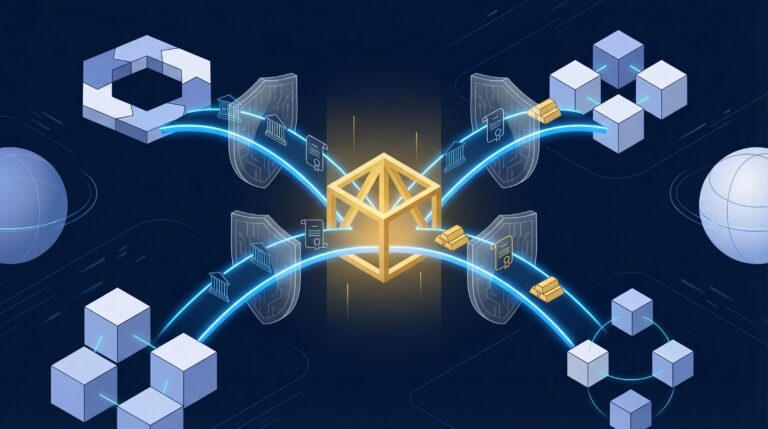
Pure decentralization has proven inefficient for active trading strategies that require immediate market responses. Consequently, the industry is rapidly moving toward hybrid governance structures that blend the speed of traditional finance with the transparency of blockchain architecture. In this model, the DAO acts similarly to a corporate board of directors, establishing the broad investment mandate, selecting the professional management team, and setting the strict risk parameters. The appointed fund managers or specialized investment committees then handle the day-to-day capital deployment within those approved boundaries. Reading our comprehensive Centrifuge review reveals how platforms are already structuring real-world asset pools using similar hybrid oversight mechanisms. This approach preserves the core benefits of decentralized governance while solving the critical issues of voter apathy and execution latency.
This hybrid framework is particularly crucial for the integration of traditional financial instruments into the blockchain ecosystem. As the industry expands into tokenized real estate, private credit, and government securities, the need for professional management becomes unavoidable. For example, executing strategies for tokenized bonds investing requires dedicated financial professionals who understand duration risk and yield curve dynamics, skills not typically distributed evenly across a retail token holder base. The hybrid DAO model allows investors to retain ultimate control over their capital through on-chain veto rights and manager replacement protocols, while relying on credentialed experts to navigate complex financial markets. This evolution from ideological decentralization to practical, structured oversight represents the necessary maturation phase for tokenized investment funds seeking institutional adoption.
DAO governance tokenized investment funds represent a profound structural shift in how capital is pooled, managed, and deployed. While pure decentralized models face significant legal and operational hurdles, the emergence of hybrid governance frameworks offers a viable path forward. By combining robust legal wrappers like the Marshall Islands DAO LLC with professional management and on-chain community oversight, founders can build transparent, efficient investment vehicles. The next critical step for any organization entering this space is selecting the appropriate jurisdictional structure and governance mechanism that balances regulatory compliance with the operational agility required to succeed in modern financial markets.
Frequently Asked Questions
What is a DAO governance tokenized investment fund?
It is an investment vehicle where traditional fund managers are replaced by a decentralized network of token holders. Participants use governance tokens to vote on asset allocation, fee structures, and fund parameters, with all decisions executed transparently via smart contracts on a blockchain.
How do investment DAOs comply with US securities laws?
Most US-based investment DAOs structure themselves as Delaware LLCs and rely on specific SEC exemptions. They typically utilize Investment Company Act Section 3(c)(1) or 3(c)(7), which restrict membership to a limited number of accredited investors or qualified purchasers to avoid registering as an investment company.
What is the rage quit mechanism in DAO governance?
The rage quit mechanism allows dissenting DAO members to exit the fund and withdraw their proportional share of the treasury. Pioneered by the Moloch DAO, it protects minority investors from being forced to participate in investment decisions approved by a majority they fundamentally disagree with.
Why is voter apathy a problem for tokenized funds?
Voter apathy results in a small minority making decisions for the entire fund treasury. With average DAO participation rates hovering between 5 and 15 percent, funds suffer from centralized decision-making, which contradicts the primary goal of decentralized, community-driven capital management.
What is a flash loan governance attack?
This is an exploit where an attacker borrows a massive amount of governance tokens temporarily using a flash loan. They use this borrowed voting power to pass a malicious proposal, such as draining the fund’s treasury, and return the tokens within a single transaction block.