Fund Tokenization Institutional: Market Analysis and Data
The asset management industry is undergoing a fundamental infrastructure upgrade as trillion-dollar institutions replace legacy ledger systems with blockchain technology. Fund tokenization institutional adoption has moved beyond theoretical whitepapers and pilot programs into live commercial products managing billions of dollars in client assets. This transition represents a structural shift in how investment vehicles are manufactured, distributed, and managed across global capital markets. Asset managers are no longer questioning whether blockchain technology works for financial products. They are actively deploying tokenized money market funds, private credit vehicles, and alternative investment strategies on public and private ledger systems. The integration of cryptographic tokens into traditional fund structures offers a mathematical solution to decades-old operational inefficiencies regarding settlement times, collateral mobility, and reconciliation costs.
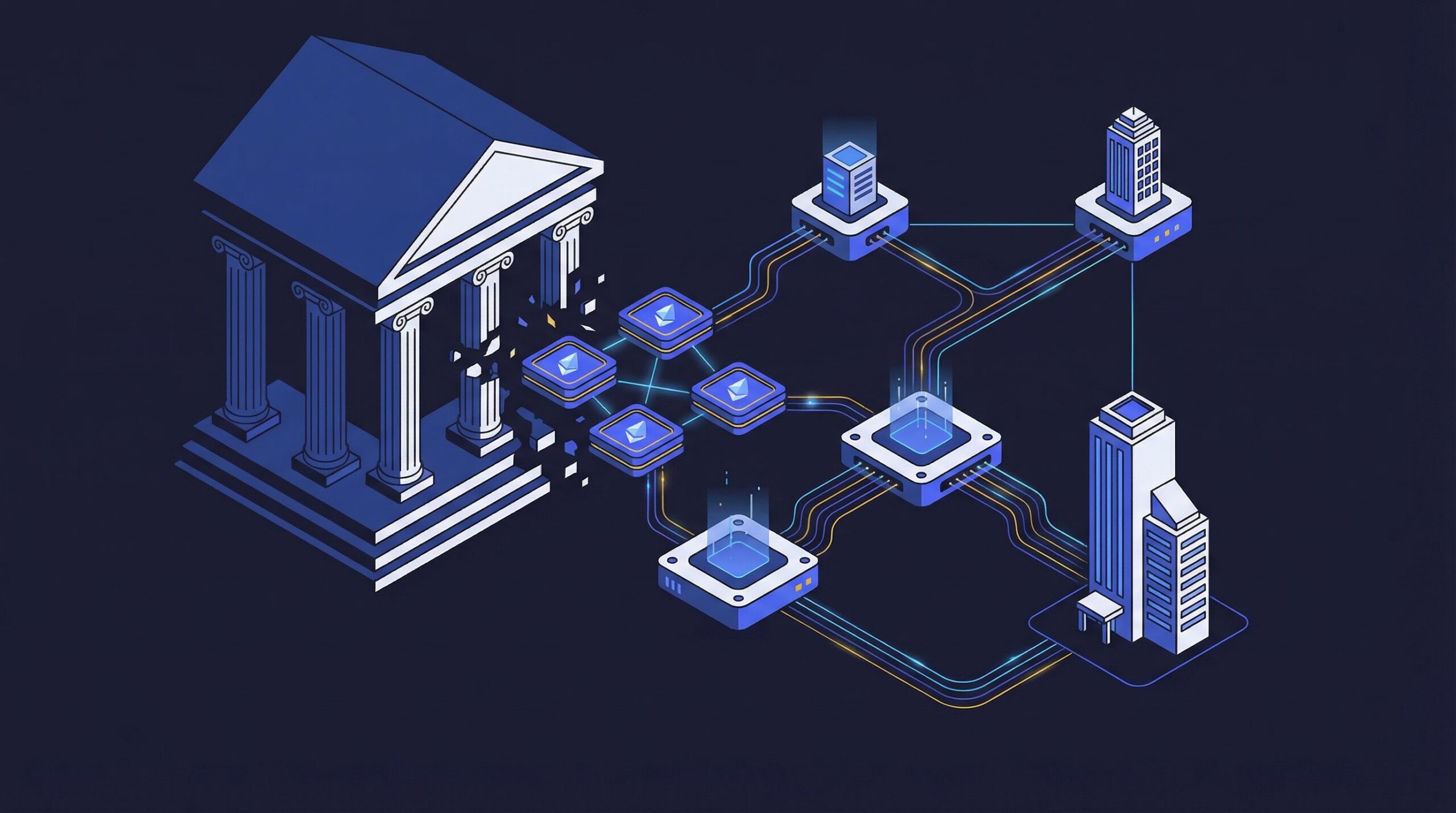
Understanding this shift requires examining the mechanical differences between traditional mutual fund infrastructure and blockchain-based share issuance. The current financial system relies on a fragmented network of transfer agents, clearinghouses, custodians, and broker-dealers to process a single fund subscription or redemption. Each entity maintains an independent database that must be periodically reconciled against the others to ensure accuracy. This redundant architecture necessitates delayed settlement cycles, typically requiring two full business days to finalize a transaction. By replacing these siloed databases with a unified smart contract architecture, asset managers can execute instant atomic settlement while dramatically reducing the administrative overhead associated with fund operations. This architectural efficiency is driving the largest financial institutions in the world to rebuild their product offerings on-chain.
The context driving institutional fund tokenization
Institutional fund tokenization is the process of issuing digital representations of investment fund shares on a blockchain network. This infrastructure allows asset managers to offer fractional ownership, automate compliance through smart contracts, and enable continuous 24-hour settlement for traditional financial products like money market funds and private equity vehicles.
The economic rationale for asset management tokenization centers on operational efficiency and market expansion. Traditional fund administration is a labor-intensive process characterized by manual data entry, batch processing, and continuous database reconciliation among multiple counterparties. According to a 2022 report by Boston Consulting Group, the broader tokenized asset market is projected to reach $16 trillion by 2030, driven largely by the digitization of traditional financial instruments. The cost of maintaining legacy infrastructure limits the ability of asset managers to offer institutional-grade products to a wider audience. High administrative costs force fund sponsors to impose high minimum investment thresholds, effectively locking smaller investors out of premium private credit and private equity strategies. Tokenization fundamentally alters this cost structure by automating the functions of transfer agents and compliance officers through immutable computer code.
Legacy transfer agents operate by maintaining a centralized ledger of fund shareholders and processing trades during standard banking hours. When an investor wishes to redeem shares, the request passes through multiple intermediaries before the transfer agent updates the master ledger and the custodian releases the underlying cash. This sequential processing creates counterparty risk and traps capital in transit. In a tokenized fund model, the blockchain itself serves as the golden source of truth for shareholder records. Smart contracts handle the transfer logic automatically, ensuring that tokens cannot move unless specific regulatory and financial conditions are met simultaneously. If you want to understand the broader context of this shift across different asset classes, reviewing the current tokenization market size provides clear evidence of institutional capital flows migrating toward blockchain architecture.
This structural upgrade also addresses the liquidity premium associated with private market investments. Private equity and private credit funds typically lock up investor capital for seven to ten years. While tokenization does not magically create liquidity for illiquid underlying assets, it does create the technical infrastructure necessary for secondary market trading of fund shares. If regulatory frameworks permit, investors holding tokenized fund shares could theoretically transfer their positions to other whitelisted buyers without requiring the fund manager to liquidate the underlying portfolio assets. The foundational concepts driving these mechanical improvements are thoroughly detailed in our guide on RWA tokenization explained.
What happened when major asset managers moved on-chain
Major financial institutions including BlackRock, Franklin Templeton, and Hamilton Lane launched tokenized funds to test blockchain infrastructure in live market conditions. These asset managers partnered with digital transfer agents and tokenization platforms to issue shares directly on public blockchains like Ethereum, Polygon, and Stellar, proving that regulated financial products can operate securely on decentralized networks.
The most significant catalyst for institutional adoption occurred in March 2024 when BlackRock introduced the BlackRock USD Institutional Digital Liquidity Fund. Known by its ticker symbol BUIDL, this product became the first tokenized fund issued by the world’s largest asset manager on a public blockchain. The fund invests entirely in cash, United States Treasury bills, and repurchase agreements, offering a stable value of one dollar per token while paying daily accrued dividends directly to investor wallets. BUIDL operates on the Ethereum blockchain and utilizes BNY Mellon for custody and administration services. The product experienced rapid adoption from cryptocurrency companies seeking yield on their stablecoin reserves, crossing $500 million in assets under management within four months of its launch. The architecture of the BlackRock BUIDL fund demonstrates how traditional financial institutions can leverage public blockchain networks without compromising regulatory compliance or asset security.
Franklin Templeton preceded BlackRock in the tokenized fund space by several years, launching the Franklin OnChain U.S. Government Money Fund in 2021. The fund, represented by the BENJI token, originally launched on the Stellar blockchain before expanding to Polygon to capture broader market distribution. Franklin Templeton developed a proprietary mobile application that allows retail and institutional investors to purchase tokenized fund shares directly, effectively bypassing traditional brokerage platforms. The firm operates its own blockchain node infrastructure to process transactions and maintain the digital share registry. This vertical integration allows Franklin Templeton to capture more of the fund’s economic value by reducing reliance on external transfer agents and clearing systems. The BENJI fund maintains a stable one-dollar net asset value and distributes yield through airdrops directly into the digital wallets of shareholders.
Beyond liquid money market funds, alternative asset managers are utilizing tokenization to distribute private market strategies to a wider investor base. Hamilton Lane partnered with digital asset infrastructure providers to tokenize its Senior Credit Opportunities Fund on the Polygon network. In the traditional financial system, this private credit vehicle requires a minimum investment of five million dollars, restricting access to large institutions and ultra-high-net-worth individuals. By issuing tokenized fund shares through a specialized platform, Hamilton Lane lowered the minimum investment threshold to just ten thousand dollars for qualified purchasers. You can review the technical infrastructure powering these private market offerings in our comprehensive Securitize review. Similarly, global investment firm KKR tokenized a portion of its Health Care Strategic Growth Fund on the Avalanche blockchain, demonstrating that complex private equity structures can be successfully mapped to smart contract architecture.
Apollo Global Management and JPMorgan have also conducted extensive testing regarding the tokenization of wealth management portfolios. Through the Monetary Authority of Singapore’s Project Guardian initiative, these firms demonstrated how tokenized alternative assets could be combined with tokenized cash to automate discretionary portfolio management. The proof of concept showed that smart contracts could automatically rebalance hundreds of client portfolios simultaneously based on predefined algorithmic rules. This capability eliminates the manual trading and reconciliation processes that currently plague wealth management operations. The involvement of Apollo and JPMorgan indicates that the ultimate goal of asset management tokenization is not simply issuing single funds, but rather creating an entirely new operating system for portfolio construction and wealth distribution.
Results of deploying tokenized fund shares
The deployment of tokenized fund shares resulted in reduced operational costs, faster settlement times, and broader investor access through lower minimum investment thresholds. Asset managers successfully integrated blockchain networks with traditional net asset value calculations, enabling automated subscription and redemption flows that operate continuously outside of standard banking hours.
One of the most profound mechanical results of this deployment is the realization of atomic settlement in fund operations. Atomic settlement means the exchange of assets and payment occurs simultaneously and irrevocably. In a traditional fund subscription, an investor wires fiat currency to a fund administrator, waits for the funds to clear, and eventually receives a book-entry update indicating their share ownership days later. With tokenized fund shares, smart contracts execute the transaction in a single block on the ledger. The investor transfers a stablecoin to the fund’s smart contract, and the contract immediately mints and delivers the corresponding fund tokens to the investor’s wallet. This simultaneous exchange eliminates settlement risk and ensures that capital is immediately put to work rather than sitting idle in transit accounts.
The integration of traditional net asset value calculations with blockchain networks represents another significant technical achievement. For funds that do not maintain a stable one-dollar value, the price of the token must accurately reflect the changing value of the underlying portfolio. Asset managers achieve this by utilizing specialized oracle networks that securely transmit the daily or hourly net asset value from the fund administrator’s internal systems directly into the smart contract. Platforms like Securitize and fund administrators like Apex Group have developed sophisticated application programming interfaces that bridge traditional accounting software with blockchain architecture. This ensures that when an investor redeems a tokenized share, the smart contract executes the transaction at the precise, mathematically verified net asset value for that specific moment in time.
Tokenization also fundamentally changes the compliance and transfer agency functions through the implementation of permissioned tokens. Unlike standard cryptocurrencies that can be sent to any address globally, tokenized fund shares utilize modified token standards that enforce regulatory rules at the code level. Before a tokenized fund share can move from one wallet to another, the smart contract automatically verifies that the receiving wallet belongs to a whitelisted investor who has completed know-your-customer and anti-money-laundering checks. If the receiving address is not registered in the identity registry, the smart contract rejects the transaction outright. This automated compliance layer ensures that asset managers can utilize the efficiency of public blockchains without violating strict securities regulations regarding investor eligibility and transfer restrictions. Investors looking to participate in this ecosystem must understand these technical requirements, which are detailed in our guide on how to invest in tokenized assets.
| Fund Manager | Tokenized Product | Ticker | Primary Blockchain | Underlying Assets |
|---|---|---|---|---|
| BlackRock | USD Institutional Digital Liquidity Fund | BUIDL | Ethereum | US Treasuries, Cash, Repos |
| Franklin Templeton | OnChain U.S. Government Money Fund | BENJI | Stellar, Polygon | US Government Securities |
| Hamilton Lane | Senior Credit Opportunities Fund | SCOPE | Polygon | Private Corporate Credit |
| KKR | Health Care Strategic Growth Fund | HCSG | Avalanche | Healthcare Private Equity |
The economic results of these deployments are becoming measurable. Asset managers report significant reductions in the marginal cost of onboarding new investors and processing routine transactions. Because the smart contract handles the administrative heavy lifting, the cost difference between processing a ten-thousand-dollar subscription and a ten-million-dollar subscription is effectively zero. This scalability is the primary reason managers can drastically lower minimum investment thresholds for tokenized alternative funds. Furthermore, the ability to use tokenized fund shares as collateral in decentralized finance applications is creating new utility for traditional assets. Institutional investors can hold yield-bearing tokenized money market funds and simultaneously pledge those tokens as collateral for trading activities, maximizing their capital efficiency in ways that were impossible with traditional mutual fund shares.
Lessons learned and regulatory realities
Asset managers learned that while blockchain technology functions exceptionally well for share issuance, regulatory fragmentation and custody requirements remain significant hurdles. Jurisdictions like Singapore and the European Union offer clear frameworks for tokenized funds, while United States regulations require reliance on existing private placement exemptions that restrict broader retail distribution.
The regulatory landscape in the United States presents specific challenges for institutional fund tokenization. The Securities and Exchange Commission has not created a tailored framework for tokenized mutual funds. Consequently, most tokenized funds offered to United States investors operate under Regulation D exemptions, specifically Rule 506(c). This rule allows fund sponsors to broadly market their tokenized products but strictly limits actual investment to verified accredited investors. Furthermore, securities issued under these exemptions typically carry strict transfer restrictions, meaning investors cannot freely trade their tokens on secondary markets for a specified holding period. This regulatory reality prevents tokenized funds in the United States from achieving the deep, unified liquidity that blockchain technology technically enables. Asset managers must navigate these constraints by tightly controlling the whitelisting process and restricting token transfers to approved counterparties within walled-garden ecosystems.
Conversely, the European Union and Singapore are actively developing regulatory frameworks designed to accommodate blockchain-based financial products. The European Union implemented the Distributed Ledger Technology Pilot Regime, which allows financial institutions to operate tokenized trading facilities and settlement systems in a controlled environment with specific regulatory exemptions. This framework is particularly important for the development of tokenized UCITS funds. UCITS is a globally recognized regulatory standard for mutual funds, and the ability to tokenize these vehicles would open massive distribution channels across Europe and Asia. Regulators in Ireland and Luxembourg, the two largest fund domiciles in Europe, are currently evaluating how blockchain registries can comply with strict UCITS requirements regarding asset segregation and depositary oversight. Familiarizing yourself with these international frameworks requires understanding the specific terminology outlined in our tokenization glossary.
In Singapore, the Monetary Authority has taken a highly proactive approach through Project Guardian. This collaborative initiative partners regulators directly with global asset managers to test the tokenization of fixed income, foreign exchange, and asset management products. The lessons learned from Project Guardian indicate that interoperability between different blockchain networks is essential for long-term success. Asset managers realized that issuing funds on isolated, incompatible blockchains creates the same fragmented liquidity problems that exist in legacy finance. Consequently, the industry is heavily focused on developing cross-chain communication protocols that allow tokenized fund shares to move seamlessly between Ethereum, Avalanche, Polygon, and institutional private ledgers.
The final major lesson concerns the complex reality of digital asset custody. While the tokenized shares themselves live on a blockchain, the underlying assets backing those shares remain in traditional financial infrastructure. A tokenized Treasury fund still requires a regulated bank to hold the actual physical or book-entry Treasury bills. Bridging the gap between the traditional custodian holding the assets and the smart contract managing the token supply requires robust legal agreements and highly secure oracle networks. Institutions must ensure that the number of tokens minted on the blockchain never exceeds the value of the assets held in the bank vault. As the industry matures, the distinction between digital asset custodians and traditional fund administrators is blurring, with major financial institutions building unified platforms that can manage both the cryptographic keys and the underlying physical assets simultaneously.
Frequently Asked Questions
What is institutional fund tokenization?
Institutional fund tokenization is the process of representing investment fund shares as digital tokens on a blockchain. This allows asset managers to automate compliance, offer fractional ownership, and process subscriptions and redemptions instantly without relying on legacy transfer agents.
How does the BlackRock BUIDL fund work?
The BlackRock BUIDL fund issues tokens on the Ethereum blockchain backed by cash and United States Treasury bills. Each token maintains a one-dollar value and pays daily accrued dividends directly to the investor’s digital wallet, combining traditional yield with blockchain efficiency.
Are tokenized funds the same as cryptocurrencies?
No. Tokenized funds are regulated securities that represent ownership in traditional financial assets. Unlike standard cryptocurrencies, tokenized fund shares utilize permissioned smart contracts that restrict transfers to verified, whitelisted investors to ensure strict regulatory compliance.
Why do asset managers want to tokenize mutual funds?
Asset managers tokenize funds to drastically reduce the operational costs associated with manual reconciliation and legacy settlement systems. Tokenization also allows them to lower minimum investment thresholds, expanding their potential customer base for private market and alternative investment strategies.
Can retail investors buy tokenized institutional funds?
Currently, most tokenized institutional funds in the United States are restricted to verified accredited investors due to strict securities regulations. However, regulatory frameworks in other jurisdictions are evolving to potentially allow broader retail access to tokenized mutual funds in the future.