Tokenized Insurance Products: Parametric Blockchain Guide
Traditional insurance relies on manual claims adjustment, subjective damage assessment, and lengthy payout timelines that often leave policyholders waiting months for critical funds. Tokenized insurance products replace this legacy infrastructure with programmable capital and deterministic execution. By combining blockchain technology with parametric policy structures, these instruments automatically trigger payouts when specific, verifiable conditions are met. This shift reduces administrative overhead and eliminates the adversarial dynamic between insurers and policyholders during the claims process. The traditional model suffers from inherent conflicts of interest, as insurance companies improve their bottom line by denying or delaying valid claims. Decentralized systems remove this conflict by locking the rules of execution into immutable code before any event occurs. For institutional and retail investors, decentralized insurance tokenization opens new avenues for yield generation by allowing capital providers to underwrite specific risk pools. This guide examines the mechanics of smart contract insurance, the platforms driving market adoption, the risk-return profile for capital providers, and the evolving regulatory treatment of programmable risk transfer.
Mechanics of smart contract and parametric insurance
Smart contract insurance operates through self-executing code that holds pooled capital and automatically distributes payouts based on predefined external data. Parametric insurance on the blockchain relies on data oracles to verify objective events, triggering immediate settlement without human claims adjustment.
The traditional insurance model requires policyholders to prove their specific financial loss after an event occurs, initiating a subjective review process by corporate claims adjusters. Parametric insurance bypasses this friction by insuring against the probability of a predefined event rather than the exact magnitude of the resulting financial loss. When an insured event happens, the policy pays out a fixed amount automatically regardless of the actual physical damage sustained. Understanding what is asset tokenization is necessary to grasp how these policies are structured as digital assets on distributed ledgers. Developers write the policy terms into a smart contract, which escrows the premium payments and the underwriting capital in a transparent vault. If the trigger condition is met, the contract executes the transfer of funds to the policyholder’s wallet within seconds. If the policy period expires without an event, the locked capital returns to the underwriting pool along with the accumulated premiums. This deterministic approach completely removes the need for human intervention, drastically lowering the operational costs associated with policy administration.
Data oracles serve as the operational bridge between real-world events and blockchain-based insurance contracts, functioning as the sole arbiter of truth for the policy. Networks like Chainlink provide cryptographically secure data feeds from authorized sources, such as the National Weather Service or global aviation databases, directly to the smart contracts. This infrastructure ensures that the trigger mechanism remains tamper-proof and fully transparent to all parties involved. A clear understanding of how tokenization works reveals that the integrity of any tokenized real-world asset depends entirely on the reliability of its underlying data inputs. In parametric models, if the oracle reports that sustained wind speeds in a specific geographic grid exceeded 100 miles per hour, the smart contract insurance policy executes the payout immediately. To prevent a single point of failure, robust protocols utilize decentralized oracle networks that require multiple independent data providers to reach consensus before a trigger is validated. This deterministic execution eliminates the months-long delays typical of property and casualty claims following natural disasters, providing immediate liquidity to businesses when they need it most.
Leading platforms deploying decentralized insurance tokenization
Nexus Mutual, Arbol, and Etherisc are the primary platforms issuing tokenized insurance products. Nexus Mutual dominates crypto-native risk with over $270 million in total value locked. Arbol facilitates hundreds of millions in parametric weather risk transfer, while Etherisc deploys specialized frameworks for crop and flight delay coverage.
Nexus Mutual operates as a decentralized discretionary mutual rather than a traditional insurance company, providing coverage primarily against smart contract vulnerabilities and exchange insolvencies. According to Nexus Mutual’s January 2024 financial summary, the protocol maintains a total value locked of approximately $270 million and has paid out more than $24 million in claims to date. Members of the mutual hold NXM tokens, which represent a proportional claim on the underlying capital pool and grant governance rights over risk assessment and claims approval. The platform utilizes a unique staking mechanism where members allocate their tokens to specific smart contracts they believe are secure, effectively pricing the risk of different decentralized finance protocols through market dynamics. This model demonstrates how RWA tokenization explained in broader financial contexts applies directly to the mutualization of digital asset risks. When a hack or exploit occurs on a covered protocol, affected members submit claims that are voted on by the community of token holders. The mutual structure aligns the incentives of capital providers and coverage buyers, creating a self-sustaining ecosystem for native digital risk management.
Arbol focuses entirely on parametric climate and weather risk, serving agricultural enterprises, energy companies, and maritime businesses that require immediate liquidity following adverse weather events. Per Arbol’s 2023 operational report, the platform transacted over $250 million in notional risk volume, utilizing smart contracts to automate settlement. By integrating decentralized climate data networks like dClimate, Arbol structures policies that pay out automatically if specific temperature or precipitation thresholds are breached during a defined period. A corporate farming operation, for example, can purchase a tokenized policy that triggers a $500,000 payout if rainfall in their specific zip code drops below two inches during the critical planting month of May. Etherisc takes a broader infrastructure approach, developing open-source protocols for various parametric insurance applications across global markets. Their deployments include flight delay insurance that triggers payouts based on global aviation data and crop insurance programs for smallholder farmers in Kenya. The Etherisc model allows third-party developers to build specialized insurance products on top of their core smart contract architecture, accelerating the deployment of localized parametric solutions in emerging economies.
Insurance token investing and risk underwriting
Insurance token investing allows capital providers to earn yields by supplying liquidity to decentralized underwriting pools. Investors earn a share of the premium payments in exchange for assuming the risk of a payout event. Yields typically range from 4% to 15% annually, depending on historical loss ratios.
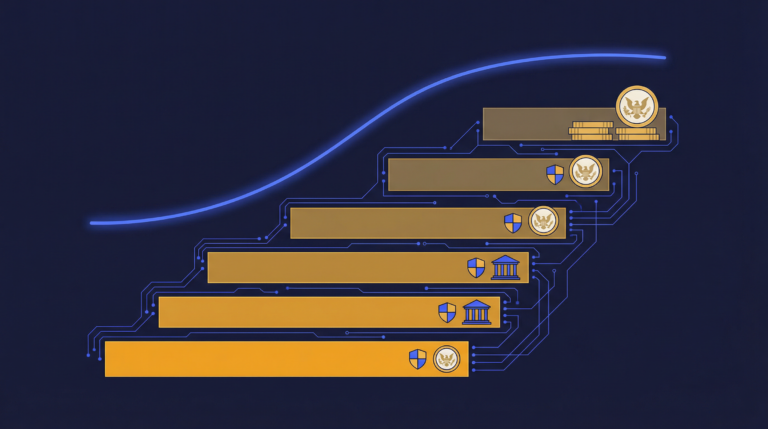
Capital providers participate in decentralized insurance tokenization by depositing stablecoins or native crypto assets into specific underwriting pools. These deposits collateralize the active policies and generate returns derived directly from the premiums paid by coverage buyers seeking risk mitigation. For those researching how to invest in tokenized assets, insurance pools offer a distinct yield profile that is generally uncorrelated with broader financial market movements or cryptocurrency price fluctuations. The return on investment depends entirely on the frequency and severity of claims against the pool during the coverage period. If a pool experiences a low loss ratio-meaning the total claims paid are significantly lower than the premiums collected-investors capture the surplus as a high percentage yield. Advanced platforms often structure these pools into different risk tranches, allowing conservative investors to supply senior capital with lower yields while aggressive investors fund junior tranches that absorb the first losses in exchange for higher returns. Conversely, a major catastrophic event that triggers widespread parametric payouts can result in the total loss of the staked capital for junior tranche participants.
The risk architecture of smart contract insurance requires investors to evaluate both the underlying actuarial risk and the technical infrastructure supporting the protocol. Assessing tokenized asset risks in this sector means acknowledging the severe threat of smart contract vulnerabilities and oracle manipulation. If the code governing the underwriting pool contains a flaw, malicious actors could drain the locked capital regardless of whether an insured real-world event actually occurred. Similarly, if the data oracle feeding information to a parametric policy is compromised or malfunctions, it could trigger erroneous payouts or fail to execute legitimate claims when disaster strikes. To mitigate these threats, mature platforms employ multiple independent oracle nodes and subject their smart contracts to rigorous, continuous security audits by top-tier cybersecurity firms. Investors must balance these technical risks against the historical performance and yield generation of the specific insurance pools they choose to underwrite. Diversifying capital across multiple geographic regions and trigger types is standard practice for institutional investors participating in decentralized risk markets.
Regulatory classification of tokenized insurance products
Tokenized insurance products face complex regulatory environments, with classification varying by jurisdiction. In the United States, regulators often classify parametric contracts as weather derivatives or swaps under CFTC jurisdiction rather than traditional insurance. The global parametric insurance market is projected to reach $29.3 billion by 2032.
The legal treatment of decentralized insurance tokenization depends heavily on how the specific product is structured, marketed, and executed within a given jurisdiction. Traditional insurance regulation requires the policyholder to demonstrate an insurable interest in the underlying asset and prove actual financial loss after an event to receive indemnification. Because parametric insurance pays out based on an objective data trigger rather than proven indemnification, regulators in many jurisdictions view these instruments through a different legal lens. In the United States, the Commodity Futures Trading Commission (CFTC) frequently regulates parametric weather contracts as swaps or derivatives rather than insurance policies. This classification subjects the issuers to different capital requirements, licensing processes, and reporting standards than traditional property and casualty insurers overseen by state insurance commissioners. Navigating this regulatory fragmentation is a primary operational hurdle for platforms seeking to scale their tokenized insurance products globally, often requiring them to establish separate legal entities for different product lines.
Despite regulatory friction, the market for programmable risk transfer is expanding rapidly as legacy financial institutions recognize the massive efficiency gains of blockchain settlement. According to a 2023 report by Allied Market Research, the global parametric insurance market was valued at $11.7 billion and is projected to reach $29.3 billion by 2032, growing at a compound annual growth rate of 10.8%. As this market expands, regulators in forward-looking jurisdictions like the United Kingdom, Bermuda, and Singapore are developing sandbox environments to test smart contract insurance deployments in controlled settings. The UK Financial Conduct Authority (FCA) currently evaluates tokenized insurance products within its existing regulatory perimeter, focusing heavily on consumer protection and the reliability of the underlying data oracles. Bermuda has emerged as a particularly favorable jurisdiction, creating specific digital asset business licenses that accommodate decentralized underwriting models. Market participants should consult a comprehensive tokenization glossary to understand the specific legal definitions applied to different types of digital risk transfer instruments across these varying global jurisdictions.
Conclusion
Tokenized insurance products represent a fundamental restructuring of how financial risk is transferred, verified, and settled in the modern economy. By replacing subjective claims adjustment with deterministic smart contracts and objective data oracles, parametric insurance on the blockchain eliminates the inefficiencies that have long plagued the legacy insurance sector. Platforms like Nexus Mutual, Arbol, and Etherisc are demonstrating the commercial viability of this model across digital asset protection, global weather risk, and agricultural coverage. For capital providers, insurance token investing offers a unique, non-correlated yield opportunity, provided they can accurately assess both the actuarial probabilities and the technical risks inherent in decentralized infrastructure. As the regulatory frameworks surrounding parametric contracts mature, the integration of programmable policies into mainstream corporate risk management will likely accelerate significantly. Investors, startup founders, and risk managers should begin evaluating how these automated, data-driven insurance models can optimize their capital efficiency and long-term coverage strategies.
Frequently Asked Questions
What are tokenized insurance products?
Tokenized insurance products are digital policies represented as tokens on a blockchain. They use smart contracts to automate premium collection, pool underwriting capital, and execute claims payouts without traditional human claims adjusters.
How does parametric insurance work on the blockchain?
Parametric insurance on the blockchain pays out automatically when a specific, verifiable event occurs. Data oracles feed real-world information, such as earthquake magnitude or weather data, directly into the smart contract to trigger immediate settlement.
What risks are associated with insurance token investing?
Investors in tokenized insurance pools face the primary risk of capital loss if claims exceed collected premiums. Additional risks include smart contract bugs that could allow capital to be drained and data oracle failures that trigger incorrect payouts.
Are tokenized insurance policies legally recognized?
The legal recognition of tokenized insurance varies by jurisdiction. In many regions, parametric policies are classified and regulated as financial derivatives or swaps rather than traditional indemnity insurance, subjecting them to different regulatory frameworks.