Tokenized Agricultural Commodities & Farmland Guide
The global agricultural sector forms the bedrock of human civilization, yet it remains one of the most difficult asset classes for modern investors to access. In the United States alone, the total value of farmland reaches approximately $3.5 trillion according to United States Department of Agriculture data. Despite this immense scale, agricultural land is notoriously illiquid and traditionally reserved for institutional players or multi-generational farming families. Tokenized agricultural commodities and farmland are now dismantling these historical barriers by utilizing blockchain infrastructure to divide massive agricultural assets into accessible digital shares. This shift allows capital to flow directly into rural economies while providing a broader base of investors with exposure to an asset class that has consistently demonstrated low correlation to traditional equities and bonds.
Institutional investors have recognized the value of agricultural land for decades. The alternative investment manager Nuveen, operating through its parent company TIAA, currently stands as the largest institutional farmland owner in the US with more than $10 billion in agricultural assets under management. These institutions allocate heavy capital to agriculture because the sector historically delivers reliable returns while acting as a natural hedge against inflation. Food prices rise in tandem with broader inflation metrics, which directly increases the underlying value of the land producing that food. For retail investors seeking to understand what is asset tokenization, agriculture presents one of the clearest use cases for bridging physical, cash-flowing assets onto blockchain networks.
The Investment Case for Tokenized Agricultural Commodities and Farmland
Tokenizing agricultural assets transforms a historically illiquid, high-barrier market into accessible digital shares. This process allows retail and institutional investors to access an asset class that has historically delivered 10-12% annual returns with low volatility, acting as a powerful hedge against inflation and supply chain disruptions.
Historically, farmland has delivered approximately 10-12% annual returns according to the National Council of Real Estate Investment Fiduciaries (NCREIF) Farmland Index. These returns consist of both annual cash yields from crop production or land leases, combined with steady long-term capital appreciation of the land itself. Despite these attractive metrics, the minimum capital required to purchase a commercial farm typically ranges from $500,000 to $5,000,000, effectively excluding the vast majority of individual investors. Tokenization solves this capital barrier by fractionalizing ownership into digital tokens with minimum investments ranging from $100 to $10,000. This democratization of access mirrors the shifts seen in tokenized real estate investing, but applies the technology to an asset class with fundamentally different economic drivers.
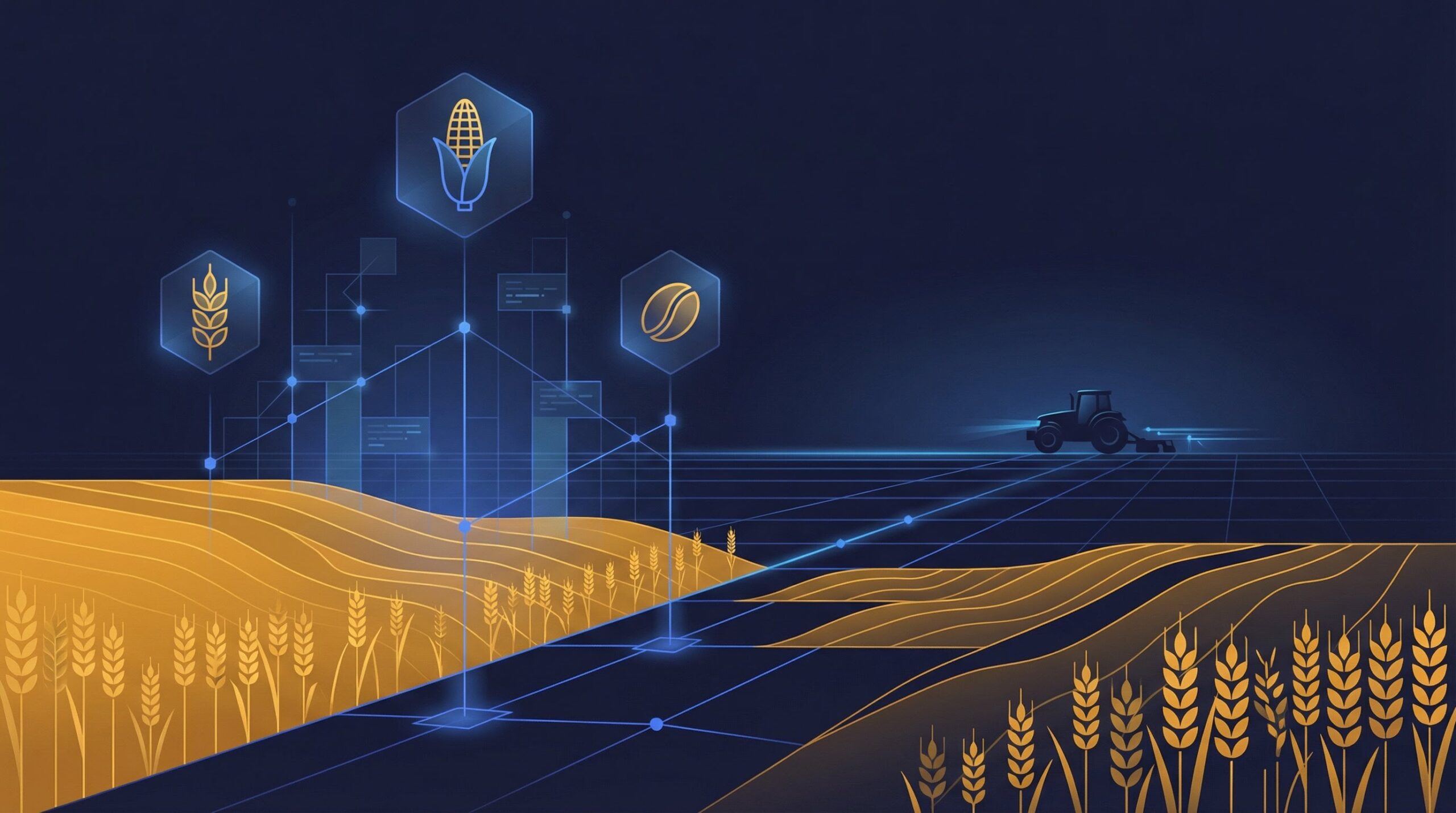
Beyond the physical land, agricultural commodities themselves present distinct investment opportunities that benefit from tokenization. Traditional commodity investing requires navigating complex futures contracts, managing margin accounts, or paying high expense ratios for commodity-focused exchange-traded funds. Tokenizing physical agricultural commodities like wheat, corn, soybeans, coffee, and cocoa allows investors to gain direct spot-price exposure without the complexities of the derivatives market. These commodity tokens represent direct legal claims on physical goods stored in audited agricultural silos and warehouses. When combined with farmland ownership tokens, investors can build comprehensive agricultural portfolios that capture both the steady yield of land ownership and the cyclical price movements of the crops produced.
How Platforms Structure Tokenized Farmland Investing
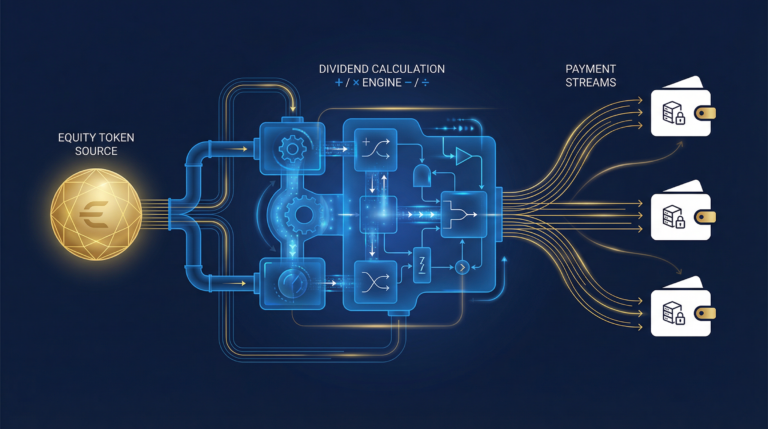
Platforms structure tokenized farmland investing by placing agricultural real estate or future crop yields into special purpose vehicles, then issuing blockchain-based tokens representing fractional ownership or yield rights. This digital infrastructure handles dividend distributions, compliance, and secondary market trading for agricultural assets globally.
The current landscape of agricultural tokenization platforms includes both traditional fractional models and native blockchain protocols. AcreTrader provides the most important precedent for this market, having pioneered fractional farmland investing with $10,000 to $25,000 minimums before being acquired by Farmland Partners Inc. in 2024. While AcreTrader did not use blockchain technology, its successful exit validated the demand for fractional agricultural assets. Modern blockchain platforms are now building on this foundation. Lofty, which primarily focuses on residential and commercial real estate, is actively exploring agricultural property tokenization to expand its asset base. Similarly, Landshare operates on the Binance Smart Chain to tokenize both traditional real estate and agricultural land, offering investors direct exposure to physical property appreciation and rental yields.
Other platforms take entirely different approaches to agricultural tokenization by focusing on yields and commodities rather than the land itself. LandX operates a unique model that tokenizes future crop yields, allowing investors to buy tokens representing future harvests from specific farms. Under the LandX model, a single token gives the holder rights to a specified amount of crop per year, such as one xWHEAT token representing one kilogram of wheat annually, or equivalent structures for xSOY tokens. AgriDex operates as a Solana-based agricultural commodity marketplace designed to settle physical commodity trades on-chain. Emerging platforms like DIMO and HarvestFlow are also building infrastructure to bring farm data and agricultural assets on-chain. Investors researching how to invest in tokenized assets must carefully evaluate which specific mechanism a platform uses, as the legal rights and return profiles vary significantly between land ownership, crop yields, and commodity trading.
Types of Agricultural Commodity Tokens and Yield Models
Investors can access different agricultural tokenization models, including direct farmland ownership tokens, crop yield tokens representing future harvests, physical agricultural commodity tokens, and agricultural private credit tokens. Each model offers distinct risk profiles and return mechanisms tied to land appreciation, commodity prices, or lending rates.
Farmland ownership tokens represent traditional equity in a specific farm or a broader portfolio of agricultural land. Returns from these tokens generally stem from two sources: annual operating income and long-term land appreciation. When the land is leased to independent farm operators, investors typically see rental yields of 3-5% annually in the US Midwest, while emerging market farmland can generate 5-8% rental yields. Additionally, US farmland values have historically appreciated between 5-8% annually. When combined, these factors generate the targeted 10-12% gross returns, which typically net out to 7-9% after platform fees, property taxes, and management expenses. This structure provides the most stable, predictable return profile within the agricultural tokenization sector.
Crop yield tokens and agricultural commodity tokens introduce more direct exposure to global food prices and farming productivity. Crop yield tokens represent contractual rights to a specific volume of future agricultural production. The returns on these tokens are highly variable because they depend entirely on the spot price of the commodity at harvest time and the actual yield produced by the farm. Agricultural commodity tokens operate differently by representing physical commodities already harvested and stored in secure facilities. This model closely mirrors gold tokenization structures like PAXG, but applies the mechanics to agricultural goods. Finally, agricultural debt and credit tokens offer fixed-income returns by funding loans to farming operations. Protocols operating in this space, which investors can explore further in our Centrifuge review, pool capital to provide operating loans to farmers, often targeting emerging markets where traditional banking infrastructure fails to meet agricultural capital needs. Goldfinch, for example, has successfully funded agricultural lending pools in emerging markets, providing crypto investors with stable yields derived from real-world farming activities.
Global Opportunities and Risks in Blockchain Farming Investment
Global blockchain farming investment spans from low-risk, low-yield US Midwest row crops to high-growth opportunities in Brazil and Africa where tokenization solves severe land title disputes. However, these investments carry significant risks related to extreme weather, volatile commodity prices, operational farming challenges, and strict foreign ownership regulations.
The global nature of agriculture means that tokenization opportunities differ drastically by geographic region. The US Midwest represents the most established and liquid farmland investment market globally, focusing heavily on corn and soybeans. This region offers the lowest political risk and the most secure property rights, but consequently delivers the lowest baseline yields. In contrast, Brazil offers high productivity growth potential with major exports in coffee, sugarcane, and soybeans. Tokenization in Brazil and broader Latin America has the potential to be transformative by establishing clear, immutable ownership records in regions historically plagued by complex and disputed land title systems. Africa presents enormous agricultural potential but carries high political, infrastructure, and title risk. Southeast Asian markets, particularly in Singapore and Indonesia, are seeing growing interest in agricultural tokenization focused on regional staples like rice and palm oil.
Investors must rigorously evaluate the specific tokenized asset risks inherent to agriculture. Weather and climate risks sit at the forefront, as droughts, floods, and hurricanes directly impact farm productivity and land valuations. Commodity price volatility is another major factor; agricultural commodities are among the most volatile of any asset class, demonstrated clearly when global wheat prices doubled during the onset of the Russia-Ukraine conflict before eventually retreating. Operational risk affects any tokenized farmland that is directly operated rather than leased, exposing token holders to management quality, equipment failures, and rural labor shortages. Furthermore, regulatory risk requires careful navigation. Agricultural land ownership is heavily restricted globally to protect national food security. In the United States, foreign farmland ownership restrictions vary heavily on a state-by-state basis, while countries like India, Brazil, and Thailand maintain strict federal limits on foreign agricultural land ownership.
Building a Portfolio with Fractional Farmland Ownership
Building a portfolio with fractional farmland ownership requires allocating 2-5% of total assets across different geographic regions, crop types, and investment structures. Investors must continuously monitor agricultural commodity futures, global weather patterns, and platform reporting while consulting tax professionals regarding specific agricultural depreciation benefits.
Constructing a resilient agricultural allocation begins with proper sizing and diversification. Financial advisors generally suggest allocating 2-5% of a diversified portfolio to agricultural assets to capture the inflation-hedging benefits without overexposing the portfolio to localized weather events. Diversification within that allocation is equally important. Investors should spread capital across different geographic regions to mitigate regional drought or flood risks. Furthermore, diversifying by crop type provides protection against specific commodity price crashes. A balanced tokenized agricultural portfolio might include exposure to row crops like corn and wheat, permanent crops like almond orchards or vineyards, and specialty crops. Mixing investment models-combining stable farmland ownership tokens with higher-yield agricultural credit tokens-can optimize the overall risk-return profile.
Active management of a tokenized agricultural portfolio requires tracking data sources not typically used in traditional equity investing. Investors must monitor USDA crop progress reports, track commodity futures prices on the Chicago Board of Trade, and observe macro weather patterns like El Niño that dictate global harvest yields. Tax considerations also play a major role in agricultural investing. Depending on how the tokenized investment is legally structured, farmland income may qualify for specific agricultural tax benefits, including the depreciation of farm improvements, irrigation systems, and specific deductions for soil and water conservation expenses. By understanding these mechanics and utilizing the vocabulary found in our tokenization glossary, investors can effectively navigate tokenized agricultural commodities and farmland to build a more resilient, inflation-protected wealth strategy.
Frequently Asked Questions
What are tokenized agricultural commodities?
Tokenized agricultural commodities are digital tokens on a blockchain that represent legal ownership of physical farming products like wheat, corn, or soybeans. These tokens allow investors to gain direct price exposure to agricultural goods without trading complex futures contracts or managing physical storage logistics.
How much money do I need to invest in tokenized farmland?
Tokenized farmland platforms typically allow minimum investments ranging from $100 to $10,000. This is a massive reduction from traditional commercial farmland investments, which usually require $500,000 to $5,000,000 in upfront capital to purchase an operational farm outright.
What kind of returns does farmland traditionally generate?
Historically, commercial farmland has delivered 10-12% annual returns according to the NCREIF Farmland Index. These returns are generated through a combination of annual cash yields from crop sales or land leases (typically 3-5%) and long-term capital appreciation of the land itself (typically 5-8%).
Are there restrictions on who can buy tokenized farmland?
Yes, agricultural land ownership is heavily regulated globally to protect national food security. In the United States, foreign ownership restrictions vary significantly by state, and many international jurisdictions strictly limit or outright ban foreign investors from owning agricultural real estate.